Showing posts with label oil. Show all posts

Wednesday, March 30, 2011

Obama Plans to Wean U.S. Off Foreign Oil... Just Like the Seven Presidents Before Him

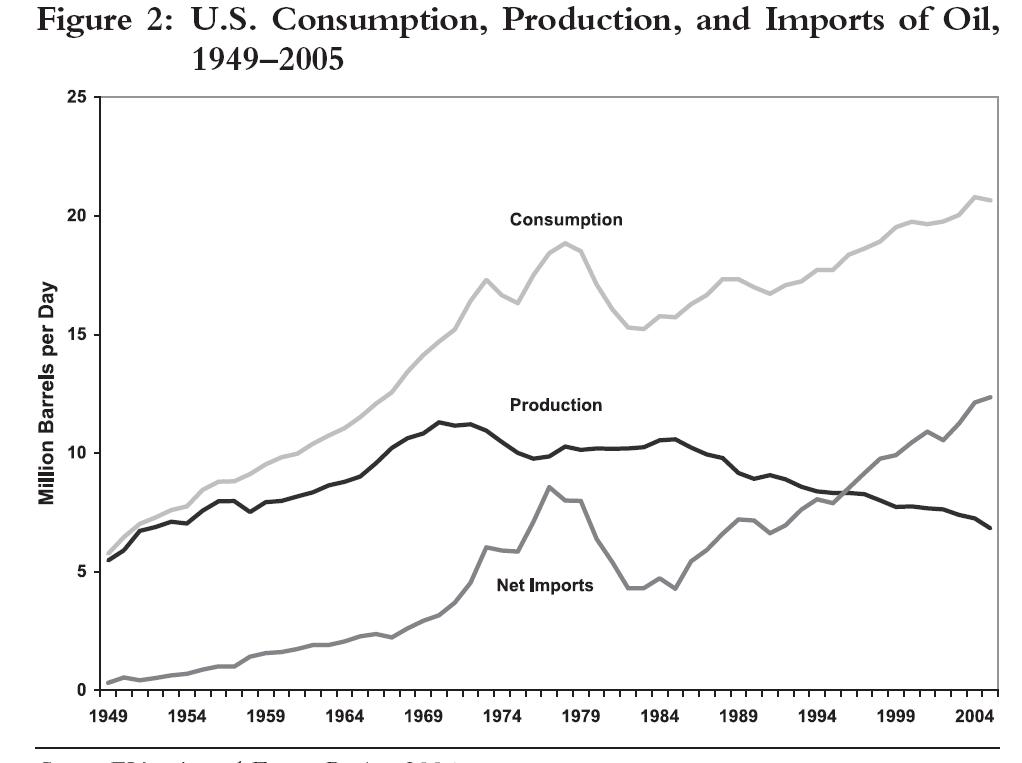
No one has summed it up better than Jon Stewart did last year: since Nixon, every U.S. president, Democrat and Republican, has bemoaned our dangerous addiction to foreign oil. And yet, U.S. oil imports have increased nearly constantly since 1949, with the exception of a drop in the late 70s and early 80s when the oil crises of the 70s forced Americans to get serious about conservation and efficiency. Now the U.S. imports more than 11 million barrels of oil each day. Almost two-thirds of our oil comes from imports, and half of that comes from unstable or unfriendly countries.

Source: Council on Foreign Relations


Today, President Obama reiterated his wish to cut oil imports by one-third in a decade. His proposed strategy:
  1. Finding and producing more oil within our borders.
  2. Reducing overall dependence with alternative fuels and efficiency.
Step 1 is what Republicans want to focus on (Drill Baby Drill!); Step 2 is what Democrats want to focus on. But even with such a bipartisan strategy, nothing is being done, just as nothing has been to seriously reduce our oil imports.

The reality is, exploring for and producing more oil at home is not a long term fix. The same arguments were brought up during the 2008 campaign when Sen. McCain and others called for expansion of domestic drilling, ostensibly as relief from high summer gasoline prices, and again by Obama last year when he announced his expanded offshore drilling proposal (less than a month before the BP spill). All this despite experts agreeing that new drilling wouldn't cut gasoline prices more than a few cents per gallon—decades later.

And a decrease in oil prices will only lead to an increase in gasoline consumption, which will create a need for more immediate oil resources, which will lead to an increase in oil imports—right back where we started. (Keep in mind that the U.S. has 2% of the world's oil reserves and consumes over 25% of the world's oil.)

What is really going to help us reach oil independence is Step 2.

Advances in alternative fuel vehicles, as well as electric, plug-in, and hybrid electric vehicles are important, and are slowly beginning to penetrate the market. Increasing fuel economy is important too, and the Obama Administration has taken some of the greatest strides in decades to increase the efficiency of American cars (to the chagrin of many Republicans).

But while more efficient cars will certainly decrease the amount of gasoline per mile traveled, they will probably not lead to the deep fuel savings that will be necessary to wean us off foreign oil. That may just need to come from conservation, in the form of less driving and more walking, biking, and public transit.

Jimmy Carter's famous conservation
talk. Source: treehugger.com

Obama hasn't mentioned conservation as part of his strategy for oil reduction, likely because it's not in the "American spirit" to have to sacrifice anything. It's political suicide to campaign for increased gas taxes—despite the myriad benefits—and the harsh criticism Jimmy Carter received for wearing a sweater in the Oval Office and asking Americans to start saving energy is still ringing in most politicians' ears.

In the 112th Congress, Obama has no hope to pass any legislation that will reduce American oil consumption. The only bills he will be able to sign will attempt to expand domestic oil production, a boon to oil companies, but far from a solution to our oil dependence (not to mention an increased risk for catastrophic impacts on the environment, the most grave example of which, after less than a year, many Americans already seem to have forgotten).

President Obama may find it an opportune time to repeat the calls for oil independence as unrest in the Middle East continues to spread and reportedly affect world oil prices. But for serious change to occur, serious measures will need to be taken, measures which the President will surely not be willing to take until at least 2013 (if he is reelected) and which the current Congress will never enact.

Monday, February 28, 2011

Libyan Oil: Supply, Demand and Speculation

I'm no economist, so let us get that out there in the beginning of this article. I took an intro to econ in college and got a solid average B+, so anything I say here should be taken with a grain or two of salt. That being said, I feel that I am pretty in tune with what is going on in the world. Which is why I was very surprised that the New York Times would print an article entitled, "Tremors From Libya Threaten to Rattle the Oil World" in their "News Analysis" section and leave out the very word that sums up the entire "oil world" as we know it today: speculation.

They lay out the facts of reality today, but in very soft terms. They mention that Libya is a small oil producer and that Saudi Arabia has agreed to increase production to fill the "void" left by Libya. To be more precise, Libya produces only 2% of the world's oil and, to reiterate, Saudi Arabia is more than willing and able to make up all of that. In other words, in the world of supply and demand, nothing changes. In fact, this news has allowed oil prices to drop during Monday trading.

So why the big stink about Libya? The higher the price of oil, the higher the profits of oil companies like Exxon Mobile, whose profit rose 53% in the fourth quarter of 2010. Additionally, the more Wall Street whines about oil supplies (that in reality are unchanged) the more things become a self-fulfilling prophecy. Take this paragraph from the Times article:
The price of oil had been rising steadily even before the wave of pro-democracy protests swept much of the Middle East and North Africa. A recovering global economy had convinced traders that demand for oil was going to rise by about 2 percent in 2011. Some industry experts and Wall Street seers were predicting a gradual march back to $120 and even $150. The thinking was that investors would pour money into the commodity markets.
So Wall Street had predicted–even before the North African pro-democracy revolutions–that the demand for oil would rise, which would lead to a rise in oil prices. But the main driver of the rise in oil prices? People "pouring money into the commodity markets." In other words, speculation. So a rise in prices thanks to higher demand (assuming OPEC did not increase production to meet this demand) would be exacerbated by people betting on oil futures. A psuedo-supply problem simply acts as a catalyst for this, allowing Wall Street can meet their predictions while everyone else pays nearly $4.00 a gallon.

So, as far as "new analysis" goes, this is pretty soft. There are some serious statements that are clear in the article, the best of which is, "But the events unfolding in the Arab world, the epicenter of global oil production, are a sobering reminder that trading in oil, that mother of all commodities, is at heart a political game." But too much credence is given to Libya's position as an oil producer which is really negligible in all of this. The main focus here ought to be speculation, but it is not. It is what Wall Street thinks about oil prices and where they are headed. If Wall Street says oil prices will rise enough times, they will rise, regardless of supply and demand. There is your "analysis."

The flag that Libyan protesters have adopted (Al Jazeera)

Friday, August 6, 2010

Republicans Not Open to Compromise on Already-Compromised Oil Bill; Bill Dies

In what can hardly be viewed as a surprise, on Tuesday the Senate gave up on its oil spill bill (at least until after the August recess). As a refresher, the Clean Energy Jobs and Oil Accountability Act of 2010 was the substitute that Harry Reid pushed through for the climate—nay, renewable energy—nay, energy bill that was supposed to have emerged from the Senate many months ago. Reid's reason for not even bothering to try? It didn't have 60 votes. The reason the oil spill went nowhere this week? It didn't have 60 votes. If I didn't know any better, I'd say Republicans are just banking on a strategy where they're trying to keep Democrats from scoring any victories for the rest of the year, and they're not going to cooperate on any more legislation.

Sunday, May 30, 2010

Glass Half Full: Big Disasters Can Spur Big Changes

On Thursday President Obama held a press conference in which he took full responsibility for the federal government's response to the oil spill in the Gulf of Mexico. This was largely in response to widespread criticism that the White House has done little in the month since the disaster took place. Some have even gone so far as to call it "Obama's Katrina," in reference to the Bush Administration's monumental failure to provide support to the victims of Hurricane Katrina in 2005.

Thursday, May 6, 2010

Oil Spills and Energy Bills

It's already been more than two weeks since a yet-unexplained explosion at BP's Deepwater Horizon offshore drilling rig started sending between 5,000 and 25,000 barrels of oil each day into the Gulf of Mexico. The spill is expected to completely trump the Exxon Valdez disaster, taking the title of worst oil catastrophe in history.

Each day more oil is washing up on the shores of gulf states, as over 2,500 square miles in the gulf are completely blanketed with petroleum. The fishing industry and tourism industry are suffering tremendously and will continue to suffer through the foreseeable future, to say nothing of the havoc that the spill is wreaking on the already fragile ecosystems in the gulf.

Wednesday, March 31, 2010

Offshore Drilling Proposal Solves Nothing

Today, President Obama announced a proposal to greatly expand offshore drilling in the United States. He has already received a good deal of flak, with environmentalists attacking him for leaving our oceans open to environmental assault by the oil industry, and conservatives arguing that this doesn’t go far enough to open our waters to reap the benefits of oil wealth.


Saturday, August 15, 2009

Astroturf Strategy Spreads from Health Care to Climate

As the House and Senate have been on August recess, their "town hall meetings"—largely focused on health care legislation—have been met with vociferous, angry, and even violent opponents of any reform. These right-wing conservatives, feeding off each other's anger as well as that of inflammatory media pundits, are taking a stand against what they see as a "government takeover" of health insurance, which they associate with the worst of evils, many comparing it to Socialism, or even Nazism.

Unfortunately, much of this contrived anger and fear is a result of irresponsible media neglecting to provide facts on what the current health care bills would actually change (the government would, in fact, not be "taking over" any insurance options, and there was never anything close to a "death panel" proposed, as ex-governor Palin had insisted last week). And much of it is simply the conservative Republican effort to derail Obama and the Democrats' platform in order to blame them for a slew of failures come 2010, and pick up Congressional seats (even if it does mean leaving millions of Americans without health insurance—a minor hitch to an otherwise noble plan).

But now, finding that this public, "grassroots" (or "astroturf," as some are calling it) outcry strategy is actually working—despite its largely uninformed, and sometimes clandestinely confederate perpetrators—the oil industry is planning to apply it to its opposition to climate legislation in the Senate.

The American Petroleum Institute (API) has written to its member companies asking them to "move aggressively" to stage dozens of anti-climate bill gatherings across the country, mostly in states with swing voters in the Senate. Greenpeace acquired the letter that API distributed, which outlines many of the same false arguments that have been plaguing the climate debate for months. At one point, the letter reads:
After hearing that Waxman-Markey-like legislation could increase the costs of gasoline to around $4 and lead to significant job losses . . . audiences changed their opinions on the bill significantly. Opposition to the bill within the policy influentials cohort grew 23 points, from 40% to 63%; with a 19 point increase in those who now “strongly” oppose the legislation.
What this letter fails to mention is that the $4 figure above comes from research by the Heritage Foundation, which asserts that gasoline will reach that price in 2035. That's 26 years away. And we just had $4 per gallon gas last year, only there were few fuel-efficient cars that found themselves immune to the hikes. I can guarantee that with functional climate change regulations, and more responsible consumer behavior, there will be an abundance of alternatives that will render such a gasoline price increase insignificant. But API doesn't give credence to these trivial details.

So now these astroturf groups—meant to look like regular citizen groups, but actually groups funded by corporations, trade associations, and lobbying firms—will have their voices heard much more readily than those they are impersonating.

And the saddest part is that the targeted Senators, even though they will likely be mindful of these charades, will still be affected by them. Instead of taking a strong stance against artificially engineered rallies and pervasive lies, many Senators will ultimately bow to the pressure exerted upon them—and fueled by the media, who report not on facts, but on spectacles.

If the public were fairly informed about issues like health care and climate change, the debate would be completely lopsided in favor of a comprehensive overhaul of policy on both fronts. But well-endowed corporations, ratings-driven media, and Senators susceptible to being weakened with lies and bought with contributions, are playing no part in helping to accurately educate voters. And those frightening realities of our modern democracy could end up dismantling some of the most important legislative initiatives in our history.

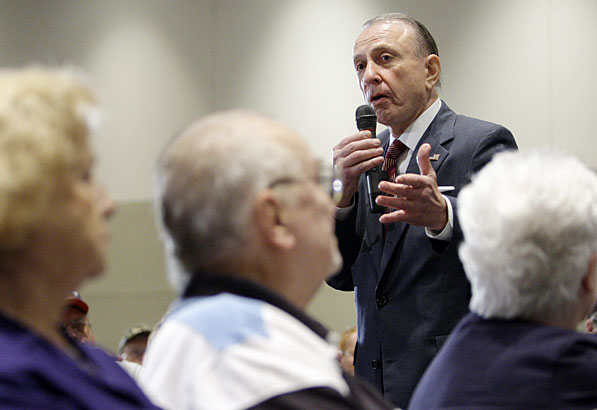
Images: Violent town hall meeting (The National), API Presdient Jack Gerard (flickr), Senator Arlen Specter at a town hall meeting (Philly.com)

Friday, June 26, 2009

Climate Bill Passes by an All-Too-Thin Margin

The U.S. House of Representatives just passed the American Clean Energy and Security Act of 2009 by a margin of seven votes, 219 to 212. Kudos to Chairmen Waxman and Markey for taking the lead on the most crucial issue of the next several generations, the threat of global climate change. Many perceive the issue as an environmental one, and one that is only a victory for "environmentalists." But that couldn't be further from the truth.

As I have touched on many times, climate change is an all-encompassing issue that threatens a seemingly endless variety of other issues. You might personally believe that healthcare, civil liberties, war, or any number of other issues is a bigger priority than climate change, a supposedly futuristic notion predicated upon shaky science. But every issue being debated in the United States today can in some way be connected to climate change—or at least related policies.

Tom Friedman wrote in Tuesday's Times that weaning ourselves off of oil could serve to undermine oppressive oil-rich regimes in countries like Iran, Saudi Arabia, and Russia. Many countries rich from oil use their profits to invest in nuclear weapons or fund terrorism. Anyone care to do something about nukes and terrorists? Isn't that why we're in Iraq and Afghanistan (or at least Afghanistan)? Isn't that why we're so frightened of Iran?

If we don't address climate change, the healthcare issue will only be exacerbated. Airborne diseases will increase with increased temperatures, including potential epidemics for which we are ill prepared.

If we don't address climate change, refugees of floods, droughts, and desertified lands will try to flee to other countries to rebuild their lives, and as we see all over Africa and Asia, an increase in ethnically diverse populations in economically depressed regions competing for the same jobs and resources tends to lead to intrastate conflict that can easily spread across borders. Want to help prevent war? Help prevent climate change.

Even the agricultural community in the United States, who lobbied hard enough to essentially fend off any potential regulation of greenhouse gas emissions in the agricultural sector, would be drastically affected by even a minor change in temperature and climate conditions. But the major problem here is that no one thinks in the long term.

And that is exactly why Republicans, only eight of whom voted for the legislation today, are able to exploit it for political gains. 'It only amounts to a tax,' they say. 'It will only hurt American business and force consumers to pay more for their heat, power, and gasoline.' For them, it's not about preventing disaster across the world. It's about winning back a Republican majority in the United States Congress by exploiting myopic concerns. But climate change is not just an environmental issue, and it's sure not a partisan issue. It has somehow devolved into both over the course of the debate on regulation, and will inevitably cause forward-thinking politicians to lose their seats. This is the unfortunate reality in a democracy like ours of standing up for what is right, even if it may not be exceptionally popular in the short run.

So the Waxman-Markey bill, even though it was watered down excessively to cater to wealthy businesses and utilities and power-wielding lobbyists, has finally passed. No one knows if it will accomplish anything near what scientists say we need to. But at least it's a start. And now the issue will move on to the Senate, where it will be diluted even more, and progress will only be hindered further. In 40 years, we'll all look back at this and wonder how we could have been so ignorant. Those who opposed the bill are on the wrong side of history, just as the anti-civil rights folks were in the '50s and '60s. But in the realm of climate change, by the time that fact is universally accepted, it could very well be too late.

Images: Climate rally outside Capitol (Wall Street Journal), Ahmadinejad in front of oil refinery (New York Times), Republican opponents to ACES (TreeHugger)

Thursday, December 4, 2008

Gas is Cheap Again. Drill Baby Drill can wait.

Now is the first time since the oil crisis of the 1970s that there has been so much bipartisan support for weaning the United States off foreign fuels, and reaching ever-appealing “energy independence.” Democrats tend to want to realize this goal by focusing primarily on conservation, efficiency, and alternative fuel sources. Most Republicans talk about all of these methods as well, but don’t think it will be enough. John McCain during the campaign, for instance, spent a great deal of time talking about the widespread need for more nuclear power plants, “clean-coal” plants, and stressed the importance of drilling for more oil within and around United States territory. Sometime in August, it seemed, the “Drill Baby Drill!” chants were starting to ring across the land.

Thank goodness. There is a surefire solution to energy independence that doesn’t involve relinquishing our massive Ford Expeditions and Hummers. If we just open up new sites for oil extraction off our coasts, we will begin to offset our oil imports (which currently account for two-thirds of US consumption), while also saving money on our gas bills. …Right? Well, most “Drill Here, Drill Now” chanters during the election season seemed to be ignoring the economic analysts’ reports that asserted that we wouldn’t see gas prices drop—due to the new rigs—for several years.

Still, election seasons are election seasons. And the Democrats, delightful opportunists that they are, hopped on board the drill train, lifting an offshore drilling ban to prove to constituents that they too cared about gas prices. But wait! Now, thanks to the worst economic crisis since the Great Depression, gas prices are at their lowest points in years, and all those conservation measures that people were starting to carry out without government prodding—buying efficient cars, taking public transportation and biking, taking fewer unnecessary car rides—are gradually falling by the wayside. SUV sales are up once more. And it seems that all that talk about drilling is off the table—for now.

And then there’s the Big Three. You know, the car companies asking for $34 billion from the government (read: taxpayers). Wait, but why are Honda and Toyota not going bankrupt? Perhaps because instead of clinging exclusively to “all-American” big ol’ trucks and marketing them heavily, they invested at least a bit in more compact, efficient cars that have brought most auto business to them over the past year or so. And only now—as part of their rescue plan—do Ford and GM talk about investing seriously in plug-in hybrids, battery technology, and other efficiency measures.

What should government do? Raise gas taxes now, while they’re so low. The Federal Government should even put a floor on gas prices so that people don’t go flocking back to the Hummer too. Invest revenues from gas taxes in public transportation, research and development, and alternative energy. It’s going to take a while to make the transition to alternative fuel vehicles, so let’s start with vehicles that use much less oil than those we have now, and then once cars are running mostly on electricity, make the switch so that the backup engine is running on cellulosic ethanol or fuel cells. Going forward, we need to stop thinking about drilling and start thinking about real, long-term, innovative solutions that will keep jobs within our borders, create new jobs, cut pollution, and actually wean us off foreign oil.

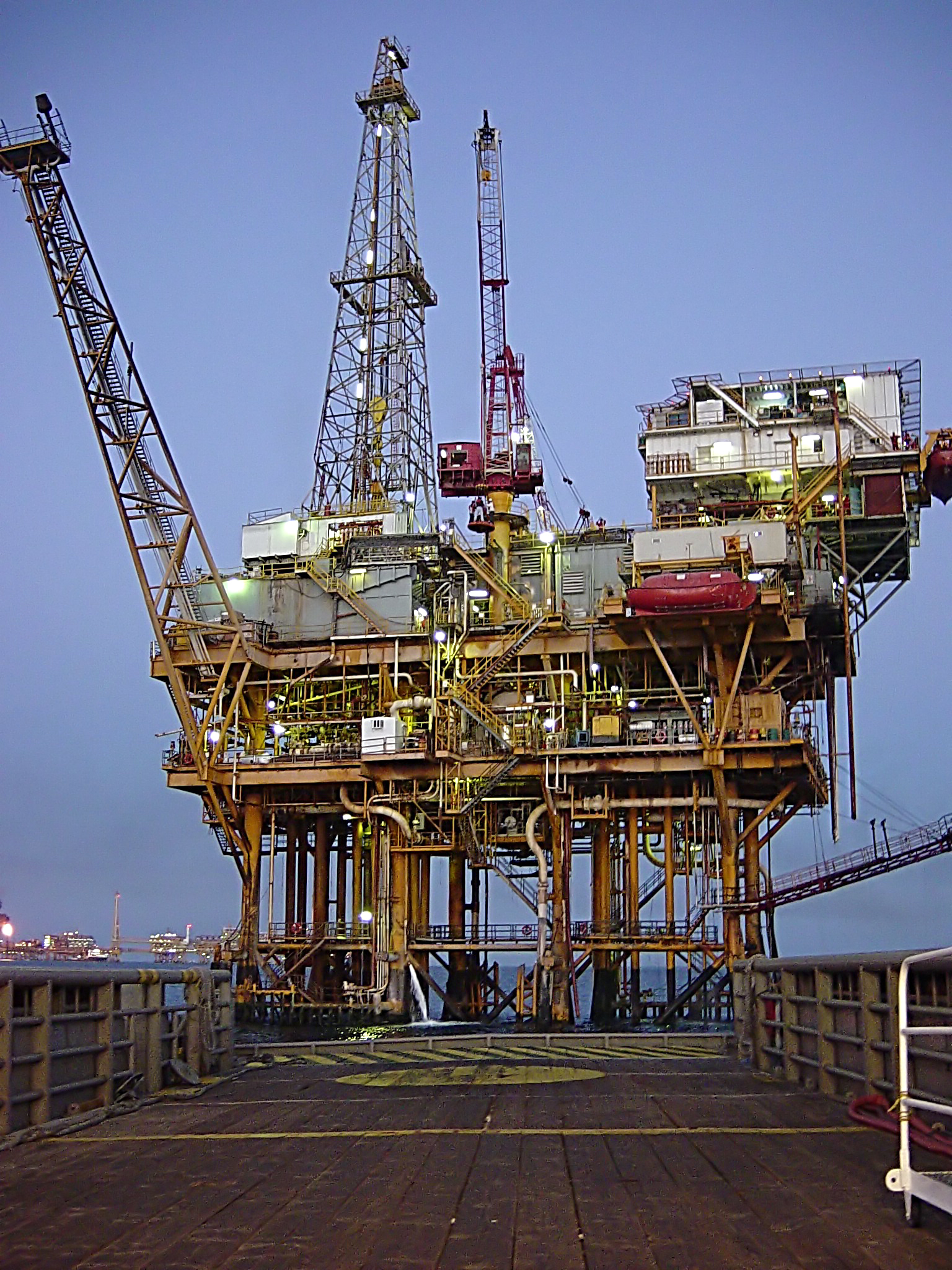
Photos: Oil rig (Wikipedia), Hummer (Hummerreports.com), Plug-in Prius (Autospectator.com)