Showing posts with label barack obama. Show all posts

Sunday, December 21, 2014

A Time to Come Together, Not Apart

A memorial for PO Liu and PO Ramos in Brooklyn. (Source)
Last night's assassination of Police Officers Wenjian Liu and Rafael Ramos was a tragedy. There is no other way to describe it. Two men simply doing their job gunned down in cold blood as they sat in their cruiser. The killer furthered his cowardly act by turning the gun on himself, escaping the responsibility of answering for his actions. Any sane individual mourns with the city of New York and the NYPD over this senseless tragedy.

A moment like this should unite a city that has already seen such unrest the past few weeks. Unfortunately, pundits, politicians and others who gain from division have jumped on the opportunity to politicize this. Long Island Congressman Peter King (who has previously supported cop-killers) has used this tragedy to point the finger at people like Bill de Blasio and President Barack Obama for their "cop bashing," suggesting some kind of link between yesterday's killer and the president of the United States.

Thursday, May 23, 2013

Attorney General Eric Holder Must Go

Attorney General Eric Holder (Source: NBC News)
In what has proven an incredibly disappointing tenure by Attorney General Eric Holder, in which he, among other things, claimed that "due process" was not "judicial process," the last straw may have (hopefully) just seen the light of day. NBC News is reporting that Holder personally approved the secret seizure of Fox News reporter James Rosen's private emails.

Unlike the AP case, where Holder has stated that he recused himself because he had been interviewed by the FBI for the investigation, this Fox News case shows how far the Obama administration will go in its quest to control information. That the administration went beyond finding the source of the leak, which was intelligence analyst Stephen Kim, and tracked Rosen's movements to of the State Department to prove he was meeting with Kim.

Thursday, February 21, 2013

How to Fix The Republican Party in One Step

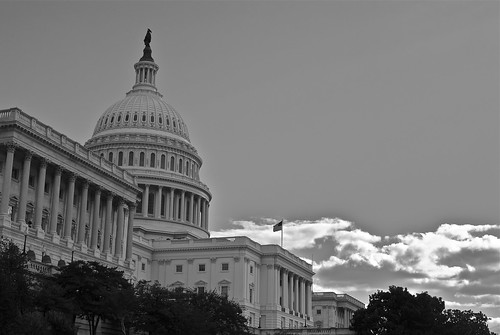
The United States Capitol (Flickr/Dray-Dray)
One of the major setbacks of the Democratic Party is that it is a big tent party; too many factions within the party. Looking back at the health care debate it is glaringly obvious that while it can be great to have a supermajority on paper, practically it may not work out as well as perceived. The Blue Dog Democrats immediately come to mind when thinking about internal strife within the party.

This has been the 21st century Democrat's problem: lack of party unity. It's not necessarily the Democratic Party's fault, because in order to have such a large party that aims to be as inclusive as possible you're bound to have some intraparty disagreements. When you have an opponent in George Bush (read: Dick Cheney and Karl Rove) who is able to keep their party in lockstep, convincing the nation to go to war with a country we had no business warring with while eroding civil liberties in the name of safety, it is going to be very difficult to rally any party together to fight it, especially the Democrats. But in 2008 the Dems did just that and then blew it as only the Democrats can.

But they've been handed a bit of luck, as the pre-2006 Republican Party simply does not exist. It is plagued by the infighting that doomed Obama's domestic legislative agenda from 2008-2010. The fact that the two of the past three State of the Union addresses had two Republican responses, one official and the other unsanctioned, is evidence of that on a macro level. The drama around the Boehner speaker vote can point to this on a micro level. Simply put, the Republican party is in crisis.

The worst part of the whole thing for Republicans is that now is the time to reinvent the party, but instead of coming up with a more dynamic platform to speak to the younger generation disillusioned by Obama's Bush-esque foreign policy and drama-filled presidency (whether he is to blame for the latter is another question), they move further to the right. Their 2012 candidates were embarrassing. They chose to put forth Mitt Romney, one of the most boring and out of touch individuals in recent history (honestly, I'd probably rather have a drink with Al Gore, which is saying a lot) and Paul Ryan, who got smoked by a much-ridiculed and jokey VP Biden in an embarrassing debate. Throw in your fringe candidates who were not distanced enough from the party (Richard Murdouck, Todd Akin) and you're bound to lose favor with the nation, even self-described Republicans. We're starting to see this occur.

Here's what the Republican Party needs to do: drop the culture war and stop with the self-victimization over social issues. Obama is not a Marxist, gay marriage will not ruin yours, and as much as it may pain the Republican Party to hear it, separation of church and state is a major part of this country's founding. Until the GOP realizes this, there will be no groundswell movement of young, disillusioned voters to their side of the aisle. Until Rush Limbaugh and Fox News talking heads no longer hold so much power in the party, masses of young people will steer clear from the GOP.

There can be two ways for the current dual-party system to go. One of the parties can adapt and bring in a fed up, young generation of voters and dominate until at least 2020. Or a new party can emerge - maybe a coalition of liberal Republicans and conservative Democrats (again, as long as they're not overly focused on some made up culture war) who feel their parties are missing out on a huge opportunity for votes (and they'd be right). If the two parties increase the polarization we've seen in Washington, Juan Linz may have to update his famous piece on presidential democracy. Let's hope we don't get to that point.

Correction 22 February 2013: A previous version of this post said that VP Biden smoked Ron Paul in a debate, when in reality it was Paul Ryan who was embarrassed that night.

Monday, September 24, 2012

2012 Election Primer: Obama and Romney

Obama and Romney (Politico)
So after a bunch of requests (read: 3) to write up an election primer, I decided that it is time to give the people what they want: to know what a random 20-something in New York who thinks he knows more than he does feels is the best candidate to cast your ballot for in November.

I began this election season promising myself that I would vote for neither candidate and instead write someone in. President Obama, in my opinion (and I can't explain to you the amount of flak I've received for this) has been an underwhelming president when compared to the candidate he was in 2008. And that last sentence fragment is important: when compared to the candidate he was in 2008. All in all, Obama's done some good things domestically (repealing DADT, his better-late-than-never support of marriage equality, healthcare reform).

That's only one side of the coin, however. I've chronicled my disappointment with President Obama numerous times on this blog (here, here, and here to begin with). One thing that you'll notice about those articles (and most of my gripes about Obama) is that his foreign policy is, in a word, horrible. It is unfathomable to me that those who derided Bush's war mongering will defend Obama for 2012.

Obama is leading this country in the wrong direction, but not in the way that Fox News would have you believe. Precedents are being set in the Obama White House that could have dire consequences down the road.

For one, take the drone program (a program that is technically entirely classified). We have drones flying over many countries - countries with whom we are at war and countries with whom we are not at war. This sets a serious precedent for other countries who may want to fly drones over the United States when they get the same technology we currently have.

Moving beyond the precedent it sets, however, is the diplomatic damage that drone strikes carry given their civilian casualties. We conduct drone operations in countries like Pakistan, Yemen and Somalia; countries we are not at war with. This comes back to the precedent setting: can you imagine if Islamabad began flying drones, making strikes and killing American civilians?

A drone equipped with weapons and a camera (Wired)
But it's not only about the drones. It's about extralegal killings of American citizens in non-war zones. It's about a dubiously legal "kill list," despite a longstanding executive order against such assassinations. It's about not closing what will certainly be viewed as a black-eye on this nation in the form of Guantanamo.

Going back to precedents, Obama seems to be making the same, if not similar, mistakes his predecessors made in Afghanistan. During the Libya non-war, I decried the support for the untrained rebels fighting Colonel Qaddafi. Throwing supplies and intel at a group not ready for it is not good foreign policy. In fact, when I heard that the attack on the late Ambassador Chris Stevens was coordinated I wondered if any of the attackers were former Libyan rebels who had received training or materiel from the U.S. or other NATO nations. We've seen similar problems with green on blue attacks in Afghanistan in which US-trained Afghan forces attack US soldiers.

It is for these reasons that I simply felt that I could not vote for Barack Obama come November. That view is beginning to change, however, and it has nothing to do with anything Obama is doing.

I knew I was not going to vote for the Republican candidate no matter who it was. The post-Reagan conservative is simply too beholden to the religious right (cue the famous Barry Goldwater quote). You look at candidates like Rick Santorum or Rick Perry and you shake your head wondering what has happened to the Republican Party.

Now, Mitt Romney would appear to be the most palatable of the Republican candidates. Having lived in Massachusetts while he was governor and seeing the good things he did during that time (near-universal healthcare, turning around a large deficit), I have been amazed to see Romney backtrack from his accomplishments. In 2008 I asked a good friend his opinion of Romney and he replied that he was spineless and would say anything to get elected. His prescient statement has more than proven true.

We could get into the issues with Romney, but one problem is I simply don't know where he stands on anything. It changes so frequently that it makes Obama's flip-flop on gay marriage look like, well, evolution. Romney simply cannot choose one side of a position and keep it.

One thing I like in a president is transparency (this is another arena in which I've been disappointed with the Obama administration). Needless to say, the fact that Romney refuses to release his tax returns (a tradition started by his own father, to boot) does not sit well. The fact that he and his campaign allowed it to become a months-long campaign issue indicates to me that whatever he wanted to hide in the returns was worth hiding.

I was never going to cast my vote for Romney; that was decided well before he won the Republican nomination. But what Romney has done through his ridiculous missteps - the Egypt and Libya embassy attacks statement, the utter lack of specifics in any of his policy, the 47% irrationale - has made me so angry that I might actually vote for Obama out of spite for Romney. Romney's seeming ineptitude has moved me in such a way that I might actually vote for a president who I think is setting this country up for a very difficult foreign policy environment in the near and long-term future.

So to sum it up: I do not want to vote for Obama, but if voting for neither candidate would give Romney any kind of advantage (no matter how small) it actually may be irresponsible of me, given my worldview, to not vote Obama in November. I felt that the 2008 election was the first one in a while that gave the American people a chance to actually vote for a quality candidate, as opposed to the lesser of the two evils. And I maintain that Obama was a good candidate; he just could not live up to that candidate as president. This election will definitely fall into the "lesser of two evils category." I'm just angry that Romney's horrendous campaign may actually force me to choose one.

Monday, May 21, 2012

Cory Booker: Too Genuine for National Politics?

Street Fight movie poster (Wikipedia)
If you've been paying attention to the latest political rhetoric around Bain Capital, you would know that Cory Booker had an embarrassing backtrack from comments he made on Sunday morning on Meet the Press. Booker said on that program that negative attacks coming from the Obama camp focused on Romney's work at Bain Capital were "nauseating" and comparable to the right's attacks about Jeremiah Wright. Booker wanted the Obama camp to focus on the positives of this administration's accomplishments instead of making attack ads.

Booker later walked back on the comments, saying that he actually encouraged the Obama campaign to "examine his [Romney's] record" at Bain, using the justification that Romney himself has made it the centerpiece of his campaign. Romney says he's not a career politician, and since he's only been involved in two careers (political and business—namely private equity) then the only other career Romney feels he has held is business. Ipso facto, Romney is running on his record as a businessman.

Now, if one wanted to really parse this out they could say that on MTP Booker was repudiating the increasingly negative tone of campaigns and the indictment of private equity as a business, as opposed to Romney's record in the field, and given Romney's denial politics as a career then the only thing to judge him on is his private equity record. But this is American politics and nuance—like common sense and logic—has no place here.


And this is where Cory Booker's biggest weakness comes into play: he is a common sense man who is genuine with the public. This is the era of death panels and birthers, sluts and Nazis. And you want to bring genuineness and logic into it? Agree or disagree with Booker on MTP, it was his genuine opinion. It was clear his follow up video was not as passionate as his stint on Meet the Press.

Cory Booker's mostly refreshing approach to politics reminds me of someone who ran for president in 2008. If I'm not mistaken, it's the same person today telling Booker to walk back on his true opinions.

Wednesday, May 16, 2012

Obama Doesn't Want You Breaking the Law, But Won't Tell You What It Is

Don't break the laws that I just made up and won't tell you about. (NYTimes)
While I was swiping through the New York Times on a recent train trip I clicked on an article about the feds looking into who leaked the details of a recently uncovered Al Qaeda plot to blow up a plane via their underwear. Titled "F.B.I. Chief Says Leak on Qaeda Plot is Being Investigated," the article went over the details and mentioned the Obama administration's willingness to go after those who leak classified information to the press. But the last three paragraphs, which seemingly had nothing to do with the article, were the most interesting. Given their stand-alone nature, I reproduce them below:
In another sign of the Obama administration’s increasing focus on Yemen, President Obama issued an executive order on Wednesday giving the Treasury Department authority to freeze the United States-based assets of anyone who seeks to “undermine” the American-backed political transition in Yemen. 
The order is unusual because unlike similar measures authorizing terrorist designations and sanctions, it does not include a list of names or organizations already determined to be in violation. Instead, administration officials said, it is designed to deter individuals who could threaten Yemen’s fragile security and political stability by undermining the transition agreement reached last November that paved the way for the departure of President Ali Abdullah Saleh and the election in February of a new president, Abdu Rabbu Mansour Hadi. 
“It is definitely meant today as a message to those who are trying to block a transition that we have this tool to use against them and that they should think again about the policies that they are pursuing,” the State Department spokeswoman, Victoria Nuland, said.
For all of Obama's talk of transparency, there seems to be little of it here. I'm sure there is a list of organizations or individuals with whom it would be illegal to conduct business with, but for whatever reason, Treasury and the executive branch do not want to release it. This is not that surprising, coming from an administration whose Attorney General does not believe that "due process" means "judicial process."

Why these details were deposited into the back of a New York Times article, instead of in an op-ed or in a wider expose of a baffling executive order escapes me. How can someone break the law if the authorities refuse to tell people what it is? Maybe we will just have to wait for someone to leak the details of blacklisted Yemeni names to find out who to avoid to stay within the letter of the law.

Friday, May 11, 2012

Why Don't We Give Romney a Break for High School Pranks

(From Wikipedia)
Reading the Washington Post piece on Mitt Romney and his days at Cranbrook, I felt like I was reading the past mistakes of a high school kid. Yes, it's a cruel, cruel thing what Romney did to John Lauber and it should make Romney feel embarrassed, as it made everyone else involved feel according to WaPo. There was also the "Atta girl" comments Romney shouted when Gary Hummel, a closeted gay student, would speak up in class at Cranbrook. Both unsavory things to do, for sure, but in the context of an all-boys private high school in 1960s, unfortunately not all that surprising.

Romney certainly made mistakes in high school - as we all did. But the upside of mistakes is that it is sometimes the best way to learn. Look at Barack Obama. He did cocaine in his younger days and came out to say that it was one of the greatest moral failures in his life. It was a mistake that he made, has been able to recognize and move on from.

So it is with Romney. He made a mistake and he owned up to it—wait, what? He claimed to not remember it and offered a conditional apology? So he didn't actually apologize for the incident, but for all of his "hijinks" and only if he "hurt anyone by virtue of that"? That doesn't really sound like an apology.

That's okay though, because even if Romney picked on people he thought might be gay, at least he fights for equal rights for all Americans - gay or straight - today. What? He doesn't? He wants gay couples to not enjoy the same rights to marriage as straight couples? And tries to justify it by using history, claiming that his homophobic religion has nothing to do with his decision? That doesn't sound very believable.

So even from all of the talk of how prestigious Cranbrook is and how hard he studied, it seems as if Mitt Romney learned little from his time there.

Wednesday, May 9, 2012

Obama Comes Out in Support of Same Sex Marriage

Obama announcing his support of marriage equality
(jasonlefkowitz.net)
The optimist in me wants to commend Obama for such a brave stance in the fight for marriage equality. But anyone who knows me and/or follows politics knows that there is not much optimism left when it comes to anything a presidential administration does. So the cynic in me wins. And the cynic in me thinks, what took so damn long?

Obama's stance is hardly courageous or brave. He is a liberal Democrat (at least he is seen as one) and most liberal Democrats support marriage equality. The trend of American support for gay marriage has been an upward one, and new polling shows moderates and independents, a key demographic that the next president needs to win in November, support it in greater numbers than the rest of the population.

If Obama is alienating anyone, it is the homophobic liberal, which is a rare breed. If someone believes strongly enough that gays should be not allowed to marry and would not vote for a candidate because of that, chances are they weren't voting for the black guy with the immigrant father who's rumored to be a Muslim born in Kenya come November anyway.

Additionally, let's not forget that Obama has not had some sudden change of heart. He was pressured politically to do this because his vice president was not stuck in some evolutionary process when it comes to civil rights. If Biden doesn't speak his mind on Meet the Press this weekend, chances are Obama stays silent.

Visit msnbc.com for breaking news, world news, and news about the economy

And we can't forget about that 1996 survey Obama took as a candidate for state senator in Illinois, in which he stated, "“I favor legalizing same-sex marriages,and would fight efforts to prohibit such marriages." Since then he came out against gay marriage and said that he was evolving on it. The theory of evolution, unlike Obama, is progressive and not a circular process. When one holds a policy position, switches it, and then switches back we call that flip-flopping, not evolution (otherwise Mitt Romney is the gold standard of evolution.)

And finally, there is the annoying habit of Obama to say one thing and not follow through. An eloquent poet by the name of DMX once said, "Talk is cheap..." He's right. Obama's been disappointing for progressives and a presser coming out in favor of gay marriage a day late and a dollar short does little to shore that up. In fact, it could prove just how political—as opposed to principled—Obama has become.

So what will come of Obama's vocal support of marriage equality? Probably nothing, considering Obama supports the ability of states to decide their own marriage laws and 30 states have voted for bans, with zero voting for marriage equality. Even if Obama had promised marriage equality, all you have to do is take a gander at Executive Order 13492 to understand how bankable that would be. So while words are one thing, I'd like to see some action from the administration.

Wednesday, March 30, 2011

Obama Plans to Wean U.S. Off Foreign Oil... Just Like the Seven Presidents Before Him

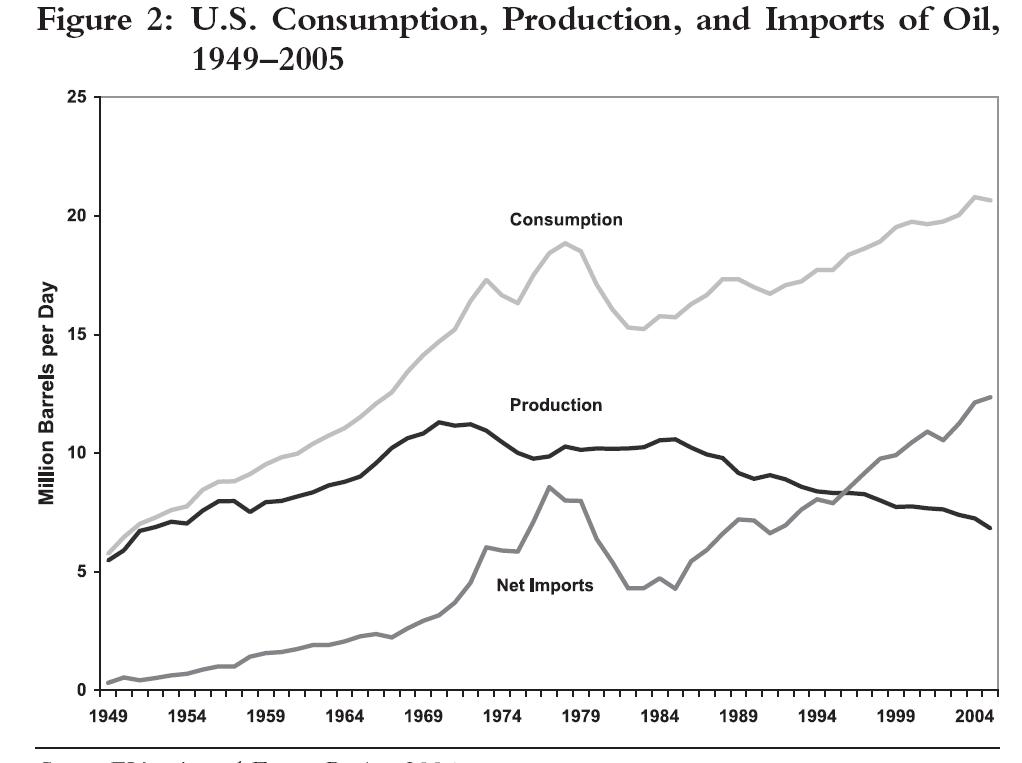
No one has summed it up better than Jon Stewart did last year: since Nixon, every U.S. president, Democrat and Republican, has bemoaned our dangerous addiction to foreign oil. And yet, U.S. oil imports have increased nearly constantly since 1949, with the exception of a drop in the late 70s and early 80s when the oil crises of the 70s forced Americans to get serious about conservation and efficiency. Now the U.S. imports more than 11 million barrels of oil each day. Almost two-thirds of our oil comes from imports, and half of that comes from unstable or unfriendly countries.

Source: Council on Foreign Relations


Today, President Obama reiterated his wish to cut oil imports by one-third in a decade. His proposed strategy:
  1. Finding and producing more oil within our borders.
  2. Reducing overall dependence with alternative fuels and efficiency.
Step 1 is what Republicans want to focus on (Drill Baby Drill!); Step 2 is what Democrats want to focus on. But even with such a bipartisan strategy, nothing is being done, just as nothing has been to seriously reduce our oil imports.

The reality is, exploring for and producing more oil at home is not a long term fix. The same arguments were brought up during the 2008 campaign when Sen. McCain and others called for expansion of domestic drilling, ostensibly as relief from high summer gasoline prices, and again by Obama last year when he announced his expanded offshore drilling proposal (less than a month before the BP spill). All this despite experts agreeing that new drilling wouldn't cut gasoline prices more than a few cents per gallon—decades later.

And a decrease in oil prices will only lead to an increase in gasoline consumption, which will create a need for more immediate oil resources, which will lead to an increase in oil imports—right back where we started. (Keep in mind that the U.S. has 2% of the world's oil reserves and consumes over 25% of the world's oil.)

What is really going to help us reach oil independence is Step 2.

Advances in alternative fuel vehicles, as well as electric, plug-in, and hybrid electric vehicles are important, and are slowly beginning to penetrate the market. Increasing fuel economy is important too, and the Obama Administration has taken some of the greatest strides in decades to increase the efficiency of American cars (to the chagrin of many Republicans).

But while more efficient cars will certainly decrease the amount of gasoline per mile traveled, they will probably not lead to the deep fuel savings that will be necessary to wean us off foreign oil. That may just need to come from conservation, in the form of less driving and more walking, biking, and public transit.

Jimmy Carter's famous conservation
talk. Source: treehugger.com

Obama hasn't mentioned conservation as part of his strategy for oil reduction, likely because it's not in the "American spirit" to have to sacrifice anything. It's political suicide to campaign for increased gas taxes—despite the myriad benefits—and the harsh criticism Jimmy Carter received for wearing a sweater in the Oval Office and asking Americans to start saving energy is still ringing in most politicians' ears.

In the 112th Congress, Obama has no hope to pass any legislation that will reduce American oil consumption. The only bills he will be able to sign will attempt to expand domestic oil production, a boon to oil companies, but far from a solution to our oil dependence (not to mention an increased risk for catastrophic impacts on the environment, the most grave example of which, after less than a year, many Americans already seem to have forgotten).

President Obama may find it an opportune time to repeat the calls for oil independence as unrest in the Middle East continues to spread and reportedly affect world oil prices. But for serious change to occur, serious measures will need to be taken, measures which the President will surely not be willing to take until at least 2013 (if he is reelected) and which the current Congress will never enact.

Tuesday, March 29, 2011

Obama Speech on Libya: Close, but No Cigar

By Matt Kane

Last night President Obama addressed the nation about the "kinetic military action" in Libya. In his half hour speech he hit on a few points that should have been made more than a week ago in the lead-up to war in Libya. As I discussed in yesterday's podcast, Obama had his work cut out for him thanks to the horrendous and confusing interview that Secretary of State Clinton and Defense Secretary Gates gave over the weekend on Meet the Press.

One thing that I really liked about the speech was that President Obama came right out and said that the United States led the mission in Libya. I was quite frustrated on Sunday when Clinton said that the United States would be joining the international community, as if the U.S. had not been leading the charge in Libya from the word "go."

One phrase kept popping up in the speech that went directly against what Defense Secretary Gates said on Sunday. Obama said that our "values and interests" are at stake in Libya. That simply is not true. Like Gates said on Sunday, Libya is not in America's vital interest. And talk of values will remain empty as long as Guantanamo is open and Bradley Manning continues to be mistreated. It is akin to Newt Gingrich talking about the sanctity of marriage.

Along the same lines, the whole "stain the conscious of the world" rhetoric is just as empty. If every humanitarian crisis necessitated Western intervention a lá Libya, we would see allied forces on nearly every continent. At the very least we would see a large Western force in places like the Sudans, Zimbabwe, Mexico and Belarus, to name a few. It simply is not realistic.

In all fairness, Obama did bring up other countries going through changes that have been met with violence by the ruling regimes. His answer to this? Libya happened at a very specific time with very specific interests (which, for the record, were not listed) and it differs greatly from other places like Yemen or Syria. Without specifics about what makes Libya different, we would have to take Obama's word that American/allied interests in Libya made it more pressing than other civilian tragedies in other Middle Eastern countries. At this point in his presidency, however, only a fool would take Obama at his word.

Finally, Obama hinted that American and allied involvement in Libya will last much longer than anticipated. Even if Qaddafi steps down, Obama said, Libya will need help and support to transition to a truly democratic nation responsive to its people. This open-ended commitment to democracy in Libya should make anyone who has followed the Iraq War very nervous. Obama praised what we have done in Iraq in terms of bringing them democracy, but in reality we still have about 47,000 troops there. He explicitly stated that regime change is not the goal in Libya, but he wants Qaddafi out. Pick a goal and stick to it, Mr. President. You cannot have it both ways.

Obama made a promise similar to the one he made during this year's State of the Union. He said, "Wherever people long to be free, they will find a friend in the United States." *Offer not applicable in Saudi Arabia, Iran, Yemen, Syria, Bahrain, China or any other country not meeting an unspecified rubric of the United States Department of Defense and Department of State. Unless those seeking freedom feel buoyed by Secretary Clinton's mumblings about restraint and peaceful dialogue while Libyan rebels get first-class Tomahawk missiles and air support, I do not know how valued American friendship will truly be.

Questions or comments? Leave them in the comment section or email The Second Age: admin(at)thesecondageblog.com.

Thursday, March 24, 2011

French Foreign Minister: Libya Ops Could Take "Days or Weeks"

By Matt Kane

I was reading the New York Times this morning for updates on the situation in Libya and yet again I was taken aback by what officials are saying (or not saying, really) about the coalition's plans in the North African country. While yesterday it was Robert Gates who was dominating the "What did he just say?" game, today it is Alain Juppe, the French Foreign Minister. He is quoted in the Times as saying
"The destruction of Qaddafi’s military capacity is a matter of days or weeks, certainly not months."
Days or weeks? Is that how the allies are operating? I pointed out yesterday that they were taking their time to meet in London to discuss the future of Libyan action, and it now seems clear why. When you ask someone for a timeline and they say, "Days of weeks," what they really mean is, "I have no idea."

Obviously Minister Juppe did not want people to think that the allies did not really know what was going on in terms of Libya, so he added that the military operations would not take months. This seems to be in contrast to what top advisor to French President Nicolas Sarkozy, Henri Guaino, said Monday. He was quoted saying that allied intervention in Libya would last "a while yet." Sounds more than "days or weeks" to me.

I don't think anyone can contest this statement anymore: The allies rushed into this military action against Libya with complete disregard to plans beyond the initial strikes. Juppe also told the Times that "You can’t expect us to achieve our objective in just five days." I don't think anyone did, except for the people calling the shots.

Photo - French Foreign Minister Alain Juppe (Wikipedia)

Monday, March 21, 2011

Obama Breaking Promises Regarding Libya

One of the most poignant—and very welcome—quote in President Obama's speech on Friday regarding the situation in Libya was,
It is not an action that we will pursue alone. Indeed, our British and French allies, and members of the Arab League, have already committed to take a leadership role in the enforcement of this resolution, just as they were instrumental in pursuing it.
A rational individual reading this quote would assume that this would mean that the United States would be taking a backseat role in the military action in Libya. Welcome news to war-weary Americans who have lived the past ten years with Afghanistan and the past eight with Iraq. As trillions and trillions of dollars leave America for wars on the other side of the world—despite talk of government shutdowns and budget crises—the statement that the U.S. would not be leading these strikes was good news in a bleak financial environment.

Obama repeated this promise on Saturday in Brazil, saying,
As a part of this effort, the United States will contribute our unique capabilities at the front end of the mission to protect Libyan civilians, and enable the enforcement of a no-fly zone that will be led by our international partners.
 So you can imagine my surprise at this headline: "U.S. to hand over Libyan operation to France or UK." Even worse, here was the lead paragraph:
US Defence Secretary Robert Gates today said that his country expects to hand over the leadership of the military operations against Libyan regime to a coalition likely to be headed by either the French, the British or NATO "in a matter of days".
Wait, what? After two assurances from President Obama that the United States would not lead the military operations against Libya we are actually looking to hand over said leadership? And we do not even know to whom?

So I decided to do a quick Google search of "us-led libya." Multiple outlets are referring to the strikes in Libya as "U.S.-led." The Atlantic says that Operation Odyssey Dawn could cost the allies between $400 million and $800 million. The outlet also uses the language of "U.S.-led" operations.

Obama also threw out the phrase "international community" nine times in the two speeches, trying to link the U.S.-led actions as being backed by the world. Unfortunately, this is not the entire truth. Russian Prime Minister Vladimir Putin went so far as to say that the operations reminded him "of a medieval call for a crusade." China tempered their negative response, saying that the actions violated international law and damaged the UN Charter. Both countries abstained from the UN vote authorizing military action in the North African country.

The Arab League, another group touted by Obama as being behind military action in Libya, has not been as supportive as the Obama administration has portrayed. The Secretary General of the League, Amr Moussa, called an emergency meeting to discuss the events. The New York Times characterized the Arab League's opinion of the air strikes as "extreme unhappiness."

Barack Obama talks a big game and has rarely backed it up when it comes to foreign policy. Guantanamo is still open, Bradley Manning is essentially being tortured while Obama's press secretary touts the administration's "transparency," and now the U.S. is leading military action in a country that is not a direct threat to the United States. To make matters worse, a French official has echoed the words of Libyan dictator Moammar Qaddafi, saying Monday that the operations in Libya could last "a while."

Obama's broken promises continue to pile up. The fact that he continually told the American people that the United States would not take a leading role in military action against Libya, while at the same time having the United States take the leading role in military action against Libya, shows just how empty his words have become. One promise that I hope Obama keeps is the one stating that American ground troops will not be deployed in Libya. Given his other promises regarding the country, however, I am not holding my breath.

Photo - Obama during his Libya remarks on Friday (Politico)

Friday, March 18, 2011

Could Libya Become Obama's Iraq?


Today, Barack Obama made a speech regarding the use of American military force in Libya to protect the civilians of the North African country, who have been subject to violent repression from Moammar Qaddafi and his loyalist forces. In it, the president promises some big-ticket items—namely the "protection of civilians in Libya." Listening to the speech I got some flashbacks to the lead-up to the Iraq War at the beginning of the millennium.

The parallels begin with the classic pre-war rhetoric of the "international community." In the case of Saddam, George W. Bush made the case that the Iraqi leader could not care less what the world thought of him and his actions, saying in his 2003 State of the Union Address: "Almost three months ago, the United Nations Security Council gave Saddam Hussein his final chance to disarm. He has shown instead his utter contempt for the United Nations, and for the opinion of the world."

Similarly, Obama today said about Moammar Qaddafi, "Ample warning was given that Qaddafi needed to stop his campaign of repression, or be held accountable.  The Arab League and the European Union joined us in calling for an end to violence. Once again, Qaddafi chose to ignore the will of his people and the international community."

Obama used another pre-war keyword: accountability. Today he said that, "Our focus has been clear: protecting innocent civilians within Libya, and holding the Qaddafi regime accountable." This is not the first time "accountability" has been one of the reasons used to urge military force against a dictator. On March 16, 2003 Dick Cheney told Tim Russert that "Now, with all due respect to the French, if you look back at their track record, they have consistently opposed efforts to hold Saddam Hussein accountable for his actions."

John Kerry used the accountability schtick back in 2004 when he was running for president, defending his vote to authorize use of force in Iraq on Meet the Press by telling Tim Russert, "I supported the notion that we must as a country hold Saddam Hussein accountable for what he was doing."

My question is this: why, all of a sudden, must we hold Qaddafi accountable? Why did we not hold him accountable following the Lockerbie bombing? Or when its perpetrator got a hero's welcome after being released by the British back in 2009? Are we really to believe that, up until the people of Libya tried to overthrow Qaddafi, the Western powers thought that he was a legitimate ruler incapable of these atrocities?

Additionally, the threat of military actions if UN resolutions are not met is nothing new. One of the main justifications for Iraq was Saddam Hussein's continual flouting of measures put upon his regime by the UN.  The key phrase here is "non-negotiable." Obama said, "Let me be clear, these terms are not negotiable." The terms he is referring to regard humanitarian aspects of life—from the cessation of attacks on civilians to everyday items like electricity and water.

Rewind to October 2002, when then-President Bush said the following in Cincinnati in a speech about Iraq: "America believes that all people are entitled to hope and human rights, to the non-negotiable demands of human dignity."

Obama's speech itself also had inherent contradictions. Ezra Klein at the Washington Post made an excellent point when he tweeted, "If Libya collapses into chaos and tribal warfare, how do we protect civilians but not send in ground troops?" If our goal—which Obama made very clear—is to protect Libyan civilians and we cannot do that via air power, what will the administration do? Re-neg on its promise to the Libyan people, or re-neg on its promise to the American people?

Klein made another great point in yet another tweet, talking about Obama's statement, "And we are not going to use force to go beyond a well-defined goal -- specifically, the protection of civilians in Libya." One major issue that American foreign policy has faced in the past decade is a lack of definition of important terms like "victory." George W. Bush's assertion of "Mission Accomplished" in Iraq simply underscores the point.

Beyond all of this, there is another issue that military action in Libya will create. With the precedent set of American military power entering North African/Middle Eastern countries that are not direct threats to American sovereignty, where will it end? Which countries will be "graced" with an American military presence and which will be left to their dictators' whims? Do the developments in Yemen and Bahrain warrant American military action? What makes Libya so special in our protection of its civilians?

While Obama may believe that American military action in Libya is good for the international community, it is important to remember that George W. Bush thought the same thing about invading Iraq. The justifications both have been highlighting—dangerous leaders shunning the international community, holding dictators accountable, non-negotiable human rights—are eerily similar. And before people say that Obama is very different from Bush, I would agree only when it comes to domestic matters. But when it comes to foreign policy—Guantanamo detainee treatment and Pakistani predator drones especially—to me they're quite similar. They share a Secretary of Defense, to boot.

I hope I am wrong, and there is plenty of things that can happen between now and a ground war in Libya. We are nowhere near the "point of no return." The justifications being used, however, for military action in Libya seem to mirror those used for military action in Iraq. Say what you want about Libya being different from Iraq; the problem is that I seem to have heard it all before.

Thursday, January 20, 2011

Amidst Success, Obama's Glaring Failure

As President Obama's approval numbers begin to climb, there is one glaring failure that has taken a back seat to the Giffords shooting and the symbolic vote to repeal "Obamacare" by the House. This failure is one that I have spoken about in the past, ruffling the feathers of many progressives who seem to choose to point to Obama's successes–a watered-down health care bill, a months-too-long repeal of DADT–rather than point out where he can improve.

This failure, of course, is Guantanamo Bay, the blemish of which America seems unable (or worse, unwilling) to rid itself. While Obama promised that Gitmo would be closed within a year of taking office, and signed an executive order to that end, it remains open and fully functional.

If this is not bad enough, Obama has now fully reversed his decision to close Guantanamo by embracing a Bush-era policy of holding military tribunals on the navy base in Cuba. A policy that Obama heavily criticized while running for office in 2008. Back then, he said, "These trials are too important to be held in a flawed military commission system that has failed to convict anyone of a terrorist act since the 9/11 attacks and that has been embroiled in legal challenges." Now he seems more than willing to participate in a process that, by his own words, is a failure.

Sadly, this is not the most disheartening part of all of this. It is the justification used by Republicans that ought to make people hang their head in shame:
While Mr. Ghailani faces between 20 years and life in prison, many Republicans have pointed to his acquittal on 284 related charges — and a judge’s decision to exclude an important witness because investigators learned about the man during Mr. Ghailani’s C.I.A. interrogation — to argue that prosecuting terrorism cases in federal court is too risky.
So the fact that a judge was following the law and not allowing torture-based evidence (the treatment of one detainee who will face a tribunal was so bad that video of it was destroyed by the CIA) means that trying individuals in federal court is too "risky"? This sets a very, very disturbing precedent and the fact that Obama, a lawyer, is going along with it makes it all the more scarier.

And just when you thought it couldn't get worse, it does. On top of all of this, the Obama administration is attempting to rewrite history. The bombing of the USS Cole back in October of 2000 was handled as a peacetime terrorist attack. Because of this, a military tribunal would be an inappropriate venue to charge a suspect because it did not take place during hostilities against al Qaeda, which began after September 11, 2001. What the Obama administration wants to argue is that, according to the New York Times, "a state of armed conflict had legally existed since 1996, when Osama bin Laden declared war against the United States." That would extend the "War on Terrorism" into the first term of Bill Clinton, essentially rewriting history.

To sum up what Obama wants to do: work within a system he's already declared a failure, bow to Republicans who feel following Constitutional principles when trying our enemies is "too risky," and rewrite history to justify all of this. For all of the protests and crying out about George W. Bush's extralegal track record, where is the same outrage for Obama's?

Photo - Gitmo (The Guantanamo Lawyers)

Wednesday, December 22, 2010

Don't Ask, Don't Tell Repealed. Kind of.

Well, it's about time. The discriminatory practice of barring open gays from the armed forces has ended. Except that it really hasn't.

Obama signed a bill that stipulated that DADT will be officially repealed 60 days after a written certification, signed by the President, the Secretary of Defense and the Chairman of the Joint Chiefs of Staff, is produced. Additionally, the Department of Defense has to ensure that "the implementation of necessary policies and regulations pursuant to the discretion provided by the amendments made by subsection (f) is consistent with the standards of military readiness, military effectiveness, unit cohesion, and recruiting and retention of the Armed Forces."

While this may simply be my cynical side talking, this sounds a lot like the "all deliberate speed" clause in Brown v. Board; in other words, a loophole that can be utilized by those opposed to ending DADT. Given that Obama is against gay marriage and had his administration previously fight DADT repeal, I'm not really expecting him to really fight for DADT's demise. Secretary of Defense Gates, for his part, refuses to even make a vague estimate. Obama told the Advocate that it would be a matter of months, not years, but all we need to do is ask a Guantanamo detainee how Obama's timelines tend to work out (hint: they don't).

So while everyone seems to be patting themselves on the back for a job well done, the reality of the situation is that only a framework to get the job done has been created. It's like breaking open a bottle of champagne to commemorate your new house once you build the frame; there's still a bit to be done. Obama may be saying, "We are not a nation that says 'don't ask, don't tell," but, at least for the time being, that is simply not true.

Photo from Flickr via Third Way.

Wednesday, December 1, 2010

Hey Obama, Make a Decision and Stick to It

I wrote in the Huffington Post a few weeks ago about the Democrats' uncanny ability to never, ever, be on the same page with each other. If some Democrats want single-payer health care, a loud and vocal minority will pledge to fight "Obamacare." But none of this is more embodied in one single man than President Obama, who today has announced that he will enact a seven year ban on drilling in the eastern Gulf and the Atlantic coastline.

I don't disagree with this move; in fact I think it's absolutely the right thing to do. It shouldn't even be a question, especially considering that he was against it during his 2008 campaign. What irks me is the completely equivocal way that Obama reached this decision. Back in March Obama announced that he would be opening up the eastern portion of the Gulf as well as a sizable chunk of the Atlantic coastline for offshore drilling. Now he's not going to do that, opening himself up to (legitimate) criticism of flip-flopping.

The administration is saying that the Deepwater Horizon disaster was the main factor in the decision, but then why did it take months after the spill was even "contained" to announce this? Did he think that is sufficient time passed that we would forget what he had said in March? Was it even a question after the Deepwater Horizon debacle to allow this kind of drilling?

But that's just Obama. His Guantanamo failure and his wavering on health care are just two more examples of his inability to make a decision and simply stick to it. Look at "Don't Ask, Don't Tell." He has Justice fight a DADT repeal all the while saying that he supports the repeal of it. The argument for this dichotomous stance was that it is tradition for Justice to fight for Congressional legislation even if they believe it to be unconstitutional or against the president's wishes. So using traditional and illogical tactics to repeal a traditional and illogical measure. Because that makes sense.

So when I saw Obama's tweet this morning about DADT, I about lost it. In it he says, "Send a message to the Senate that you support the repeal of 'Don't Ask, Don't Tell': ." He is the president of the country and has had people under him fighting to keep DADT, yet he wants the American public to call their senators to let them know that they should repeal it. It's like planting land mines across a field and then wondering why people think it's so difficult to traverse it.

So, just to be clear, Obama was for an offshore drilling ban before he was against it and then for it again. He wants DADT repealed but will allow Justice to argue that it should not be repealed. George Bush was for Iraq and was never against it and that's why we're there. He is for waterboarding and was never against it and will probably never be prosecuted for it. In politics it doesn't matter who's right or wrong, as the previous administration made painfully obvious to this country. It matters who can get things done. So my advice to the president is this: when you make a decision, stick to it.

Photo - Do as I say, not as I do (Twitter)

Thursday, October 7, 2010

NRCC Takes Out a Loan Despite Republican Gripes About Spending Money You Don't Have

One of the main focal points of Republicans this midterm election season is the unbelievable burden of taxes that socialist liberals have hoisted upon the backs of hardworking Americans (their words, not mine). House Republicans have pledged to cut $100 billion from the federal budget next year should they gain control of the lower house of Congress. House Minority leader John Boehner has outlined what he would do to curb spending if Republicans gain the House majority and he is in charge.

Tuesday, September 28, 2010

Are the Democrats Trying to Lose in November?

I wrote last week on the Huffington Post about how the Tea Party has the potential to energize both the Republican base and the Democratic base this November. The movement is scary, not only from a xenophobic standpoint but also a policy one (or lack of policy), and the prospect of someone like Christine O'Donnell walking the halls of Congress just might be enough to get Democrats out to vote Democratic in an election cycle when, in all honesty, Democrats have not proven themselves worthy of our votes.

Wednesday, August 25, 2010

Is Iraq Ready to Handle Its Own Security Operations?

Today insurgents in Iraq mounted a two hour, 13 town assault as America begins its plans to draw down troops under 50,000 and will move from a combat operation to an "advise and assist" role in Iraqi security affairs. Unfortunately the attack today in Iraq, which killed at least 46 people (many police), underscores the ill-preparedness of Iraqi security forces to take over a very hostile situation created following the invasion of their country.

Obama is poised to announce the end of combat operations on August 31 in a major speech and I have this nightmare of it being Bush's "Mission Accomplished" all over again. Bush's speech aboard the USS Abraham Lincoln back in May of 2003 began like this:

Thursday, August 19, 2010

Obama's "Otherness" Somehow Still An Issue


Today the New York Times had an article about the increase in people who are unabashedly delusional. It cites, of all sources, the Globe, to point out that some people think that President Barack Obama was not born in the United States and he uses a fake social security card to pretend that he was. The sad part? People actually believe this kind of stuff. A Pew research study showed that the number of people who think that Obama is a Muslim has increased from 12% during the campaign to 18% today. Among conservative Republicans, 34% think that Obama prays to Allah.