

Showing posts with label transportation. Show all posts
Showing posts with label transportation. Show all posts
Wednesday, April 14, 2010
Republican Secretary Making Some of the Biggest Strides in Good Policy


Tuesday, March 30, 2010
A Lesson in Incompetence: The Metropolitan Transportation Authority
 Harking back on Nate's post from last week about transit cuts and their long-term unsustainability, I want to quickly point out the MTA here in New York and its woefully pathetic state. The drama of heightened subway fares and decreased service continues, as even more cuts are expected this year. What is frustrating is that the additional cuts are a result of state auditors miscalculating how much revenue the new payroll tax would bring in for the mismanaged agency.
To add insult to injury, Mayor Bloomberg had a message for subway riders. He said, "So save your anger for the next round [of cuts]. Just say thank you that it isn't any worse with this one." Translation: Despite your government and public agencies failing you, you should be thankful for us. Here's what Bloomberg is missing: when something costs extra, you expect to get something more from it. When you put the money up to buy a Mercedes, you expect to get certain perks that you would not find in a cheaper Honda. But what the MTA has done has taken that Honda, stripped it down (no A/C, no radio, etc.) and are making the people pay the Mercedes price. It is now more expensive to ride a service cut-laden subway system. And Bloomberg wants us to be thankful?
But it doesn't end with service cuts. A recent stabbing on the 2 train this past weekend has highlighted the gaping security holes in New York's subway system. CCTV cameras, a simple and effective safety measure employed by everyone from the highest federal offices to your local bodega, either are non-existent (as in the case of Christopher Street, where the assailants from this weekend's stabbing fled) or simply don't work (as is the case with almost half of the system's 4,313 security cameras). Why? Depends on who you ask, but there's plenty of blame being thrown around as the MTA is using its time and resources to sue Lockheed Martin, the winner of the $212 million contract to outfit the system with cameras, after the military contractor sued the authority. It's unclear if ongoing security work is continuing through the litigation (an email to the MTA has not been answered yet).
I don't expect the subway to run perfectly, nor do I expect it to be free of crime. I do expect that a raise in fares will correspond to one of two things: better service or, at the very least, the same service. To have fares raised, massive service cuts implemented, and then be told to be thankful it's not worse is insulting. Security-wise, subway systems are vulnerable in general, but to learn of New York's subway system's vulnerabilities specifically is worrisome. It just highlights the misguided priorities of the MTA, which is plagued with incompetence and mismanagement at nearly every level. They can't stand up to the unions, they can't run the system without massive problems, and they can't even get CCTV cameras installed properly. That's not a lot to be thankful for.
Photo - An overpriced piece of plastic (The Village Voice Blog)
Wednesday, March 24, 2010
Transit Cuts Are Bad Public Policy
 Recently, Washington, DC increased its Metro and bus fares by 10 cents per ride, and more drastic fare hikes (or cuts in service) are expected in July. The New York MTA board just voted on a package of severe cuts, eliminating entire subway lines and substantially slashing bus service. I understand that these cities are dealing with budget shortfalls to the tune of $189 million and $400 million, respectively, but these issues should be dealt with on the city level, not on the Metropolitan Authority level, since all the authorities can do are increase fares and decrease service.
Instead, these cities, and all other cities facing similar budget woes, should look at transportation not as a luxury but as a priority. Here are the problems with attacking public transportation when fiscal times are tough:
- Poor people will be disproportionately affected. Public transportation is usually an inelastic good for the poor, and increasing fares will only create greater economic burdens for them. Many cities have good subsidization programs for the poorest riders, but many people who cannot easily afford increased fares will have no choice but to absorb the increased costs.
- Ridership will decrease. People who are on the fence between using public transport because it's cheap and good for the planet but aren't enthralled with its crowdedness, slowness, and sometimes inconvenience will likely err on the side of personal vehicles to avoid increased prices and worse service. This will only further decrease revenue for the transit authorities, exacerbating budgetary problems. Similarly, those who may have been on the fence about switching to public transportation will now have less incentive to do so.
- Traffic congestion will increase. As more people eschew public transportation, more cars will be used, increasing traffic problems in cities.
- Pollution will increase. As personal vehicle ridership increases, so will greenhouse gases, criteria pollutants, and other emissions. In an era where cities and states have begun to understand the desperate need to address environmental problems, this would be a huge setback to good environmental policy. And this is to say nothing of the increased dependence on foreign oil.
I've already made the case for a gas tax. Assuming these transit cuts in service and hikes in price are temporary, why not instead increase the gasoline tax, also ostensibly temporarily? This would put more of the burden on wealthy people who can afford to drive to work, increase public transportation usage, increase transit authority revenue, decrease congestion, and decrease pollution. This seems like a win-win-win-win to me. The only disadvantage is pissing people off who drive cars. But when they are contributing to so many social, economic, and environmental problems by doing so, isn't it a sacrifice worth making? Raise gas prices the same amount you would raise transit rides.
Alternatively, increase tolls. This will have many of the same benefits as a gas tax, though in cities other than DC it will more specifically affect those entering the cities in question, as opposed to everyone in the state (gas taxes are implemented on a state level; however, DC has the authority to instate its own gas taxes).
I realize none of these measures is politically popular, and no one wants to make anyone pay more for something so vital as transportation. But when push comes to shove, it shouldn't be public transit users who suffer increased burdens. People should be incentivized to use more public transportation so that transit systems can grow stronger, gain people's trust, and become the widespread, efficient, fast, clean, dominant means of human movement that they should be.
Images: DC Metro (American Architecture)
Tuesday, May 26, 2009
The Case for a Gasoline Tax
 An op-ed by Eric Grunebaum in yesterday's Boston Globe eloquently outlines some of the most compelling arguments for a gasoline tax, specifically in Massachusetts. Unfortunately, such a tax has already been defeated twice this year in the Massachusetts legislature, and debate continues to roil over whether a gas tax or a hike in highway tolls would be more equitable.
Let me add one more argument to the article linked above. As urban sprawl becomes a bigger and bigger problem throughout the country (and the world), we need to be rethinking the way we develop, which is inextricably tied to the way we get around. Residents of western Massachusetts are bemoaning a gas tax, arguing that they will be unfairly impacted, as they will not be able to take advantage of the public transportation alternatives that easterners have at their disposal. However, maybe this sort of "inequity" is part of the solution to some of our biggest problems.
 I would contend (with no empirical data) that a vast majority of the people who live in western Massachusetts, and other such areas relatively far from urban centers, are not farmers. While farmers need to be far away from cities to make a living and contribute to society, most who live in rural areas do not need to. Now I'm not going to be exceptionally radical here and argue that no one should live outside of a 20 mile radius of a major city, but I will argue that as long as you are living far away from an area that has access to public transportation, you should still have to pay a higher fare for gasoline, along with those who do have access to an alternative.
I don't see this as a punishment for suburban and rural dwellers, but rather as an incentive to live near trains, buses, and subways, and therefore push society to build upwards rather than outwards, and smartly rather than regressively. At a forum of urban planners that I attended last week, one of the members of the panel called for a $0.50 per gallon gas tax, a political unreality to be sure, but one that would no doubt help to decrease the insatiable sprawl that has been creeping through our untouched lands for centuries.
 A Times article from a couple weeks ago discusses emerging suburbs that strive to eliminate the use of cars, a feat that seems daunting and perhaps impossible in today's fast-lane society. But towns like Vauban, Germany may just be the paradigms that we need to look to for a guide to modern planning and transportation strategies. And a gas tax, while not a singular solution, is a good place to start.
Images: Gas prices (good.is), exurban sprawl in Florida (Brittanica), Vauban, Germany (New York Times)
Thursday, December 4, 2008
Gas is Cheap Again. Drill Baby Drill can wait.
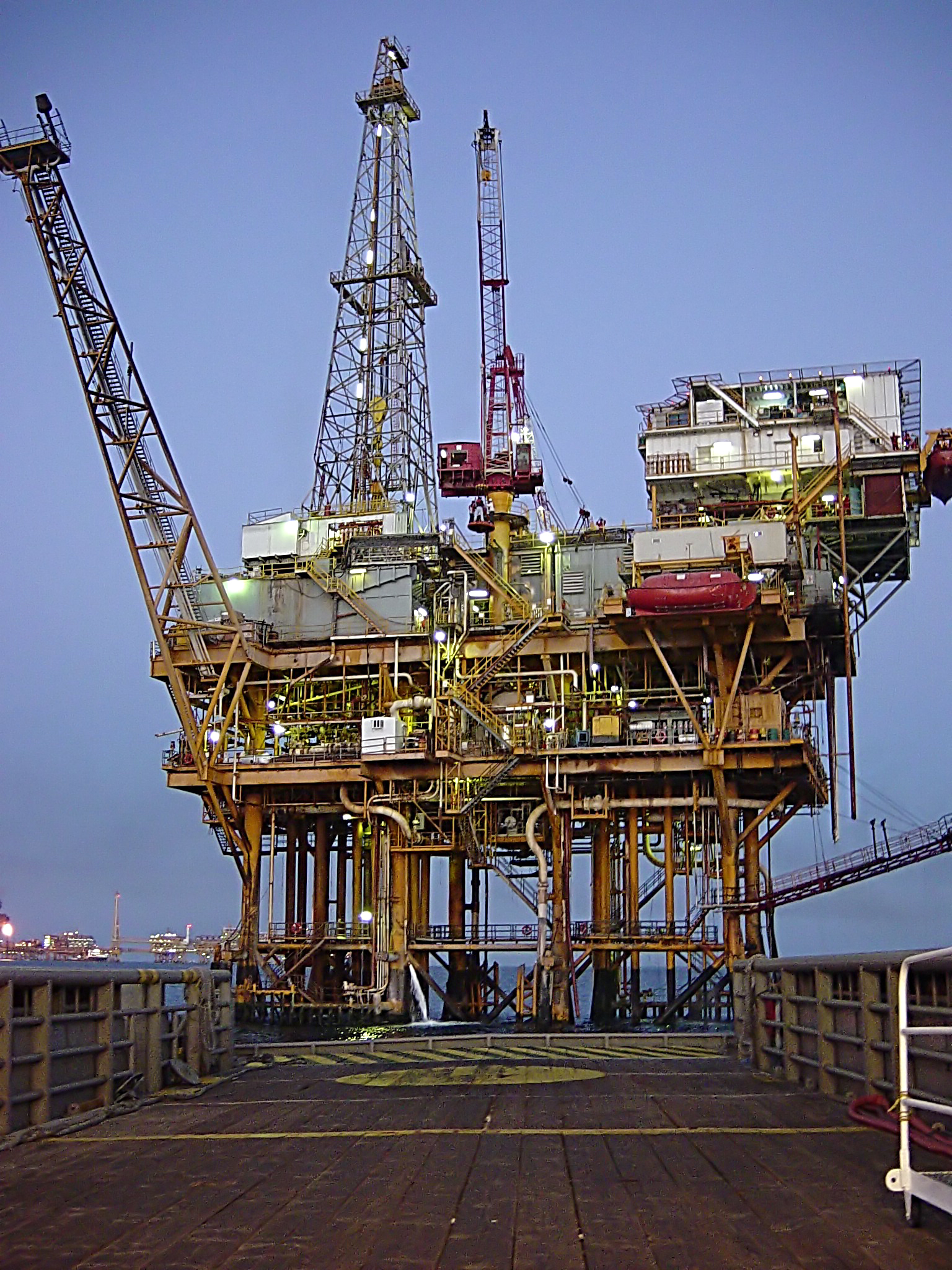 Now is the first time since the oil crisis of the 1970s that there has been so much bipartisan support for weaning the United States off foreign fuels, and reaching ever-appealing “energy independence.” Democrats tend to want to realize this goal by focusing primarily on conservation, efficiency, and alternative fuel sources. Most Republicans talk about all of these methods as well, but don’t think it will be enough. John McCain during the campaign, for instance, spent a great deal of time talking about the widespread need for more nuclear power plants, “clean-coal” plants, and stressed the importance of drilling for more oil within and around United States territory. Sometime in August, it seemed, the “Drill Baby Drill!” chants were starting to ring across the land.
 Thank goodness. There is a surefire solution to energy independence that doesn’t involve relinquishing our massive Ford Expeditions and Hummers. If we just open up new sites for oil extraction off our coasts, we will begin to offset our oil imports (which currently account for two-thirds of US consumption), while also saving money on our gas bills. …Right? Well, most “Drill Here, Drill Now” chanters during the election season seemed to be ignoring the economic analysts’ reports that asserted that we wouldn’t see gas prices drop—due to the new rigs—for several years.
Still, election seasons are election seasons. And the Democrats, delightful opportunists that they are, hopped on board the drill train, lifting an offshore drilling ban to prove to constituents that they too cared about gas prices. But wait! Now, thanks to the worst economic crisis since the Great Depression, gas prices are at their lowest points in years, and all those conservation measures that people were starting to carry out without government prodding—buying efficient cars, taking public transportation and biking, taking fewer unnecessary car rides—are gradually falling by the wayside. SUV sales are up once more. And it seems that all that talk about drilling is off the table—for now.
And then there’s the Big Three. You know, the car companies asking for $34 billion from the government (read: taxpayers). Wait, but why are Honda and Toyota not going bankrupt? Perhaps because instead of clinging exclusively to “all-American” big ol’ trucks and marketing them heavily, they invested at least a bit in more compact, efficient cars that have brought most auto business to them over the past year or so. And only now—as part of their rescue plan—do Ford and GM talk about investing seriously in plug-in hybrids, battery technology, and other efficiency measures.
 What should government do? Raise gas taxes now, while they’re so low. The Federal Government should even put a floor on gas prices so that people don’t go flocking back to the Hummer too. Invest revenues from gas taxes in public transportation, research and development, and alternative energy. It’s going to take a while to make the transition to alternative fuel vehicles, so let’s start with vehicles that use much less oil than those we have now, and then once cars are running mostly on electricity, make the switch so that the backup engine is running on cellulosic ethanol or fuel cells. Going forward, we need to stop thinking about drilling and start thinking about real, long-term, innovative solutions that will keep jobs within our borders, create new jobs, cut pollution, and actually wean us off foreign oil.
Photos: Oil rig (Wikipedia), Hummer (Hummerreports.com), Plug-in Prius (Autospectator.com)
Subscribe to:
Posts (Atom)