Showing posts with label new york times. Show all posts

Wednesday, May 16, 2012

Obama Doesn't Want You Breaking the Law, But Won't Tell You What It Is

Don't break the laws that I just made up and won't tell you about. (NYTimes)
While I was swiping through the New York Times on a recent train trip I clicked on an article about the feds looking into who leaked the details of a recently uncovered Al Qaeda plot to blow up a plane via their underwear. Titled "F.B.I. Chief Says Leak on Qaeda Plot is Being Investigated," the article went over the details and mentioned the Obama administration's willingness to go after those who leak classified information to the press. But the last three paragraphs, which seemingly had nothing to do with the article, were the most interesting. Given their stand-alone nature, I reproduce them below:
In another sign of the Obama administration’s increasing focus on Yemen, President Obama issued an executive order on Wednesday giving the Treasury Department authority to freeze the United States-based assets of anyone who seeks to “undermine” the American-backed political transition in Yemen. 
The order is unusual because unlike similar measures authorizing terrorist designations and sanctions, it does not include a list of names or organizations already determined to be in violation. Instead, administration officials said, it is designed to deter individuals who could threaten Yemen’s fragile security and political stability by undermining the transition agreement reached last November that paved the way for the departure of President Ali Abdullah Saleh and the election in February of a new president, Abdu Rabbu Mansour Hadi. 
“It is definitely meant today as a message to those who are trying to block a transition that we have this tool to use against them and that they should think again about the policies that they are pursuing,” the State Department spokeswoman, Victoria Nuland, said.
For all of Obama's talk of transparency, there seems to be little of it here. I'm sure there is a list of organizations or individuals with whom it would be illegal to conduct business with, but for whatever reason, Treasury and the executive branch do not want to release it. This is not that surprising, coming from an administration whose Attorney General does not believe that "due process" means "judicial process."

Why these details were deposited into the back of a New York Times article, instead of in an op-ed or in a wider expose of a baffling executive order escapes me. How can someone break the law if the authorities refuse to tell people what it is? Maybe we will just have to wait for someone to leak the details of blacklisted Yemeni names to find out who to avoid to stay within the letter of the law.

Monday, February 28, 2011

Libyan Oil: Supply, Demand and Speculation

I'm no economist, so let us get that out there in the beginning of this article. I took an intro to econ in college and got a solid average B+, so anything I say here should be taken with a grain or two of salt. That being said, I feel that I am pretty in tune with what is going on in the world. Which is why I was very surprised that the New York Times would print an article entitled, "Tremors From Libya Threaten to Rattle the Oil World" in their "News Analysis" section and leave out the very word that sums up the entire "oil world" as we know it today: speculation.

They lay out the facts of reality today, but in very soft terms. They mention that Libya is a small oil producer and that Saudi Arabia has agreed to increase production to fill the "void" left by Libya. To be more precise, Libya produces only 2% of the world's oil and, to reiterate, Saudi Arabia is more than willing and able to make up all of that. In other words, in the world of supply and demand, nothing changes. In fact, this news has allowed oil prices to drop during Monday trading.

So why the big stink about Libya? The higher the price of oil, the higher the profits of oil companies like Exxon Mobile, whose profit rose 53% in the fourth quarter of 2010. Additionally, the more Wall Street whines about oil supplies (that in reality are unchanged) the more things become a self-fulfilling prophecy. Take this paragraph from the Times article:
The price of oil had been rising steadily even before the wave of pro-democracy protests swept much of the Middle East and North Africa. A recovering global economy had convinced traders that demand for oil was going to rise by about 2 percent in 2011. Some industry experts and Wall Street seers were predicting a gradual march back to $120 and even $150. The thinking was that investors would pour money into the commodity markets.
So Wall Street had predicted–even before the North African pro-democracy revolutions–that the demand for oil would rise, which would lead to a rise in oil prices. But the main driver of the rise in oil prices? People "pouring money into the commodity markets." In other words, speculation. So a rise in prices thanks to higher demand (assuming OPEC did not increase production to meet this demand) would be exacerbated by people betting on oil futures. A psuedo-supply problem simply acts as a catalyst for this, allowing Wall Street can meet their predictions while everyone else pays nearly $4.00 a gallon.

So, as far as "new analysis" goes, this is pretty soft. There are some serious statements that are clear in the article, the best of which is, "But the events unfolding in the Arab world, the epicenter of global oil production, are a sobering reminder that trading in oil, that mother of all commodities, is at heart a political game." But too much credence is given to Libya's position as an oil producer which is really negligible in all of this. The main focus here ought to be speculation, but it is not. It is what Wall Street thinks about oil prices and where they are headed. If Wall Street says oil prices will rise enough times, they will rise, regardless of supply and demand. There is your "analysis."

The flag that Libyan protesters have adopted (Al Jazeera)

Friday, September 3, 2010

Ground Zero Mosque Debate Rolls On; People Cannot Separate Islam from Terrorism


Reading today's New York Times article on New Yorkers' take on the Cordoba House really disappointed me. A key aspect of this entire project that people are completely failing to grasp is the connection (or lack thereof) of everyday Islam to terrorism. The article quotes people delusional enough to start naming how many blocks away from Ground Zero would be appropriate for a mosque to be located.

Monday, August 30, 2010

Charles Rangel vs. Adam Clayton Powell IV: Mediocrity in New York's 15th District

On Sunday the New York Times profiled the main challenger to Representative Charles Rangel's re-election bid, Adam Clayton Powell IV. While the profile painted Powell in a less-than-stellar light, the real victim of the piece is the people of 15th Congressional District - Rangel's current constituency that runs from Columbia University in the south to the upper portions of Manhattan in the north and from the Hudson on the West to a small portion of Queens in the east - who will have to choose between two mediocre candidates to represent them in Congress for the next two years.

Thursday, August 19, 2010

Obama's "Otherness" Somehow Still An Issue


Today the New York Times had an article about the increase in people who are unabashedly delusional. It cites, of all sources, the Globe, to point out that some people think that President Barack Obama was not born in the United States and he uses a fake social security card to pretend that he was. The sad part? People actually believe this kind of stuff. A Pew research study showed that the number of people who think that Obama is a Muslim has increased from 12% during the campaign to 18% today. Among conservative Republicans, 34% think that Obama prays to Allah.

Monday, August 16, 2010

Obama Administration Repeating Mistakes of 1980s Afghanistan Conflict

Yesterday's New York Times had an article entitled alluding to a "shadow war" being fought by the U.S. in Yemen and northern Africa. As I read the article my mind was having flashbacks to literature about the Soviet-Afghan War and our involvement in that conflict. In the 1980s we wanted to fight the Soviets without actually fighting them: we paid others (mujahedeen) to do the work and ran covert operations through the CIA to accomplish our goal of bringing down the Soviets. It worked, but the resulting consequences 20 years later were devastating.

The details of what the American government is doing in places like Yemen are disappointing to anyone hoping that this country would avoid, at nearly all costs, another Soviet-Afghan War situation. To begin with, the CIA is becoming more militant and the Pentagon is focusing more on covert operations dictated by secret Executive Orders. Combine this with that fact that the government is using military contractors in "territory hostile to the military" (which, I have to imagine, is pretty substantive in the Middle East) and the utter erosion of oversight is disturbing. Look at the death of Marib Province's deputy governor in an American strike intended for Al Qaeda: Yemen's president, Ali Abdullah Saleh took the blame. There is simply little to no accountability for these "covert ops."

Monday, July 26, 2010

WikiLeaks Documents Shed More Light on Afghanistan War

The revelation of newly released classified documents from WikiLeaks about the Afghanistan War has prompted the New York Times headline, "View is Bleaker Than Official Portrayal of War in Afghanistan." This is true, but the real question I want to pose is this: how many people have been taking the official portrayal of the war in Afghanistan at face value? After being boondoggled by the previous administration into invading Iraq and being falsely promised by the current administration to have Guantanamo Bay closed by 2010 I would be shocked if people who read the WikiLeaks documents are, well, shocked.

What are some of the "earth shattering" revelations? The report outlines the corruption and outright collaboration of Pakistan's Inter-Services Intelligence (the equivalent of America's CIA) with Taliban/Al-Qaeda/Haqqani forces in the border region of Pakistan and Afghanistan. We knew that the border between Pakistan and Afghanistan was a mess and that "Islamabad has no tangible control over the area." What we did not know (though certainly could have ascertained given the agency's history) is that the reason Islamabad has no control over the region is that they do not try, and they may even be making the situation worse rather than better.

Monday, January 26, 2009

Kristol Monday: The Last One

It's a bittersweet day for me, as I just found out that Bill Kristol has written his final column for the New York Times. It's sweet in that the country will not be exposed to his illogical arguments and one-sided "conservatives are always right" attitude, but also bitter because who will I trash on Mondays now? In order to give him the proper send-off, I'm going to rip his final column a new one.

To begin with, Kristol states that January 20, 2009 marked the "end of a conservative era." He cited Gingrich as the carrier of the torch for this "era" during the Clinton years, negating 8 years of a liberal president with a family-values conservative who cheated on his second wife while at the same time spearheading the impeachment of Bill Clinton for cheating on his (talk about sticking to your principles!). But if Gingrich is a continuance of Bush I and keeps the '90s conservative in Kristol's view, does Tip O'Neil get any recognition as a continuance of Carter and having a liberal effect in the '80s (with extra points for not being an adulterer)?

But there are more Kristol gems: "Over the next three decades, it was modern conservatism, led at the crucial moment by Ronald Reagan, that assumed the task of defending liberty with strength and confidence." Are we forgetting the Soviet-Afghan War and the rise of the Taliban and bin Laden with CIA money? Are we forgetting the Contras in Nicaragua and the money from Iranian arms sales (and as we know, Kristol hates Iran)? Or how Reagan increased government spending, yet is a hero to conservatives? Come on.

Then Kristol pulls the "if you disagree with me (i.e. "conservatism") then you are un-American" when he says: "Obama’s speech was unabashedly pro-American and implicitly conservative." So being pro-American is implying that one is really being conservative? One cannot love his or her country without subscribing to the Republican viewpoint? If I say we should not have sacrificed over 4,000 American servicemen and women in Iraq for a war based on false pretenses, does that make me un-American? If I say we should follow the Constitution - the very basis of this great nation - by not torturing or holding people in prisons without the right to a trial does that make me un-American? I thought we were done with this passive agressive name-calling, but leave it to Kristol to bring us right back down to the gutter.


So long, Bill Kristol. I wish we could say we hardley knew ye, but you made sure we heard you. While you may make outlandish statements like "Conservatives of the Reagan-Bush-Gingrich-Bush years have a fair amount to be proud of," without using any evidence to back it up, in your head you're always right and anyone else who says otherwise is just a liberal. Now that McCain lost to Obama and your post as Republican Party cheerleader will do little to help your stature as being part of the ruling party, you can act like the sore loser at the playground, take your ball and go home. Peace.

Photo - Bill Kristol (New York Times)

Monday, December 22, 2008

Kristol Defends Cheney by Blasting Blagojevich

I'm thinking of devoting every Monday to pointing out why Bill Kristol should not have a column at the New York Times. This Monday he defends Dick Cheney's legacy while comparing Cheney to Rod Blagojevich of Illinois. Now it's natural that Kristol would defend Cheney (who has about 60% disapproval ratings), because Kristol is chairman of the Project for the New American Century, which Dick Cheney helped found (with the help of such respectable people as Paul Wolfowitz and Scooter Libby). Why bring Rod Blagojevich into all of this? Well, as Kristol explains, he is "the nation's most unpopular Democrat."

Let's break Kristol's defense of Cheney down point by point. We all know about Cheney's infamous "go fuck yourself" comment to Senator Patrick Leahy of Vermont when Leahy tried to make an issue of Cheney's connection to Halliburton, the company picked to essentially rebuild Iraq when the government is done with it. According to Kristol, Cheney's remark "shows a well-considered sense of justice," because four years after Cheney uttered it, he defended his statement by saying that he though Senator Leahy deserved it. That's a "well-considered sense of justice"? Usually when someone tells you to go fuck yourself, they're just caught up in the heat of the moment and get so frustrated that they start uttering profanities. But to Kristol (who wholeheartedly championed for the Iraq War, so maybe his sense of what is "well-considered" is a bit askew), this is a valid response to a fight that, by accounts, it seems that Cheney himself started.

Kristol turns to "defending" Blagojevich after admitting that he had been defending Cheney. But his defense of Blagojevich is really a mocking of the scumbag (not that it is not deserved). But here is the problem: Kristol uses Blagojevich's shortcomings as a backdrop as to why Cheney is not that bad. That's like comparing a rotten apple and a rotten orange and trying to convince you to eat one over the other. Why not state facts as they are? They're both rotten.

Cheney has a long history of seedy business. In 1975 he brainstormed ways to curb the freedom of the press. After Seymour Hersh published a front-page article in the New York Times about covert Navy missions tapping into Soviet communications, Cheney came up with various ways to discourage similar future publications (clearly Cheney had not read New York Times Co. v. United States). But '75 is just the beginning. How can we forget Scooter Libby? I don't have time to get into everything, but suffice it to say that Cheney's history in public service is dubious (and highly secretive).

But the most damning of all Cheney indictments is his lust to go to war with Iraq. We all know how he claimed that there were ties between Saddam and Bin Laden (later proved false), and we all know that he was a leading cheerleader in the months leading up to Iraq (particularly his September 8, 2002 appearance on Meet the Press). Kristol was also a cheerleader for war in Iraq, saying in September 2002 that war in Iraq "could have terrifically good effects throughout the Middle East." He's made other highly erroneous statements about what to expect in Iraq. Why should this surprise us, though? Kristol has shared the same lust for a war in Iraq as Dick Cheney did. Hell, Kristol was calling for military action in Iraq back in 1998.

Yet people like Kristol and Cheney continue to defend themselves instead of admitting a mistake. Kristol attacks the left, and Obama specifically, for not believing in the surge, when the few people who opposed the war in the first place (Obama included) came from the left. It's back to the snake-bite analogy. Cheney has gone so far as to say that he would do Iraq over again back in 2006:


In summation, Kristol's roundabout way of defending Cheney is ridiculous. He talks about two political donkeys in his column, but sees the need to defend one and saracastically blast the other. Call a spade a spade, Mr. Kristol. There's a reason that Cheney and Blagojevich are so unpopular. Dick Cheney's legacy will be that of an architect of Vietnam Part II, a power-hungry, highly secretive Vice President who got away with a lot because he knew how to pull the levers of power in Washington. Peace.

Photos - Bill Kristol (New York Times), Bush and Cheney (CTV)

Monday, December 1, 2008

Bill Kristol: All You Need is Patriotism

In today's New York Times, Bill Kristol lays out his plan to fight terrorism. Kristol says that while wishy-washy liberals like the invoke things like "the law" and American values like habeas corpus, the people who really know what they are talking about know that the most important tool to fight terrorism is simple: patriotism. But once again, Kristol twists and bends the truth to have things his way; much of what he has to say has been undermined by America's lying about the War in Iraq and other factual misstatements.

To begin with, Kristol falls into the trap set by these psuedo-Muslims for all those who know nothing about Islam. Instead of framing the debate in political terms, Kristol continues to use the "Islamic extremist" moniker for the attackers. The attackers are not Muslim in the traditional sense of the word - jihad is not a global war against non-believers, it is an inner-struggle for understanding of oneself and Allah. Waging a war on non-believers in the name of Islam would be like saying you are marrying gay couples in the name of Catholicism. Secondly, it would make no sense for Muslims to attack citizens of the United States - a country inhabited by numerous Christians - and Israel - a Jewish country - when these two religions are considered to be People of the Book and because they are Abrahamic, they are not seen as enemies but friends according to the Qur'an.

Secondly, Kristol makes an allusion to the fact that the United States should stand with India against our common enemies. I agree with this, but the attackers in this case seem to be more focused on India and its involvement in the Kashmir than with the U.S. Reports have come out that U.S. and British nationals may have been targeted, and if this is true then the U.S. and the other states whose citizens were targeted should assist in the investigation. What is also important to remember is that Lashkar-e-Taiba got a lot of their training from Pakistan's intelligence agency, ISI, and were only banned in Pakistan when American ally Pervez Musharraf felt pressured by Bush and Co. The ISI, of course, was heavily funded and trained by the United States, who brought it out of extinction during General Zia ul-Haq's reign and the Soviet-Afghan War, yet we continue to blame it for problems like the Mumbai attacks or lack of law enforcement in the FATA region. That's like raising a kid until he's 10, unexpectedly leaving, and then wondering why he has attachment issues.

Finally, Kristol believes that the answer to the "barbarism" of terrorist organizations is patriotism. He may be right, but he still needs to define patriotism. Let's not forget that following 9/11, if you questioned the move to go into Iraq from Afghanistan, you were labeled unpatriotic (when in reality you would have saved your country $10 billion a month and global diplomatic embarrassment). Patriotism is indeed a virtue, but one defined in many ways. We cannot allow one portion of this country to railroad us into a singular, concrete definition of patriotism as we did leading up to Iraq. A love of one's country comes in many forms, not just blind loyalty to the ruling party of the time because of reactionary forces. I think patriotism is best summed up in Adlai Stevenson's timeless quote, "What do we mean by patriotism in the context of our times? I venture to suggest that what we mean is a sense of national responsibility ... a patriotism which is not short, frenzied outbursts of emotion, but the tranquil and steady dedication of a lifetime." Peace.

Photos - Bill Kristol (Fox News), Armed security forces outside of the Taj Mahal Hotel in India (CBC News), The Taj Mahal Hotel (Wikipedia)

Wednesday, November 19, 2008

Romney to Big Three: Drop Dead

If you read the opinion page of the New York Times today, you would have noticed a curious thing in the Op-Ed contributor section. Mitt Romney - yes, the golden child of Michigan - arguing to let Detroit go bankrupt. While his piece was insightful and I agreed with a lot of what he said (as it was in similar vein to my ditty about Detroit on Monday), the problem with Mitt is best summed up by a friend of mine: "He has no backbone and will say anything to placate the people in front of him." This is true given his campaign speeches in Detroit back in January.

Specifically, the speech he gave in front of the Detroit Economic Club on January 14, 2008 during his failed campaign for the Republican nomination. In his speech, he lamented over the fact that Washington saw what was happening in Detroit and in Michigan as a whole, and rhetorically asked, "And the question is, what has Washington done with this looming, not looming, this existing crisis, this recession, what has Washington done to help? The answer is not very much at all." He goes on to say that "A lot of Washington politicians are aware of the pain, but they haven't done anything about it. And of course, I hear people from time to time say, 'Well, that's Michigan's problem.' Or, they say something like, 'Well, it's the car companies. They just brought it on themselves. But that's where they're wrong."

Romney also went out of his way to criticize John McCain who told Michigan voters in his characteristic straight talk that was missing from the general election, "Some of the jobs that have left the state of Michigan are not coming back. They are not. And I am sorry to tell you that." Romney attacked McCain in the South Carolina debate and said that he disagreed with McCain's assertion and that he was "not willing to accept defeat like that." He also asked "Where is Washington?" while campaigning in front of a GM plant during the primaries.

So all of this rhetoric about Washington saving Detroit and the Big Three, with all those jobs lost in Michigan coming back in Romney's view, and the Washington politicians ignoring the problem because they think the car companies brought it on themselves was Romney's tone in January. November? Romney is a new man, calling for Washington to ignore the pleas of the Big Three and allow the companies to go bankrupt.

But why? Why the sudden turnaround? He says that the labor agreements are a burden on the American manufacturers and benefits like retirement should be reduced. Secondly, he says that the management of the companies must go. That must be because the management brought this disaster upon themselves. Romney also calls for investment in fuel saving designs - despite criticizing an energy bill signed by Bush increasing the measely MPG requirements for cars and trucks in the US. Romney says that a "managed bankruptcy" might be the only path to save these companies as it would allow them to do a multitude of things, one of which is to "shed excess labor." So I guess those jobs that Romney promised Michigan that would be coming back to their state are really just excess labor that need shedding.

So it appears that Romney may just say anything to placate those in front of him and that my friend is right. Obviously Mitt wants to stay in the spotlight because campaigning for 2012 should be starting any day now, but writing Op-Eds in the New York Times that completely go against what you said earlier this year is not a good way to start. The populism streak amongst Republicans is a fad right now, because it helped McCain garner some votes in the election, but it just does not suit most of them. So the question Mitt needs to start asking himself is not "Where is Washington?" but "Have I no shame?" Peace.

Photos - Mitt Romney (Wikipedia), Car executives begging for money in Washington (BBC), Romney at the GM exhibit at the Detroit Auto Show the same day he gave a speech in front of the Detroit Economic Club (Daylife)

Monday, October 6, 2008

Ayers Connection Non-Existent: Now It's Back to Wright

If anyone was unfortunate enough to read the ever-wrong Bill Kristol today in his New York Times column, you probably were left scratching your head saying to yourself, "Is this how inexplicably desperate the McCain campaign is?" You see Kristol, who is a foreign policy advisor to the McCain campaign, has brought the Reverend Jeremiah Wright back from the dead in the last month of the campaign.

In his unsubstantive interview with Sarah Palin, Kristol says that when Palin mentioned Ayers, he countered with the assertion that Jeremiah Wright has a closer relationship to the Democratic nominee for president than the former self-proclaimed terrorist. Palin, taking the obvious hint from Kristol and pouncing on it, said the following: "To tell you the truth, Bill, I don't know why that association isn't discussed more, because those were appalling things that the pastor had said about our great country, and to have sat in the pews for 20 years and listened to that...to me, that does say something about character. But, you know, I guess that would be a John McCain call on whether he wants to bring that up." Kristol follows with the line, "And I guess we'll soon know McCain's call on whether he wants to bring Wright up - perhaps at his debate with Obama Tuesday night." It appears that neither Palin nor Kristol realizes that McCain has already put the issue to bed.

Back in March, McCain essentially put the kabash on the issue in an interview with George Stephonanopoulos' best friend Sean Hannity when McCain said - after some insistent baiting by Hannity - "I do know Senator Obama, he does not share those views."

So while McCain said eight months ago that the Reverend Wright issue was essentially irrelevant, the campaign's major mouthpiece at the New York Times and the campaign's vice-presidential candidate are bringing it back up in a desperate attempt to drag down Obama. Given the fact that Palin is not really allowed to give input on important decisions - such as the McCain campaign pulling out of Michigan - I would not expect her to realize that the decision regarding Wright had been made months earlier.

Of course, we should all take anything that Kristol says about Wright with a large grain of salt. He is the same man who, in March of this year, stated that Obama was in the pews on the day of Wright's infamous "God damn America" sermon. A little fact-checking was done and Kristol was forced to apologize when it was proven that Obama was not at the church that day. Kristol's writing should always be suspect - he is a bit of a snake when it comes to honesty - but when talking about matters concerning Jeremiah Wright, everything should be, in Santa's manner, checked twice.

Naturally, Bill's column had other issues with it. While pointing out that Palin regretted allowing herself to be handled more than a competitor in the Westminster Dog Show (and before anyone twists my words I am not calling Mrs. Palin a dog), he pointed out how when he asked her if she would challenge Biden to another debate he believed he heard a lot of staffers in the background before Palin gave her answer (though this could just be speaking to Palin's habit of not knowing what is going on in the world around her). He also said that he would volunteer to moderate a debate between the two vice-presidential nominees. Clearly this would be a conflict of interest considering Kristol serves on McCain's campaign (although, to give Kristol a break here, it could have been a tongue-in-cheek comment). But his last line in the column - Hockey Mom knows best - is just ridiculous. Watch the Katie Couric interviews, Bill, and try to repeat that line with a straight face.

I've said it before and I will say it again: why is Bill Kristol given a spot at the New York Times? Are the Times that desperate for a conservative writer that they hire Bill Kristol? After his insistence on Iraq and its projected aftermath was shown to be completely - not even just a little bit, but completely - wrong, why is he a major part of the national conversation? Let him take his spot at Fox News and tell those not concerned with the facts what they want to hear. If Kristol wants to try to argue the issues, that's fine and possibly worthy of a weekly column for him. But if he wants to use his column as a mouthpiece for the McCain campaign by focusing on things like Bill Ayers and Jeremiah Wright when real issues like the economy and foriegn policy are what need to be discussed, let him go serve out his journalistic career as a Fox News hack. Peace.

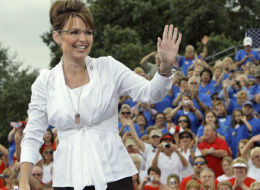
Photos - Palin at a rally in Florida (Huffington Post)

Monday, August 11, 2008

Bill Kristol Highlights the Plight of Georgians Years After Leading Charge Against Iraq

Bill Kristol never ceases to amaze. After being fatally wrong on the Iraq War, he lands a job at Time and then at the New York Times to continue opining on important world matters. He continues to be in denial about Iraq (even saying this week that in Iraq we are "on the verge" of a "strategic victory" over "jihadists"). Without going into what a "strategic victory" versus a "real victory" would be, or the fact that jihad in Islam is an internal struggle and one killing others cannot really be a jihadist because one's own internal jihad is essentially a lifelong struggle, suffice it to say that Kristol's article points the mirror outward to Eastern Europe when it should be turning it inward, toward the United States.

Before we forget, however, we need a refresher as to who Bill Kristol is: he is a McCain foreign policy advisor (the Times continues to omit this glaring fact in any of the man's op-eds), he believes that Iraqi Sunni and Shia Muslims get along fine, and that the Iraq War aftermath would need only a few thousand troops and $16 billion a year (in reality, it currently has 150,000 troops and costs the American taxpayer $12 billion a month). Taking all of this into account, let's go into what Kristol said.

Kristol laments the fact that Georgians suffered greatly under the Soviets for about 70 years during the 20th century. He states that while the League of Nations tried to exert "moral influence" on the Soviets to leave Georgia alone, everyone knew the Kremlin was so cold and evil that they would not listen to an assembled and established group of democracies. Yet the United States itself, in the lead-up to the Iraq War, defied conventional wisdom (and the United Nations) and invaded anyway with the help of the British. While it is true that U.N. Resolution 1441 states that "the Council has repeatedly warned Iraq that it will face serious consequences as a result of its continued violations of its obligations," a second resolution regarding the invasion of Iraq that was pushed by Britain, the U.S., Spain, and Bulgaria never reached the floor because its authors knew that it would not pass the Security Council. In other words, as a whole the United Nations, an assembled and established group of democracies, was against the War in Iraq prior to the invasion.

In addition to this, Kofi Annan, the U. N. Secretary General at the time of the invasion, has since stated that in the eyes of the U. N. and its Charter, the invasion of Iraq was illegal. (Nota Bene: Kofi Annan is a bit dubious himself between the Lubbers sexual harassment ordeal and the Oil-for-Food scandal). However, the Charter itself is over half a century old and Annan is right when he states that the U.S.'s actions in Iraq in March of 2003 were, in fact, illegal in the Charter's jurisdiction. This, of course, makes hawkish Kristol's assertion in Monday's Times that, "Today, the Vladimir Putins and Hu Jintaos and Mahmoud Ahmadinejads of the world — to say nothing of their junior counterparts in places like Sudan, Zimbabwe, Burma and North Korea — are no more likely than were Soviet leaders in 1924 to be swayed by 'moral influence.' Dictators aren’t moved by the claims of justice unarmed; aggressors aren’t intimidated by diplomacy absent the credible threat of force; fanatics aren’t deterred by the disapproval of men of moderation or refinement," all the more ironic. Using Kristol's own logic - of ignoring international opinion and instead invading a country based on fabricated intelligence - the United States is up there with Sudan, Zimbabwe and North Korea and all of those who pushed for war and got it (like Bush, Rove, Cheney, Rumsfeld, the rest of the neo-cons [which, of course, includes Kristol himself]) are "dictators," "aggressors," and "fanatics."

I find it very funny that Kristol continues to discuss foreign policy matters as if he is an authority on it. The fact that he still does not think Iraq was a bad idea and helped "mastermind" the damn thing shows how much he knows about foreign policy and diplomacy. One of the last people in the political "elite" of this country that we should be taking advice - never mind foreign policy advice - is from Bill Kristol. Peace.

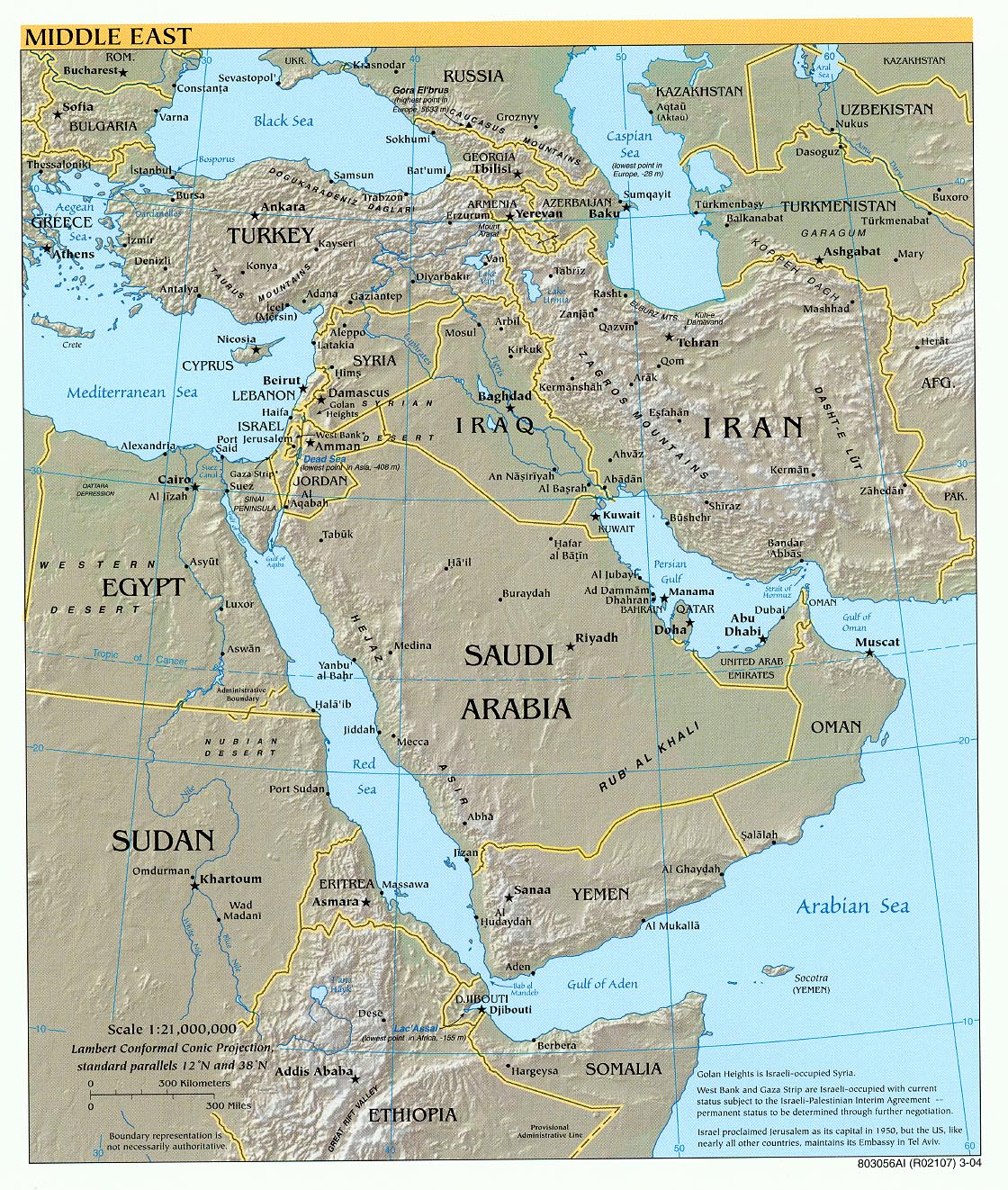
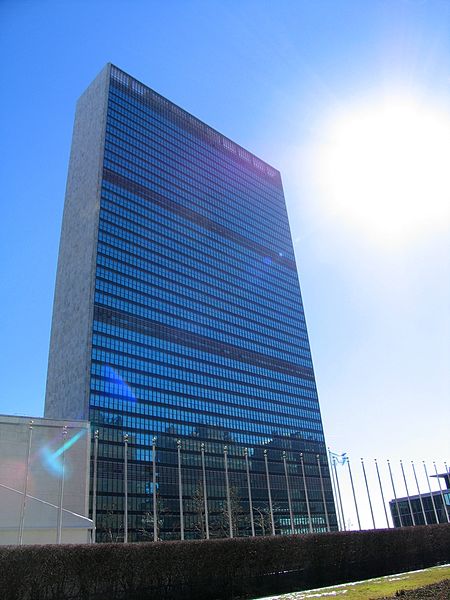
Photos - Bill Kristol (www.foxnews.com), A map of Georgia (www.lonelyplanet.com) , The U.N. building in New York (commons.wikimedia.org)

Tuesday, July 29, 2008

Neo-Cons See Obama Scare Tactics Not Working, Turn to Begging

I don't know how many people read Bill Kristol's recent column in the New York Times on July 28 entitled "Be Afraid. Please." I did, and I was scared. My fear was not directed toward Obama or the Democrats or anything like that. My fear emanated from the two main facts I found in the article: 1) Kristol is a foreign policy adviser to McCain's campaign and this was not mentioned anywhere in the online version of the column, and 2) Kristol has been consistently wrong for the past decade or so and he is still given a prestigious soapbox such as a New York Times column.

In terms of the first point, that the column does not mention Kristol's affiliation with the McCain campaign. This is troublesome because some readers may take Kristol's words as that of a spectator of the 2008 presidential election; a relatively objective observer in that only his personal beliefs seep into his columns and not his desire to gain a spot in Washington should a certain candidate win. Kristol's overwhelming bias towards McCain and his anti-Obama-ness seemed a bit much, so I looked him up and found out that he is on McCain's campaign team. Knowing that by reading it in the column (either before or after the column's text as a small disclaimer would have been more than enough) would have put the column in perspective.

Secondly, the fact that the Times gave him a column is pretty unbelievable. Kristol has proven himself to be one of the more inept of the neo-cons in today's political scene (and that is saying a lot). Kristol has been known to spout such wisdom as the fact that Iraqi Shia and Sunni Muslims do not get along too well as incorrect "pop sociology." It is also reported that in his book, Kristol said that the Iraq War would only need 75,000 troops in the immediate aftermath of the invasion and tha it would cost only $16 billion a year. The number of troops, according to Kristol, would go down to a few thousand after a year or two. One of the latest counts in a July 16, 2008 USA Today article places the total at 150,000 troops. So five years after the invasion, there are 50 times the amount of troops Kristol predicted would be needed after only 1-2 years (assuming that a "few" thousand means three thousand), and more soldiers have died in Iraq than Kristol predicted would be needed to police the entire country after the war. On top of all of this, Kristol's prediction for the annual cost of post-invasion Iraq ($16 billion) is only slightly larger than what we are actually spending per month ($12 billion). Instead of realizing that this guy has no idea what he's talking about, the Times gave him a column.

In his July 28 column, Kristol says that McCain stands up for winning America's wars, as opposed to Obama whose troop withdrawal Kristol sees as a loss. Personally, I would ask the over 4,000 families of the soldiers killed in Iraq how victorious the Bush Administration and the neo-cons (including Kristol) have been thus far. Their arrogant lack of respect for opposing opinions (or fact, for that matter) leading up to the invasion (opinions that turned out to be correct) forced this country and its brave, all-volunteer armed forces into a war that has unjustly claimed the lives of thousands of Americans and even more Iraqis. That, Mr. Kristol, is not what I call a victory.

Kristol also pulls out the age-old fear tactic in classic Republican-Democrat campaigns: taxes. He implies that if elected president, Obama would take more of people's hard-earned money. As opposed to the lenders and banks with their predatory loans and sketchy debt packages sold to investors (all while Washington looked the other way) or the oil companies who have made record profits as gas prices shoot up due to instability in the Middle East (where did that come from?) and Wall Street speculators. But all of a sudden it's Obama who is the boogeyman and will take your money away.

So on the one hand, one almost feels bad for Kristol. He is literally begging (he should have gone with a "pretty please with sugar on top" for his column title) people to be afraid of Obama. He wants another four years of neo-conservatism in Washington (otherwise, people may see his predictions and musings for what they are: wrong). McCain may complain that the Times wouldn't publish his editorial, but why complain when you have a mouthpiece like Bill Kristol writing every week in one of the more respected dailies in the country, if not the world? The only thing people should be afraid of is more Bill Kristol predictions. Peace.

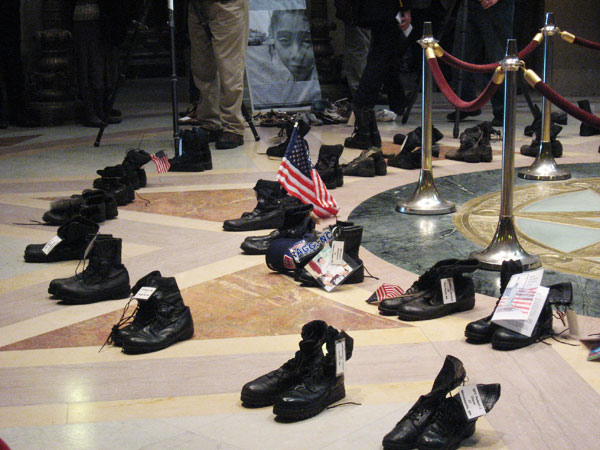
Photos - Bill Kristol (www.nytimes.com), Empty boots representing American fatalities in Iraq as part of an Iraq War exhibit (minnesota.publicradio.org), Kristol's boss (www.britannica.com)