Monday, December 29, 2008

Kristol Monday: Potshots at the Left, Backhanded Compliments for Obama

It seems that every Monday Bill Kristol's column in the New York Times just spews right-wing propaganda into the media atmosphere while dismissing liberals as "the intolerant left" and who, at the same time, belong to "finger-wagging nanny-state-nagging liberalism." Oh, Bill, does it ever end? Calling the left "intolerant" loses some of its value when one of the frontrunners to take over leadership of the RNC distributes a CD to RNC members with a track entitled "Barack the Magic Negro" and then defends it. But these potshots take away from Kristol's main point: Obama is having an inauguration soon and the fact that he picked Rick Warren for the invocation means that Kristol does not completely hate Obama.

As always, however, Kristol's column has some factual issues with it (or more just some common-sense issues). To begin with, for some reason he absolutely despises Maya Angeloum, but for an inane reason. Take this gem from his column: "I still remember watching Maya Angelou read 'On the Pulse of Morning' at Bill Clinton's inauguration in 1993 — and thinking that American culture really was in a state of irreversible decline, as she indulged in that multicultural cataloguing." It seems Kristol took offense when Angelou decided to list a variety of ethnicities and religions in her poem about America - you know, that great melting pot of diversity where people are different but all distinctly American? What does the Statue of Liberty say? "Give me your tired, your poor, / Your huddled masses yearning to breathe free, / The wretched refuse of your teeming shore. / Send these, the homeless, tempest-tost to me, / I lift my lamp beside the golden door!" Yet celebrating differences is an indication of a society whose culture is in "irreversible decline." And Kristol calls the left intolerant.

Then Kristol goes on to praise Abraham Lincoln, saying that his "actions exemplified the prudent and skillful pursuit of a principled end." Do not get me wrong; Lincoln was a great president and one of the main reasons that the Union remained a union at all, but to say that his Emancipation Proclamation and his fight to end slavery was based on principle - and not politics - is a bit misguided. First, his Proclamation freed slaves in the southern states during the Civil War, essentially doing nothing because he had no control over it. That would be like a president today saying that all political prisoners around the world are now free - a nice gesture, but there's no way to enforce it. Secondly, Lincoln was far from an equality seeker. In the Lincoln-Douglas debates he was quick to point out that he did not want to "set the niggers and white people to marry together" when Douglas hinted that Lincoln wanted an "amalgamation" of the races. Additionally, Lincoln stated that "I am not, nor ever have been, in favor of bringing about the social and political equality of the white and black races." To top it all off, Lincoln stated, "I am not in favor of Negro citizenship." So while Lincoln saw slavery as a horrible institution - anyone with a speck of morality did - he was not exactly fighting for equality between whites and blacks.

Then there's Kristol's backhanded compliments of Obama. Don't take Kristol's few positive words of Obama as genuine praise. Kristol thinks Obama may be a bit too proud, saying that Obama should have the "Good Book" opened up to Proverbs 16:18, which reads, "Pride goeth before destruction, and an haughty spirit before a fall." Then he goes on to criticize those who point out Obama's smoking habit, right after he pointed out Obama's smoking habit. Mentioning something by saying you should not mention it sets up the thinnest of smoke screens to take a critical shot at someone - you want to criticize someone, just do it; don't give me this passive aggressive crap.

Kristol is a symbol of the old Republican party - hawkish (while being misinformed) with too much of a focus on religion. He even says, "And having Warren there will, in fact, be a welcome reminder of the strides the evangelical movement and religious conservatives (broadly speaking) have made in recent decades." Many believe that religion is killing the Republican party and the party's true symbol before the religious right took over during Reagan's administration - Barry Goldwater - would agree: "When you say 'radical right' today, I think of these moneymaking ventures by fellows like Pat Robertson and others who are trying to take the Republican Party away from the Republican Party, and make a religious organization out of it. If that ever happens, kiss politics goodbye." If Republicans want to wrest the White House away from the "intolerant left" and nagging liberals, they need to change their outlook and what it means to be "conservative." Until then "Barack the Magic Negro" and Bill Kristol columns will have to do. Peace.

Photos - Bill Kristol on the "Daily Show" (Huffington Post), Honest Abe (Civics Online), Barry Goldwater (Official Site of the Presidential Medal of Freedom)

Monday, December 22, 2008

Kristol Defends Cheney by Blasting Blagojevich

I'm thinking of devoting every Monday to pointing out why Bill Kristol should not have a column at the New York Times. This Monday he defends Dick Cheney's legacy while comparing Cheney to Rod Blagojevich of Illinois. Now it's natural that Kristol would defend Cheney (who has about 60% disapproval ratings), because Kristol is chairman of the Project for the New American Century, which Dick Cheney helped found (with the help of such respectable people as Paul Wolfowitz and Scooter Libby). Why bring Rod Blagojevich into all of this? Well, as Kristol explains, he is "the nation's most unpopular Democrat."

Let's break Kristol's defense of Cheney down point by point. We all know about Cheney's infamous "go fuck yourself" comment to Senator Patrick Leahy of Vermont when Leahy tried to make an issue of Cheney's connection to Halliburton, the company picked to essentially rebuild Iraq when the government is done with it. According to Kristol, Cheney's remark "shows a well-considered sense of justice," because four years after Cheney uttered it, he defended his statement by saying that he though Senator Leahy deserved it. That's a "well-considered sense of justice"? Usually when someone tells you to go fuck yourself, they're just caught up in the heat of the moment and get so frustrated that they start uttering profanities. But to Kristol (who wholeheartedly championed for the Iraq War, so maybe his sense of what is "well-considered" is a bit askew), this is a valid response to a fight that, by accounts, it seems that Cheney himself started.

Kristol turns to "defending" Blagojevich after admitting that he had been defending Cheney. But his defense of Blagojevich is really a mocking of the scumbag (not that it is not deserved). But here is the problem: Kristol uses Blagojevich's shortcomings as a backdrop as to why Cheney is not that bad. That's like comparing a rotten apple and a rotten orange and trying to convince you to eat one over the other. Why not state facts as they are? They're both rotten.

Cheney has a long history of seedy business. In 1975 he brainstormed ways to curb the freedom of the press. After Seymour Hersh published a front-page article in the New York Times about covert Navy missions tapping into Soviet communications, Cheney came up with various ways to discourage similar future publications (clearly Cheney had not read New York Times Co. v. United States). But '75 is just the beginning. How can we forget Scooter Libby? I don't have time to get into everything, but suffice it to say that Cheney's history in public service is dubious (and highly secretive).

But the most damning of all Cheney indictments is his lust to go to war with Iraq. We all know how he claimed that there were ties between Saddam and Bin Laden (later proved false), and we all know that he was a leading cheerleader in the months leading up to Iraq (particularly his September 8, 2002 appearance on Meet the Press). Kristol was also a cheerleader for war in Iraq, saying in September 2002 that war in Iraq "could have terrifically good effects throughout the Middle East." He's made other highly erroneous statements about what to expect in Iraq. Why should this surprise us, though? Kristol has shared the same lust for a war in Iraq as Dick Cheney did. Hell, Kristol was calling for military action in Iraq back in 1998.

Yet people like Kristol and Cheney continue to defend themselves instead of admitting a mistake. Kristol attacks the left, and Obama specifically, for not believing in the surge, when the few people who opposed the war in the first place (Obama included) came from the left. It's back to the snake-bite analogy. Cheney has gone so far as to say that he would do Iraq over again back in 2006:


In summation, Kristol's roundabout way of defending Cheney is ridiculous. He talks about two political donkeys in his column, but sees the need to defend one and saracastically blast the other. Call a spade a spade, Mr. Kristol. There's a reason that Cheney and Blagojevich are so unpopular. Dick Cheney's legacy will be that of an architect of Vietnam Part II, a power-hungry, highly secretive Vice President who got away with a lot because he knew how to pull the levers of power in Washington. Peace.

Photos - Bill Kristol (New York Times), Bush and Cheney (CTV)

Friday, December 19, 2008

Obama's Choice of Warren Calls for Look at Gay Rights in America

Since Barack Obama announced his choice of Reverend Rick Warren (the same man who hosted the Saddleback Forum early on in the campaign) to give the invocation at his inauguration in January I decided to take a look at gay rights in America. Many gays and people on the left cried foul, given Warren's conservative social views - specifically his anti-gay marriage stance (he was a staunch supporter of Prop 8 in California). While Warren certainly holds views that those on the left do not, his choice should not be that surprising to those who have followed Obama's stance on the issues. Obama never has been a proponent of gay marriage, so his choice of Warren should not be "shocking" to anyone. He supports civil unions for same-sex couples, but marriage itself is a thing he would like to leave up to religion and to the states. Obama is not in favor of banning same-sex marriage, but he certainly is not fighting for its practice. Obama does make good points on gay marriage - points I will be making in this post - but he will not go as far to say that gays have the same right as straights when it comes to matrimony.

Many people point to religion to say that gay marriage is wrong, immoral, or sinful. They point to things like Sodom and Gomorrah and the biblical laws that seemingly ban homosexuality. That's fine, but I bet these same people would decry against the backwardness of things like Islamic extremists enforcing harsh, out-of-date Sharia law in Middle Eastern communities and the treatment of women, etc. How is invoking a book older than the religion of Islam itself to deny a right to a group of people that much different than Islamic fundamentalists using Quranic/Hadith law to deny rights to a group of people? Has humanity not changed drastically since the days of the Bible? Do these same folks who invoke the Bible argue for the relationship between man and wife as laid out in Genesis 3:16 (that the husband will "rule over" the wife)? There are plenty of biblical laws that would make no sense in today's society; we cannot just pick and choose the ones we want to justify things we do not agree with.

Others point to the societal ills that will abound if we allow gays to marry. To begin with, they say that the "sanctity" of marriage will be destroyed, the whole concept will become meaningless. Seriously? How does allowing two people of the same sex to marry ruin any part of marriage? I would say folks like Newt Gingrich, Vito Fossella, Larry Craig, Tim Mahoney, David Vitter, Eliot Spitzer (the list goes on and on) ruin the sanctity of marriage. Why is it legal to cheat on your wife, but not for two gays to get married? The other hypocrisy of gays ruining marriage is the divorce rate in this country. We often hear that 50% of American marriages end in divorce. From what I can glean, this is a misleading statement, but the divorce rate in this country seems to be somewhere between 30-40%. Now I may be old-fashioned, but I thought that marriage was a "death do us part" deal, not a "til I decided you changed or did not become as successful as I thought or just get sick of you" thing. The logic behind allowing people to leave a marriage being okay but allowing other people to enter a marriage being wrong is mind-boggling. So again I pose this question: Why is it legal to break a martial promise/bond/covenant/whatever you want to call it, but not for two gays to get married?

It seems that America as a whole has a problem with homosexuality. This is a country that had sodomy laws up until 2003 when the Supreme Court struck down such legislation as unconstitutional. If you are openly gay, you are not allowed to serve this country in its armed forces. There is no federal legislation outlawing discrimination based on sexual orientation, which leaves that matter up to the states. This means that in any state that does not have anti-discrimination laws based on sexual orientation, it is legal to not hire someone or purposely discriminate against someone based solely on their sexual orientation. And, as a good friend of mine pointed out to me recently, the United States refused to back or sign a United Nations resolution decriminalizing homosexuality. The only other nations to not sign the resolution were Russia, China, the Catholic Church, and members of the Organization of the Islamic Conference. In the context of human rights, not exactly the best company to be in.

So back to the original point about Obama and Warren - why is it that surprising? Obama touted the fact that he could work across the aisle, and Warren is pretty socially conservative (something Obama is not). They both agree that gays should not expressly be allowed to marry, but beyond that they have little agreements. Barack Obama, in my opinion, did not do anything that outrageous - he chose a reverend who is quite influential and will help him bridge the gap between social conservatives and his future administration. This is Obama making good on a promise to work with a diverse group of people. Not everyone is going to agree with everything he does, but, as long as he is not overtly hypocritical, moronic, or plunges this country into unnecessary wars, that's just politics.

Photos - Obama and Warren (Washington Post), Larry Craig, a symbol of hypocritical homophobia (Wikipedia)

Desperate Times Call For Conservative Socialism

This morning, President Bush announced that his administration will be tapping the $700 billion financial stabilization fund for a $17.4 billion loan to save Chrysler and GM—$13.4 billion now and $4 billion more in February, provided they reorganize their models toward more certain profitability. Ford has opted out of accepting government assistance, at least for now, claiming that they can get themselves back on track without taxpayer assistance.


So, a couple weeks after Senate Republicans shot down a bill similar to the one passed in the House—which would have required the Big Three to achieve new, stringent efficiency and fuel economy standards—the Bush Administration has taken up the auto bailout on its own. Initially, the Administration refused to let the auto bailout money come from Paulson’s $700 billion fund (which hasn’t seemed to help much so far, after $350 billion spent), wanting it instead to come from a 2007 energy bill fund dedicated to developing fuel-efficient vehicles. But without successful Congressional legislation moving through Mitch McConnell and the Senate minority, the Administration, acknowledging the pressing need for an auto bailout, will indeed draw from the $700 billion fund.

While Republicans’ obstruction of a bailout bill may have been another means of distancing themselves from the wildly unpopular President, they have effectively taken Congress out of the picture and left the Treasury Department with ultimate authority over the bailout. And perhaps this is what they wanted all along—the symbolic act of defying the Administration while keeping the bailout out of the hands of Democrats, and ideally helping to keep the American automotive industry afloat. Indeed, many of the Administration’s stipulations are less than progressive ones. According to the New York Times,
The loan deal requires the companies to quickly reduce their debt by two-thirds, mostly through debt-for-equity swaps, and to reach an agreement with the United Auto Workers union to cut wages and benefits so they are competitive with those of employees of foreign-based automakers in the United States.
The conservative argument over the past several months has been that the car companies’ failures have been largely a result of worker-favoring labor agreements that have brought costs up higher than they should be. Of course, they contend, it had nothing to do with the size and inefficiency of American cars, and their consequent inability to compete with foreign cars. And so now the conservative solution is to decrease worker salaries and benefits, instead of enacting sweeping changes to automobile efficiency that will wean us off of unfavorable energy sources, cut emissions, and help us resist capricious oil prices—which OPEC has been trying desperately to push back up this week.

I suppose not much can be expected from a lame duck Presidency, especially such an unpopular one. But if there were ever an opportunity to make the most out of a dire situation and get things back on the right track in the long run, now would be the time. Obama’s picks for his energy and environment staff have been fairly impressive, but it’s going to take a serious commitment from the President-elect himself to make sure some of the most necessary changes are carried out, many of which need to come from the automotive industry. And based on his nominee for Secretary of Transportation, it doesn’t seem like Obama is taking the sector especially seriously as a point of comprehensive change.

In such uncertain economic times, government cannot just continue to throw money at failing industries and corporations and tell them to change their habits, or else. Government needs to make more clear prerequisites to financial assistance, and use the opportunity to help our country in the long run. Let's remember that oil prices are low right now, which translates to a lack of incentive to make more efficient cars. Think the Big Three are less myopic than I'm giving them credit for? Try to remember why they're being bailed out in the first place. There is too much at stake right now to handle these issues so delicately. After eight long years of sitting on our hands, we need to start being proactive.

Photos: Senator Bob Corker (R-TN) (New York Times), Obama's energy/environment team (USA Today)

Monday, December 15, 2008

Bill Kristol Thinks We're Being Too Hard on the Big Three

Another Monday, another Bill Kristol column (alas). Today Kristol talks about the auto bailout and how harsh the CEOs of the auto companies are being treated. He claims that the left and the right are piling on to these folks and a lot of the scorn they are receiving is undeserved. While I have little doubt that many politicians' motivations in all of this is to get their face on television as a populist, for-the-people kind of guy (I'm looking at you, David Vitter), how much of the scorn is undeserved?

I'll go back to a few quotes from Bob Lutz, GM's vice chariman and car guru. He stated back in January that not only was global warming a "crock of shit," but hybrid cars, like Toyota's, "make no economic sense." This from the company that gave civilians the Hummer. But I ask you this question: which company is begging for our (read: taxpayer) money? Is it Toyota, where according to Lutz they make no economic sense? Or is it GM, Ford, and Chrysler, whose love of massive (unnecessary) vehicles which made their companies dependant on cheap oil, in an era where we were going to war with one of the most oil-rich regions of the world? Because, as we saw the price of oil go up we saw demand (and prices) for big cars like Suburbans, Explorers, and Hummers hit the basement while more fuel-efficient cars (such as hybrids) saw an increase in both demand and price.

So what about these companies? Letting them fall into bankruptcy, while being a good step for those companies' futures, would be a hard pill for the economy as a whole to swallow. If we give them the money they want, there is little guarantee that they will change their business practices and we could end up in this position again years (or decades) down the road. The problem here is the dichotomy between administration and laborers. It is clear that the majority of the downfall of these companies lies with the administration; they are the ones making the decisions and guiding the company. While letting the companies go bankrupt would allow the punishment of these ill-guided executives, it would also hurt the laborers. This is not to say that the UAW is innocent in all of this; their ability to get management to concede to costly demands has also hurt the company. But to say that every laborer is with the union would be a grave error. Having been in a union or two myself, I can tell you right now that the union does not, in any way, speak for every worker (for example, I am sure there are some GM workers out there who would have conceded a pay raise for the next two years in order to get the bailout through the Senate rather than risk massive layoffs).

As my friend Nate Kaufman pointed out two weeks ago, the price of gas is going back down. This will lead those with short term memory loss (remember the 70s?) to go out and buy back their Suburbans and Explorers, while those with foresight will remember the pain at the pump and get more fuel efficient, mostly foreign cars. What people tend to forget is that oil is a commodity traded on the international market. Combine this with the fact that the world is essentially at the mercy of an oil cartel, and you have a recipe for severe instability. Just because oil is down now, does not mean it will stay down.

The way I see the whole situation is like this: the auto companies are addicts. They are addicted to big cars, oil, and ignorant business decisions. In order to score these drugs, they need money. They're turning to the taxpayer, saying, "Please. If you give me this money I will clean my act up, get sober, and be a productive member of society." Anyone who has ever had any significant interaction with an addict knows that their words mean nothing; they will do anything to score. They may clean up for a week or two, but given the chance they go right back to the dope. The way to get an addict clean is this: they hit rock bottom and instead of enabling them, you get them into treatment. Sometimes they hit rock bottom on their own, other times friends and family have to bring rock bottom to them (refusing to talk to them or enable them). The addict realizes how bad their situation is and seeks treatment. Rock bottom for the Big Three would be bankruptcy, treatment would be the restructering that would have to occur under bankruptcy. The government has a choice: continue to enable these companies, or bring rock bottom to them and force them to restructure.


So back to the original question: do the execs of these companies deserve the scorn they've received, or should we, like Kristol would like, be a little easier on them? While we could look at years of mismanagement and the out-of-touch attitude that the Big Three have demonstrated, I think one fact is emblematic of the entire affair. When asked to come to Congress to make their case for a bailout, the three CEOs came in three separate private jets. So to rebut Kristol's assertion that the CEOs of the Big Three are being treated unfairly, they have thrown conventional wisdom to the wind, denied scientific proof of global climate change, and claimed that their competitors were bad businessmen. The private jet thing - that was just a big FU to the taxpayer. Peace.

Photos - The Big Three and Congress (ABC News), GM CEO Rick Wagoner (Political Bounce),

Friday, December 12, 2008

Joe the Plumber Resurfaces, Epitomizes Republican Party Problems

It turns out the fairytale that was Joe the Plumber was merely that: a fairytale. Sam J. Wurzelbacher, better known by his misnomer Joe the Plumber (in reality he was an unlicensed contractor before becoming the McCain campaign's "regular guy" spokesman), told Glenn Beck on his syndicated radio program (really, people listen to Glenn Beck?) that the actions of the McCain campaign - and McCain himself - sickened him and made him want to "get off the bus after I talked to him."


What happened after that? Wurzelbacher continued to campaign for McCain, despite the fact that he made Joe feel "dirty." Now that's sticking to your morals!

When asked why he remained on the campaign if he did not like what he saw, he gave a classic wingnut response: "The thought of Barack Obama becoming president scares me even more." Ahh, the good ole' scare tactic approach. We've seen this before (Bush saying that America loses if the Democrats win in the mid-term elections of 2006, perennially misinformed columnist Bill Kristol begging people to be scared of Obama, etc.), but clearly it did not work in this year's election (at least not enough to keep Obama out of the White House). As the adage goes - old habits die hard.

If the Republicans want any chance of salvaging their hemorrhaging party in the next 5 years, they're really going to have to make some major changes. This would include finally dismantling the "moral majority" and the religious right that has, as Kathleen Parker said three weeks ago, been "killing the Republican Party." There's nothing wrong with religion (when practiced in a responsible way i.e. not like the FLDS or the Westboro Baptist Church or radical Islam). The problem is that when you pander to a religious group, you tend to alienate a lot of the rest of the population. Some Republicans have said (McCain included) that America is a Christian nation. This is not true. The First Amendment states that there is not a national religion, and from the letters of Thomas Jefferson in the early 1800s and subsequent Supreme Court cases, we have seen the codification of the separation of church and state. Like Adams alluded to (and I have quoted this quote often on this blog): we are a nation of laws, not of men. The supreme law in America (the Constitution) states that there is no national religion.

There are other changes, and Colin Powell gets into a lot of what needs to be done with the Republican Party in his interview with Fareed Zakharia that will air this Sunday. In it, Powell says that the party needs to stop polarizing the country with their talk of small-town values' supremacy and need to not just try to pander to the black, Latino, and Asian vote, but genuinely listen to them and try to understand how they can better serve them (a politician's first duty is, after all, to serve his constituents).


Powell also says that it wouldn't hurt to stop listening to nutjobs like Rush Limbaugh.

So while Joe the Plumber seems to be a symbol of the current, stagnant Republican Party, those who claim to further the right-wing agenda, such as Glenn Beck, are more than willing to give him a mouthpiece. This even after Wurzelbacher proved his lack of logic by saying - and then defending - that a vote for Barack Obama would be a vote for the death of Israel (again with the scare tactics).


It is just another example of the Republican Party (and its radio host mouthpieces) not knowing when to stop with something/someone. For example, why is David Vitter speaking for the party at all? This is a man who frequented prostitutes yet is in Washington on a pro-family platform. Vitter recently went on a diatribe against the auto bailout, calling it "ass backward." Jay Leno said last night that Vitter should know "ass backwards" because he used to pay extra for it. It's funny, because it's true! This just shows to hypocrisy of the Republican Party at times.

It's funny that Joe the Plumber claims to be shocked at how dirty politics really is after being whored out by the McCain campaign. Did he live in a fantasy world where you don't need a license to practice contracting and Barack Obama was the devil incarnate? Maybe the Republican Party is in that same fantasy world, where America is a Christian nation and Sarah Palin is qualified to be president of the country. Either way, both need to wake up. Peace.

Photos - Republican Party brand (Buy Costumes)

Tuesday, December 9, 2008

Something Is Rotten in the State of Illinois

Today, Democratic Illinois Governor Rod Blagojevich was arrested by the FBI on corruption charges. The Bureau had been bugging his phones for weeks, listening in on conversations that revealed, among other illegal conspiracies, his plans to try to “sell” Obama’s Senate seat. “If I don’t get what I want and I’m not satisfied with it, then I’ll just take the Senate seat myself,” he was recorded saying. The practice of having the governor select a candidate to fill a Senate vacancy, which many states subscribe to, is inherently a sketchy one. I can understand the desire to circumvent a costly campaign and election whenever a Senator leaves office, and in most cases, a special election is held during the next Senate election cycle, regardless of how long the Senator had served, à la Joe Biden’s seat.

Indeed, Ruth Ann Minner of Delaware went through the same sorts of deliberations, and David Paterson of New York is in the process of choosing Hillary Clinton’s replacement—both are choices that have political implications and can be met with a great deal of opportunistic strategy. But Blagojevich’s arrest raises far more meaningful questions than those about Senatorial politics. The 74-page criminal complaint against the Governor describes a slew of crimes he committed. Here are some highlights:
  • Trading government jobs and contracts for contributions to his campaign fund. For example, he allegedly said he would hold up $8 million in financing to the Children’s Memorial Hospital unless he got a $50,000 contribution from its chief executive officer.
  • Negotiating with the Tribune Company, which owns both the Chicago Tribune and the Chicago Cubs, to fire one of the governor’s critics on the Tribune’s editorial board in exchange for state financing of the sale of Wrigley Field
  • Envisioning ways to take advantage to the greatest extent possible of the open Senate seat, including:
  • Convincing Obama to ask Warren Buffet to give $10-$15 million to a foundation that Blagojevich would later head
  • Appointing himself, in order to avoid impeachment, facilitate his wife’s career as a lobbyist, pave the way for a 2016 run for the presidency, and/or increase his speech fees once he retires from politics.

Blagojevich already had the lowest approval ratings of any governor in the country due to previous charges of corruption. Illinois, and Chicago in particular, is a notoriously corrupt state. But it is exactly this type of appalling situation that should force legislators to sit down and write more stringent ethics, campaign finance, and lobbying laws. Our country’s politicians are, with few exceptions, immersed in special interests. Lobbyists with money have exponentially more political influence than ordinary citizens without money, and campaign contributors, especially in Blagojevich’s case, have exceptional influence as well (or at least those who want any influence must become campaign contributors).

Congress is obviously reticent to enact sweeping ethics bills, because, well, they’d essentially be restricting their own behavior. Campaign finance laws are especially weak, thanks in part to recent Supreme Court decisions that have ruled against stricter regulations under the guise of “First Amendment protection.” While I was disappointed to see Obama renege on his vow to accept public financing, it was clearly the right decision for his campaign to make, as there were few obstacles precluding McCain’s campaign from effectively using the much less restricted donations piling into the Republican National Committee's chest.

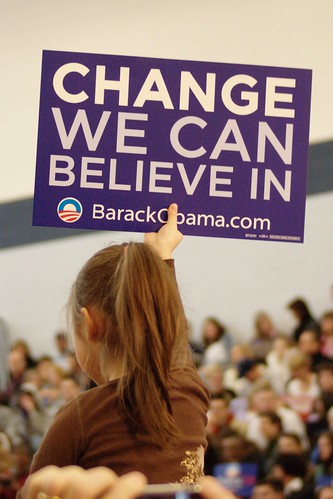
Barack Obama spent a lot of time on the campaign trail talking about lobbying and campaign finance reform, especially in the primaries (which, in my opinion, was part of both his and John Edwards’s appeal). And perhaps with the current economic crisis, such issues will be pushed to the backburner, as they are not entirely urgent. But Rod Blagojevich’s arrest should be a reminder to the country that we need to be addressing ethics in politics much more forcefully. A large part of the reason we’re so far behind on healthcare, climate change, energy independence, and now most evidently banking and financial regulation, is the potency of lobbyists over the hopes and needs of the true constituents in a democracy—the people. Only when a poor, ailing woman with no health insurance has as strong a voice in government as a bigwig insurance agency lobbyist can we truly say we are a democracy.

There is so much cynicism toward politics in our country, and with good reason. From Ted Stevens to William Jefferson to Rod Blagojevich, there seems to be little reason to trust those who are supposed to be working on our behalf. That all needs to change. And hopefully the one who’s been promising that change for two years will be able to deliver. But the proof will be in the pudding.

Photos: Rod Blagojevich (Washington Blade), Capitol for sale (CleanUpWashington.org), Obama and Clinton during a primary debate (Newsday.com), Change we can believe in (Flickr.com)

Monday, December 8, 2008

Smithtown Teenager Kills Three with His Car, Gets Only 30 Days in Jail

The scene after the crash caused by Steven Badke
(ABC 7)
While this happened a while ago, I feel the need to post about it because I feel it is an important issue and a glaring one. Last week a teenager from Smithtown, NY named Steven Badke, Jr. was sentenced to 30 days in jail as well as handed down $900 in fines relating to a car accident in which he was doing 80 mph, crossed the center line of Jericho Turnpike, and smashed into a minivan. Three people died that day - the son of the driver of the minivan, 13, and two passengers in Badke's car, both 17. The final charge that Badke was convicted of was reckless driving, a misdemeanor.

The original charges of criminally negligent homicide were thrown out by Judge C. Randall Hinrichs because he said that Badke's actions were that of someone who merely failed to perceive risk, rather than the legal definition of criminal negligence which stipulates that a person must create risk. I would argue that going 80mph and crossing the center line to pass another vehicle creates a serious risk to others (indeed, it took three peoples' lives in this case), but Judge Hinrichs seems to think otherwise.

So while Badke will serve only 10 days for each life he took (if he even serves the full 30), an equally dumb professional football player may well go to prison for over 42 times as long as Badke for carrying a gun and shooting himself in the leg, killing no one and injuring only himself. Yet the ironic thing is that 43,443 people died on American roads in 2005 (according to the DOT) while just under 31,000 deaths were reported due to guns in 2005 (with 55% of those deaths resulting from suicide). So if ten thousand more people are killed every year by a car than a gun, why does someone who kills three people while driving like a maniac get sentenced to less than the mandatory minimum for someone who merely possesses an unlicensed firearm (without intent to use it on another person)? It just does not make sense. Would Badke only be getting 30 days if he and his friends were fooling around with guns rather than cars?

If you kill someone recklessly, you kill someone recklessly; it does not matter how. If you go out randomly firing a gun around and hit someone, resulting in their death, you've killed them. If you go around driving without any regard for the people around you and hit someone, resulting in their death, you've killed them. I don't see much of a difference. If you're convicted of having an unlicensed firearm, you are a felon and can never legally own a firearm again. How much do you want to bet that at some point Badke will get his license, and thus the ability to drive, back, despite killing three people in a 100% avoidable car accident in which he was 100% at fault.

I'm not advocating the softening of the gun laws, I am saying that we need to harden the driving laws. You want to drive like that and kill people, you don't get your license back. Period. You kill multiple people while driving recklessly, you pay for it with more than 10 days per death. If you got your license permanently taken away for life for something like DUI, don't you think people would think twice about it? If you knew that you faced serious prison time - not just a slap on the wrist - for killing people while driving, don't you think people would be a little more careful on the roads? Instead, folks know that they can drive however they want and get away with it. This case is simply an example of that.

Blackwater Guards Surrender to U.S. Authorities

The U.S. Department of Justice has announced that five former Blackwater security guards will be charged for their involvement in a 2007 incident in Nisoor Square in Baghdad. Today the five guards, Donald Ball, 26, of West Valley City, Utah; Dustin Heard, 27, of Knoxville, Tennessee; Evan Liberty, 26, of Rochester, New Hampshire; Nick Slatten, 25, of Sparta, Tennessee; and Paul Slough, 29, of Keller, Texas, turned themselves in in Salt Lake City, Utah. They face charges of manslaughter and using a machine gun in a crime of violence and face a mandatory minimum of 30 years in prison if convicted.

Obviously this case brings up many legal issues, considering that the murders were committed in Iraq and the defendants are going to be tried in U.S. courts. Secondly comes the venue. By turning themselves in Utah - a decidedly conservative and pro-gun bastion of the country - some have speculated that the lawyers for the defense hope to have the case tried there and not in DC, where the case has been assigned. The defense lawyers argue that none of the men ever lived in DC and should not be tried there, yet they were employed by the State Department (via Blackwater) and committed the crimes while under the State Department's employ. Needless to say, the State Department is headquartered in DC. Why Utah is a more logical place than DC is beyond me.

But first comes the largest question (in my mind): does the US even have criminal jurisdiction in this case? The events occurred in Iraq, and thus my initial thought was that if the U.S. really wants to punish these guys, they should extradite them to Iraq to face charges there, considering the victims are Iraqi civilians. But, in the infinite wisdom that continues to guide Iraqi policy, all Blackwater employees were given immunity at the start of their business overseas. Therefore, the Iraqi government is powerless to prosecute anyone employed by Blackwater for doing anything in Iraq (until January 1, 2009). This seems to have led to some misbehavior on the part of Blackwater employees, including a Christmas Eve murder in which a drunken Blackwater firearms technician murdered an Iraqi guard of Vice President Adil Abdul Mahdi of Iraq. Instead of facing charges, the killer was allowed to sober up and fly back to the states (courtesy of Blackwater) while Blackwater paid the dead man's family $15,000.

Now in my opinion, these Blackwater guards involved in the Nisoor Square shooting should face charges, because in life there are consequences for your actions (hell, even OJ's going to prison). But the problem is, as John Adams pointed out long ago, we are a nation of laws, not of men. Because of a severe lack of foresight (this is becoming a theme in American blunders), these Blackwater guards may have a case that the Department of Justice cannot charge them with crimes committed overseas in a sovereign nation that they were granted immunity from. Now, the argument could be made that Iraq ceased to be sovereign when America forced its leader into hiding and set up its own government, but there is no way that Washington would admit that just to convict five guys of murdering innocent Iraqi civilians. While I would assume that the government has many avenues of civil repercussions it could pursue (to begin with, firing Blackwater entirely), including suing the company, it probably will not do this, either.

All of this brings up other issues with Blackwater. An average Blackwater employee makes about $600 per day, according to the Washington Post. According to the same article, an unmarried seargent in the armed forces given Iraq pay and relief from taxes makes $83-$85 a day. A married seargent with kids makes about $170 a day. The top US commander in Baghdad makes $493 a day. So the average Blackwater employee makes more than Army General Petraeus did. This is insulting to the troops. You want to talk about supporting the troops and being patriotic; paying private contractors more than 6 times what you pay the troops who (for the most part) volunteered to join the armed services is utterly ridiculous.

What happened in Nisoor Square was criminal; there seems to be little doubt about that. The defense of "They shot first" is weak when applied to women and children (at least one infant was killed), especially when U.S. soliders who arrived first at the scene denied that the Blackwater employees had been fired upon. The real question is: does the U.S. have jurisdiction to try the case on American soil in American courts? The accused were employees of a private firm, not U.S. troops, and had immunity from the Iraqi legal system, but not the United States'. I hope that the DoJ has an airtight case and has properly researched the jurisdictional issues and that the five guards are brought to justice in the proper way. If a foreign private contractor had security forces here shoot innocent American civilians, I highly doubt that the American population would be pleased if the killers got away with it. It's time we set an example of American exceptionalism in a moral sense and not an extra-legal sense. And while we're at it, maybe we can rely on the best army in the world to do our security in Iraq and not private contractors who see Iraqis as $15,000 targets.

Photos - Blackwater logo (Progress Illinois), A car destroyed in a September 2007 Nisoor Square shooting involving Blackwater (MSNBC), Timeline of Blackwater shooting in Nisoor Square (Washington Post)

Sunday, December 7, 2008

A Green New Deal?

Yesterday, Barack Obama laid out a plan for economic recovery that looks a lot like Roosevelt’s New Deal in ambition and scope. Its purpose is to help revitalize the economy by pouring hundreds of billions of federal dollars into public restoration projects, focusing primarily on repairing roads and bridges that have been widely neglected by state and local governments due to insufficient funds. The short run consequences of the plan include another massive blow to the federal deficit, as well as the creation of myriad new jobs, with governors predicting 40,000 jobs will be created with every 1 billion dollars spent.

In the long run, according the Obama transition team, the country will be able to preserve hundreds of thousands of jobs, while creating up to 2.5 million more. With last month’s job losses in the US being the highest since 1974, it’s hard to imagine a better way to help the economy get back on track than creating millions of jobs. And jobs for the public good can’t be bad, can they? They’ll be preventing disasters like the bridge collapse in Minneapolis last year, maintaining our national parks, and retrofitting schools and other public buildings to be more energy efficient, among many other projects that have been left on hold pending funding.

Still, many conservative economists believe that public works spending is not an effective way to bolster the economy. Alan Viard of the American Enterprise Institute told the New York Times that creating such jobs in the public sector would only take jobs away from the private sector. I guess that’s ignoring the fact that 533,000 Americans, most of whom were probably in the private sector, just lost their jobs last month? I appreciate fiscal conservatives’ point of view, but it seems like in cases like this, where the very livelihood of our country is at stake, we should be taking bold, drastic measures that will seek to address the problems in a responsible and publicly beneficial way, rather than sitting on our hands and hoping the markets will readjust and take us back in the direction of prosperity. Wasn’t putting too much faith into the markets a big part of what got us into this mess?

Perhaps the most promising part of the plan, though, is Obama’s dedication to energy conservation, efficiency and clean energy. He says that at least a portion of the federal funding will go toward energy-efficiency retrofitting in public buildings, mass transportation, updating electrical grid systems, and installing renewable energy generators. This is one of the most important steps toward fixing our energy problems: inciting an energy revolution that will create millions of jobs, actively push the country toward energy independence, and cut carbon emissions to desired levels.

Advocates like Van Jones even cite the societal advantages of getting youth and ex-convicts involved in the green revolution, a two-birds-with-one stone approach that can help to alleviate our nation’s considerable prison enrollment ills. Perhaps taking such an outside-the-box look at ways to clean up our economic problems, while also cleaning up other problems, is exactly the right idea. But one thing is certain: if we don’t focus on energy and climate change as part of our solution to the economic crisis, we’ll only be further hurting ourselves economically in the long run.

Now is an opportunity, as bad as times are in our country, to make an impact on other impending crises, the consequences of which will cost us much more if we don’t prevent them than they will cost to mitigate. That is, using government money to adapt to climate change (or even the future costs of “energy dependence”) will greatly outweigh the costs of cutting emissions now. Obama is right to focus on energy issues in addressing the economy, but the focus has to be sweeping, unrelenting, and pointing drastically in the right direction (wind, solar, geothermal, etc.). It’s too late at this point to let politics get in the way of progress.

Images: Obama/Roosevelt (Time Magazine), Unemployment (ConnectMidMichigan.com), Solar Installers (Saint Francis U.), Van Jones (San Francisco Sentinel)

Thursday, December 4, 2008

Gas is Cheap Again. Drill Baby Drill can wait.

Now is the first time since the oil crisis of the 1970s that there has been so much bipartisan support for weaning the United States off foreign fuels, and reaching ever-appealing “energy independence.” Democrats tend to want to realize this goal by focusing primarily on conservation, efficiency, and alternative fuel sources. Most Republicans talk about all of these methods as well, but don’t think it will be enough. John McCain during the campaign, for instance, spent a great deal of time talking about the widespread need for more nuclear power plants, “clean-coal” plants, and stressed the importance of drilling for more oil within and around United States territory. Sometime in August, it seemed, the “Drill Baby Drill!” chants were starting to ring across the land.

Thank goodness. There is a surefire solution to energy independence that doesn’t involve relinquishing our massive Ford Expeditions and Hummers. If we just open up new sites for oil extraction off our coasts, we will begin to offset our oil imports (which currently account for two-thirds of US consumption), while also saving money on our gas bills. …Right? Well, most “Drill Here, Drill Now” chanters during the election season seemed to be ignoring the economic analysts’ reports that asserted that we wouldn’t see gas prices drop—due to the new rigs—for several years.

Still, election seasons are election seasons. And the Democrats, delightful opportunists that they are, hopped on board the drill train, lifting an offshore drilling ban to prove to constituents that they too cared about gas prices. But wait! Now, thanks to the worst economic crisis since the Great Depression, gas prices are at their lowest points in years, and all those conservation measures that people were starting to carry out without government prodding—buying efficient cars, taking public transportation and biking, taking fewer unnecessary car rides—are gradually falling by the wayside. SUV sales are up once more. And it seems that all that talk about drilling is off the table—for now.

And then there’s the Big Three. You know, the car companies asking for $34 billion from the government (read: taxpayers). Wait, but why are Honda and Toyota not going bankrupt? Perhaps because instead of clinging exclusively to “all-American” big ol’ trucks and marketing them heavily, they invested at least a bit in more compact, efficient cars that have brought most auto business to them over the past year or so. And only now—as part of their rescue plan—do Ford and GM talk about investing seriously in plug-in hybrids, battery technology, and other efficiency measures.

What should government do? Raise gas taxes now, while they’re so low. The Federal Government should even put a floor on gas prices so that people don’t go flocking back to the Hummer too. Invest revenues from gas taxes in public transportation, research and development, and alternative energy. It’s going to take a while to make the transition to alternative fuel vehicles, so let’s start with vehicles that use much less oil than those we have now, and then once cars are running mostly on electricity, make the switch so that the backup engine is running on cellulosic ethanol or fuel cells. Going forward, we need to stop thinking about drilling and start thinking about real, long-term, innovative solutions that will keep jobs within our borders, create new jobs, cut pollution, and actually wean us off foreign oil.

Photos: Oil rig (Wikipedia), Hummer (Hummerreports.com), Plug-in Prius (Autospectator.com)

Monday, December 1, 2008

Bill Kristol: All You Need is Patriotism

In today's New York Times, Bill Kristol lays out his plan to fight terrorism. Kristol says that while wishy-washy liberals like the invoke things like "the law" and American values like habeas corpus, the people who really know what they are talking about know that the most important tool to fight terrorism is simple: patriotism. But once again, Kristol twists and bends the truth to have things his way; much of what he has to say has been undermined by America's lying about the War in Iraq and other factual misstatements.

To begin with, Kristol falls into the trap set by these psuedo-Muslims for all those who know nothing about Islam. Instead of framing the debate in political terms, Kristol continues to use the "Islamic extremist" moniker for the attackers. The attackers are not Muslim in the traditional sense of the word - jihad is not a global war against non-believers, it is an inner-struggle for understanding of oneself and Allah. Waging a war on non-believers in the name of Islam would be like saying you are marrying gay couples in the name of Catholicism. Secondly, it would make no sense for Muslims to attack citizens of the United States - a country inhabited by numerous Christians - and Israel - a Jewish country - when these two religions are considered to be People of the Book and because they are Abrahamic, they are not seen as enemies but friends according to the Qur'an.

Secondly, Kristol makes an allusion to the fact that the United States should stand with India against our common enemies. I agree with this, but the attackers in this case seem to be more focused on India and its involvement in the Kashmir than with the U.S. Reports have come out that U.S. and British nationals may have been targeted, and if this is true then the U.S. and the other states whose citizens were targeted should assist in the investigation. What is also important to remember is that Lashkar-e-Taiba got a lot of their training from Pakistan's intelligence agency, ISI, and were only banned in Pakistan when American ally Pervez Musharraf felt pressured by Bush and Co. The ISI, of course, was heavily funded and trained by the United States, who brought it out of extinction during General Zia ul-Haq's reign and the Soviet-Afghan War, yet we continue to blame it for problems like the Mumbai attacks or lack of law enforcement in the FATA region. That's like raising a kid until he's 10, unexpectedly leaving, and then wondering why he has attachment issues.

Finally, Kristol believes that the answer to the "barbarism" of terrorist organizations is patriotism. He may be right, but he still needs to define patriotism. Let's not forget that following 9/11, if you questioned the move to go into Iraq from Afghanistan, you were labeled unpatriotic (when in reality you would have saved your country $10 billion a month and global diplomatic embarrassment). Patriotism is indeed a virtue, but one defined in many ways. We cannot allow one portion of this country to railroad us into a singular, concrete definition of patriotism as we did leading up to Iraq. A love of one's country comes in many forms, not just blind loyalty to the ruling party of the time because of reactionary forces. I think patriotism is best summed up in Adlai Stevenson's timeless quote, "What do we mean by patriotism in the context of our times? I venture to suggest that what we mean is a sense of national responsibility ... a patriotism which is not short, frenzied outbursts of emotion, but the tranquil and steady dedication of a lifetime." Peace.

Photos - Bill Kristol (Fox News), Armed security forces outside of the Taj Mahal Hotel in India (CBC News), The Taj Mahal Hotel (Wikipedia)