Showing posts with label jpmorgan chase. Show all posts

Thursday, October 22, 2009

The Party's Alive and Well: Goldman and JP Morgan Living it Up

Before we start reveling in the fact that firms like Citigroup and AIG are going to see executive pay regulation from the Obama administration, the two firms conspicuously missing from the list of firms being watched are going to hand out near-record payouts to their executives a year after they themselves caused the financial mess that has led to rampant un- and underemployment, and a lowering in the average American's salary.

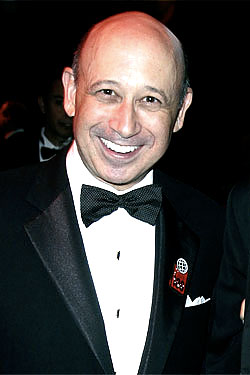
And before you say "Well, Goldman only got $10 billion in TARP funds and paid it back." What we seem to forget is that Goldman underwrote a lot of AIG debt, meaning if AIG defaults without government assistance, Goldman's $3 billion+ earnings this year turns into a multibillion dollar loss. Additionally, Goldman still has to buy back its warrants from the government, which it is shrewdly trying to do below market prices. Talk about appreciation for bailing them out.

Additionally, before we kid ourselves, Wall Street is back to its old ways, only this time it's not with people's mortgages; it's with their lives. They are packaging life insurance policies the same way they did with mortgages, and then hoping that the people they bought the policies from (the elderly and sick, to name two categories they are targeting) die quickly so they get a bigger return on the payout.

When I called Congressman Barney Frank's office and began asking questions about Mr. Frank's willingness to enter legislation to rein in firms that received TARP money but technically paid it back (again, the issue of warrants and AIG underwriting emerges here in terms of Goldman, at least), I was transferred to the House Finance Committee. The nice woman who picked up the phone explained to me that while the House has been working on shareholders' rights issues and corporate governance (where this executive pay cut seems to be stemming from), for firms like Goldman there is no recourse because of the TARP fund issue. When I asked if she knew if the Committee would be introducing legislation to rein in executive pay at firms like Goldman, she said she did not believe so. When I asked if it was even on their docket, she referred me back to the whole shareholder's rights issue and that they have done what they could. When I characterized it as a "Do what you can now, deal with others later"-type situation, she agreed. Going after a firm like Goldman would require a) a serious backbone (they have a lot of money, and C.R.E.A.M. is not just a Wu-Tang song) and b) hard work. Both seem to be in short supply right now in Washington.

I guess when you have Geithner's ear whenever you want it, you can get a lot done. So while most Americans toil and grind each day out at work for less than they used to get (granted they still have a job), the fat cats on Wall Street, who would have lost their McMansions had we, the taxpayer, not bailed them out of a problem that they created themselves, are living it up and will see massive profits and massive paychecks. I guess what's good for Wall Street is not necessarily good for Main Street.

Photo - Lloyd Blankfein, Goldman Sachs CEO (NY Mag)

Wednesday, February 11, 2009

Banks On Their Knees Asking for Money, How Could We Say No?

Today was the day many people have been waiting for: when the CEOs of the big banks who would have failed without emergency government handouts would have to answer to Congress. Now Congress has never had a fully developed vertebrae (see: Clarence Thomas), but with the popular mood seeming to be against the bankers who ruined their billion dollar companies, some in Congress asked some moderately hard questions. The banks represented included Citigroup, Bank of America, Goldman Sachs, JPMorgan Chase, Morgan Stanley, Wells Fargo, Bank of New York Mellon and State Street.

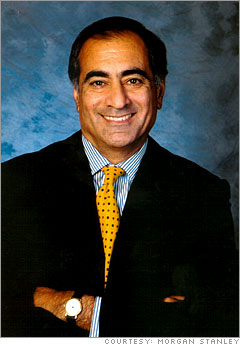
One of the main sticking points with the public is executive compensation, namely bonuses. Now a sensible person would think that a bonus would only be given out when the company has a good year and there is extra money to be spread around, but not with the banks. No; for even when the executives helped run these companies straight into corporate ICU and the government ventilator was barely keeping them alive, bonuses were apparently merited. There was actually a pretty classic line in today's hearings from John J. Mack of Morgan Stanley who told Congress, "We love what we do. If you gave us no bonus, we would still be here." That's easy to say when you've made $55.91 million at Morgan Stanley (while being there only three years). Mack should be getting nothing, especially given his admitted propensity for risky investment. But it turns out that when he screwed up, he was really paying with house money because we the taxpayer were there to bail him out.

Another laugh comes from the sentiment, "Oh, we're not using TARP money for bonuses, that's money we already had." So wait, if you already had money why wasn't it being used to help the company as a whole and not some high-level executive who most likely contributed to the problem? It's like Larry David's friend Simon in Curb Your Enthusiasm who gets a $10,000 loan from Larry only to throw a party that costs $10,000. Sure, the money he used for the party was not the physical money Larry gave to him, but without it he would have had to use the party money to stay afloat.

Barney Frank asked a pointed question during his discussion of executive bonuses: "Why do you need to be bribed to have your interests aligned with the company?" Obviously it is a rhetorical question, but one worth answering. None of these CEOs have the company's best interest in mind. Why would they care how the company does if they know that they're too big to fail? They get to fly their private jets, make tens of millions of dollars, and live in ritzy suburbs. Sure, their companies are failing, but do you really think these guys are going to downsize their personal lives? The money will still come in, and they will still live in their McMansion and drive their luxury foreign cars (though to be fair, their companies might have to use NetJets instead of owning a private plane - how embarrassing!). They can afford not to care.

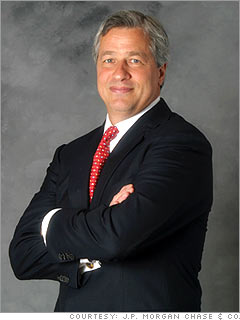
Another tactic used by the banks at the hearings: blame others. When pushed on why they were not lending a lot of money when that was what the TARP money was for, Jamie Dimon (CEO of JPMorgan Chase) said that it was from a scaling down of lenders like money market funds and hedge funds. The irony of the fact that his bank is partially responsible for the decimation of peoples' money market funds it completely lost on Mr. Dimon as he laments the fact that money market funds are not as active as they used to be.

Representative Paul E. Kanjorski said it best when he told the banks, "When you took taxpayer money, you moved into a fishbowl. Now, everyone is rightly watching your every move from every side." Obviously this is something the banks are not used to, for when they gave money out (by buying sub-prime mortgages) they did not keep tabs on who they were lending to or how they would pay them back; the money was coming from somewhere (though those who did their homework knew it would not last long). This boosted profits and lulled the shareholders and other regulators into complacency. Now when I was in school and I did not do my homework and got a bad grade on a test because of it, the teacher did not offer to give me free points to save my grade; I was responsible for myself. But these banks did not do their homework and they did not just fail the test, they failed the semester and brought everyone down with them, but it's ok because Professor Government is going to give them free points, because they're too important to fail. Peace.

Photos - The financial world brain trust (New York Times), John Mack (CNN Money), Jamie Dimon (CNN Money)