Showing posts with label democratic party. Show all posts

Thursday, February 21, 2013

How to Fix The Republican Party in One Step

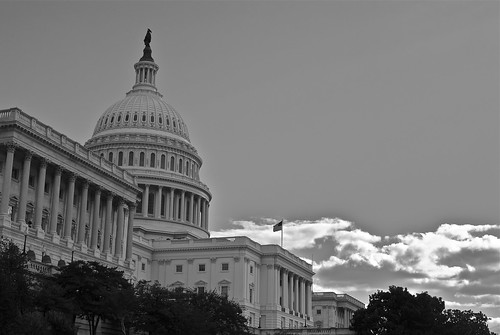
The United States Capitol (Flickr/Dray-Dray)
One of the major setbacks of the Democratic Party is that it is a big tent party; too many factions within the party. Looking back at the health care debate it is glaringly obvious that while it can be great to have a supermajority on paper, practically it may not work out as well as perceived. The Blue Dog Democrats immediately come to mind when thinking about internal strife within the party.

This has been the 21st century Democrat's problem: lack of party unity. It's not necessarily the Democratic Party's fault, because in order to have such a large party that aims to be as inclusive as possible you're bound to have some intraparty disagreements. When you have an opponent in George Bush (read: Dick Cheney and Karl Rove) who is able to keep their party in lockstep, convincing the nation to go to war with a country we had no business warring with while eroding civil liberties in the name of safety, it is going to be very difficult to rally any party together to fight it, especially the Democrats. But in 2008 the Dems did just that and then blew it as only the Democrats can.

But they've been handed a bit of luck, as the pre-2006 Republican Party simply does not exist. It is plagued by the infighting that doomed Obama's domestic legislative agenda from 2008-2010. The fact that the two of the past three State of the Union addresses had two Republican responses, one official and the other unsanctioned, is evidence of that on a macro level. The drama around the Boehner speaker vote can point to this on a micro level. Simply put, the Republican party is in crisis.

The worst part of the whole thing for Republicans is that now is the time to reinvent the party, but instead of coming up with a more dynamic platform to speak to the younger generation disillusioned by Obama's Bush-esque foreign policy and drama-filled presidency (whether he is to blame for the latter is another question), they move further to the right. Their 2012 candidates were embarrassing. They chose to put forth Mitt Romney, one of the most boring and out of touch individuals in recent history (honestly, I'd probably rather have a drink with Al Gore, which is saying a lot) and Paul Ryan, who got smoked by a much-ridiculed and jokey VP Biden in an embarrassing debate. Throw in your fringe candidates who were not distanced enough from the party (Richard Murdouck, Todd Akin) and you're bound to lose favor with the nation, even self-described Republicans. We're starting to see this occur.

Here's what the Republican Party needs to do: drop the culture war and stop with the self-victimization over social issues. Obama is not a Marxist, gay marriage will not ruin yours, and as much as it may pain the Republican Party to hear it, separation of church and state is a major part of this country's founding. Until the GOP realizes this, there will be no groundswell movement of young, disillusioned voters to their side of the aisle. Until Rush Limbaugh and Fox News talking heads no longer hold so much power in the party, masses of young people will steer clear from the GOP.

There can be two ways for the current dual-party system to go. One of the parties can adapt and bring in a fed up, young generation of voters and dominate until at least 2020. Or a new party can emerge - maybe a coalition of liberal Republicans and conservative Democrats (again, as long as they're not overly focused on some made up culture war) who feel their parties are missing out on a huge opportunity for votes (and they'd be right). If the two parties increase the polarization we've seen in Washington, Juan Linz may have to update his famous piece on presidential democracy. Let's hope we don't get to that point.

Correction 22 February 2013: A previous version of this post said that VP Biden smoked Ron Paul in a debate, when in reality it was Paul Ryan who was embarrassed that night.

Monday, September 24, 2012

2012 Election Primer: Obama and Romney

Obama and Romney (Politico)
So after a bunch of requests (read: 3) to write up an election primer, I decided that it is time to give the people what they want: to know what a random 20-something in New York who thinks he knows more than he does feels is the best candidate to cast your ballot for in November.

I began this election season promising myself that I would vote for neither candidate and instead write someone in. President Obama, in my opinion (and I can't explain to you the amount of flak I've received for this) has been an underwhelming president when compared to the candidate he was in 2008. And that last sentence fragment is important: when compared to the candidate he was in 2008. All in all, Obama's done some good things domestically (repealing DADT, his better-late-than-never support of marriage equality, healthcare reform).

That's only one side of the coin, however. I've chronicled my disappointment with President Obama numerous times on this blog (here, here, and here to begin with). One thing that you'll notice about those articles (and most of my gripes about Obama) is that his foreign policy is, in a word, horrible. It is unfathomable to me that those who derided Bush's war mongering will defend Obama for 2012.

Obama is leading this country in the wrong direction, but not in the way that Fox News would have you believe. Precedents are being set in the Obama White House that could have dire consequences down the road.

For one, take the drone program (a program that is technically entirely classified). We have drones flying over many countries - countries with whom we are at war and countries with whom we are not at war. This sets a serious precedent for other countries who may want to fly drones over the United States when they get the same technology we currently have.

Moving beyond the precedent it sets, however, is the diplomatic damage that drone strikes carry given their civilian casualties. We conduct drone operations in countries like Pakistan, Yemen and Somalia; countries we are not at war with. This comes back to the precedent setting: can you imagine if Islamabad began flying drones, making strikes and killing American civilians?

A drone equipped with weapons and a camera (Wired)
But it's not only about the drones. It's about extralegal killings of American citizens in non-war zones. It's about a dubiously legal "kill list," despite a longstanding executive order against such assassinations. It's about not closing what will certainly be viewed as a black-eye on this nation in the form of Guantanamo.

Going back to precedents, Obama seems to be making the same, if not similar, mistakes his predecessors made in Afghanistan. During the Libya non-war, I decried the support for the untrained rebels fighting Colonel Qaddafi. Throwing supplies and intel at a group not ready for it is not good foreign policy. In fact, when I heard that the attack on the late Ambassador Chris Stevens was coordinated I wondered if any of the attackers were former Libyan rebels who had received training or materiel from the U.S. or other NATO nations. We've seen similar problems with green on blue attacks in Afghanistan in which US-trained Afghan forces attack US soldiers.

It is for these reasons that I simply felt that I could not vote for Barack Obama come November. That view is beginning to change, however, and it has nothing to do with anything Obama is doing.

I knew I was not going to vote for the Republican candidate no matter who it was. The post-Reagan conservative is simply too beholden to the religious right (cue the famous Barry Goldwater quote). You look at candidates like Rick Santorum or Rick Perry and you shake your head wondering what has happened to the Republican Party.

Now, Mitt Romney would appear to be the most palatable of the Republican candidates. Having lived in Massachusetts while he was governor and seeing the good things he did during that time (near-universal healthcare, turning around a large deficit), I have been amazed to see Romney backtrack from his accomplishments. In 2008 I asked a good friend his opinion of Romney and he replied that he was spineless and would say anything to get elected. His prescient statement has more than proven true.

We could get into the issues with Romney, but one problem is I simply don't know where he stands on anything. It changes so frequently that it makes Obama's flip-flop on gay marriage look like, well, evolution. Romney simply cannot choose one side of a position and keep it.

One thing I like in a president is transparency (this is another arena in which I've been disappointed with the Obama administration). Needless to say, the fact that Romney refuses to release his tax returns (a tradition started by his own father, to boot) does not sit well. The fact that he and his campaign allowed it to become a months-long campaign issue indicates to me that whatever he wanted to hide in the returns was worth hiding.

I was never going to cast my vote for Romney; that was decided well before he won the Republican nomination. But what Romney has done through his ridiculous missteps - the Egypt and Libya embassy attacks statement, the utter lack of specifics in any of his policy, the 47% irrationale - has made me so angry that I might actually vote for Obama out of spite for Romney. Romney's seeming ineptitude has moved me in such a way that I might actually vote for a president who I think is setting this country up for a very difficult foreign policy environment in the near and long-term future.

So to sum it up: I do not want to vote for Obama, but if voting for neither candidate would give Romney any kind of advantage (no matter how small) it actually may be irresponsible of me, given my worldview, to not vote Obama in November. I felt that the 2008 election was the first one in a while that gave the American people a chance to actually vote for a quality candidate, as opposed to the lesser of the two evils. And I maintain that Obama was a good candidate; he just could not live up to that candidate as president. This election will definitely fall into the "lesser of two evils category." I'm just angry that Romney's horrendous campaign may actually force me to choose one.

Wednesday, November 3, 2010

Election Day Hangover: Can We Make Some Trades?

The Republicans have taken 60 seats in the House and six seats in the Senate, meaning that gridlock is all but ensured for at least the next two years as the lower house in Congress is controlled by Republicans and the upper chamber is Democratic.

A little part of me last night thought that maybe all of the polls were wrong; maybe the Democrats could hold onto the House and the Senate; maybe people would realize for all of the Democrats' failures the other side of the political coin held far worse consequences for progressives and, ultimately, the country.

But I wouldn't even be that mad if two things had occurred differently.

The first was Russ Feingold's loss. This really pissed me off. This is the only guy in the Senate who had the guts to stand up and vote against the PATRIOT Act in October of 2001, recognizing the fast-paced freedom erosion that the legislation would, and has, enabled. He said then that, "we must continue to respect our Constitution and protect our civil liberties in the wake of the attacks." This is an ideal that many of our elected officials have failed to live up to in this post-9/11 world. Honestly, I would take any other Democratic Senate loss over this one, including Chris Coons in Delaware. That's how important Russ Feingold is to the Senate.

The second election night loss that angered me was California's Prop 19. I don't even smoke and this proposition made so much sense. If tobacco is legal why is cannabis not? Why is the United States spending billions of dollars annually to "fight" this drug when it could be making billions of dollars a year taxing, regulating, and selling it? Marijuana has been shown to be less dangerous than tobacco, yet the government has no problem raking in billions of dollars in tax revenue from it. What's the difference?

It's expected that midterm elections tend to favor the party out of power, unless things are going swimmingly for the current administration, which is decidedly not true for Obama. If the Republicans can turn this country around without eroding the rights of gays, repealing a health care bill that will provide insurance to millions of formerly uninsured folks in this country, and giving Wall Street a carte blanche to do anything they want (again), then they just might hold onto power. If, however, they're mantra of "slash spending and cut taxes" goes no deeper than this simple slogan, then we're in trouble.

Photo - Russ Feingold (Flickr via Freedom to Marry)

Thursday, October 14, 2010

Democrats Blow Yet Another Political Opportunity

The Hill just released a set of polls in which voters in 10 battleground districts were asked if they support the extension of the Bush tax cuts. When asked if they favored or opposed the "extension of the Bush tax cuts," responses broke along party lines, with an overwhelming majority of Republicans in favor, a somewhat smaller majority of independents in favor, and a large majority of Democrats opposed.

However, when asked if they would favor extending tax cuts only for families earning less than $250,000 a year, the response was almost exactly the same among all three groups--two-thirds of Democrats, two-thirds of independents, and two-thirds of Republican are in favor of extending the cuts only for families earning less than $250,000 a year. What poll respondents probably don't realize is that the latter question is exactly what the President and the Democrats are proposing.

Reid, Pelosi, and the Democrats could have used this fact as an opportunity to force Republicans to vote on an extension of tax cuts for the wealthy, exposing them to the ire of the American middle class, and to the hypocrisy of calling for deficit reductions while adamantly opposing the expiration of unneeded tax breaks. But it seems the Republicans' messaging campaigns, as usual, are just better executed, regardless of the lack of actual support for their policies.

Senator McConnell has the messaging down: keep blaming the Democrats for spending, spending, spending, while completely ignoring the fact that tax cuts are contributing to the deficit. Make the middle class think that the Democrats are trying to tax them more by portraying them as avid taxers, even though that is the opposite of the truth. And even as House Minority Leader Boehner conceded that "If the only option I have is to vote for some of those tax reductions, I'll vote for it," he was immediately rebuked by Senate Republicans, who seem to know that they have the edge in the messaging campaign to keep Americans confused about how these tax cuts actually work.

Images: Senate Minority Leader Mitch McConnell (R-KY) (CBS News)

Tuesday, September 28, 2010

Are the Democrats Trying to Lose in November?

I wrote last week on the Huffington Post about how the Tea Party has the potential to energize both the Republican base and the Democratic base this November. The movement is scary, not only from a xenophobic standpoint but also a policy one (or lack of policy), and the prospect of someone like Christine O'Donnell walking the halls of Congress just might be enough to get Democrats out to vote Democratic in an election cycle when, in all honesty, Democrats have not proven themselves worthy of our votes.

Wednesday, September 15, 2010

Wednesday, August 18, 2010

Mosque Debate Shows Democrats' Inability to Stay on Message

During the health care debate I was livid over the Democratic Party's inability to form a coherent, usable message to galvanize the electorate and pass progressive health care legislation. My post yesterday on Harry Reid's kowtowing to anti-property rights folks further shows Democrats' inability to be unified on any issue. If there were an issue that Democrats could be 100% together on, this would, and should, be it.

But from the word "go" the Democrats have resembled the Mets front office rather than a functioning body politic. Hoping to allow the Republicans to talk about Cordoba House until they got bored (akin to allowing a child to throw a temper tantrum in the hopes that he/she will simply tire him/herself out) and sidestep the mosque as a campaign issue, the Democrats seemed to be caught off guard by Obama's statement alluding to a "mosque in Lower Manhattan."

Saturday, July 24, 2010

U.S. Senate Exhibits Pivotal Failure of Democracy

I've been writing about climate change issues for a while now. I've talked about the climate science, the leadership role of the House of Representatives, the childish politics and conservative propaganda. I've talked about the strong obstructionism against action by lobbyists, Republicans, and conservative Democrats. I've talked about the climatic, humanitarian, and security implications of inaction, and the concerted move (and failure) to block any government action at all. I've talked about the awareness among Americans, the problems with the media, and the implications of the oil spill.

But now it kind of feels like it's all over. Not because the Senate followed the House's leadership and passed a piece of climate change legislation of their own. But because the Senate fundamentally failed to do anything at all.

Thursday, January 21, 2010

Disaster in Massachusetts and a Supreme Court Decision that Disgraces Democracy

Two pieces of calamitous news in two days. Both pretty much impossible to swallow, but both realities moving forward.

The Massachusetts Senate Election

On Tuesday, Massachusetts voters elected the little-known Scott Brown to assume the late Ted Kennedy's seat. Kennedy spent decades fighting tooth and nail for health care reform, and now reform is severely threatened by Brown's impending inauguration. He has already vowed to obstruct the Democrats from passing a bill (nothing new for a Republican), and now Democrats are starting to back off any ambition they once had for making the bill strong and thorough. Massachusetts voters, who had been enamored of Ted Kennedy for decades, voted to betray his dying wish. I am not saying that the successor to his seat should have espoused his every view; I am saying that whatever values Ted Kennedy held that Massachusetts citizens ostensibly held in such high esteem for so long, they instantaneously turned their backs on.

There are innumerable factors that likely lifted Brown to victory, most of which have been discussed at length. Coakley ran an awful campaign. Voters were still disillusioned by the nation's employment and housing crises. The election was taken for granted by Democrats for too long. But whatever the reason for the shocking defeat, there are now 41 Republicans in the Senate, opening the possibility of interminable filibusters and continued obstruction until November, when Republicans will point out to Americans that Democrats have accomplished next to nothing, despite holding the Presidency and both Houses of Congress by sizable majorities.

The House climate bill can be completely scrapped. (Why do we even have a House, by the way? Sure, they're much more representative of our country than the Senate, but who needs representatives, when they don't seem to have a say in anything?) The relatively progressive House health care bill will likely give way entirely to the Senate health care bill so that at least something is passed (if there's no health care bill passed at all this year, Democrats can probably say goodbye to legislative chamber majorities come November). Who knows if there will be a jobs bill (even though that's what people are most concerned about right now). Financial regulations will pass, but likely in a weak bill that will maintain much of the status quo for the very sharks who helped push the world economy into a deep recession.

What exactly were Massachusetts voters voting for, then? Were they trying to send a message that they're mad? Because like it or not, Scott Brown will not get back at Wall Street. Scott Brown will not help create short-term jobs (his solution is to cut taxes). And by the way, when you're out of a job, Scott Brown certainly won't help you get health insurance. Oh, unless you're from Massachusetts, where progressive Democrats already passed legislation to ensure that for you. Ted Kennedy's dream, and life's work, which was so close to fruition, has been betrayed by his own loving constituents, solely because of his death. The irony is excruciating.

The U.S. Supreme Court Decision

In other horrible elections news, today the Supreme Court ruled that the government can't ban political spending by corporations in candidate elections. I've talked at length about this issue before. While I have problems with the inherent idea of democracy (see: Massachusetts voters voting against their own interests and the interests of their country), I still acknowledge that it is the only form of government that reflects the ideals of human freedom, justice, and equality. It has its flaws, of course, and must be periodically improved so that these core tenets are not betrayed. Today, they were betrayed.

The four conservative ideologues on the Supreme Court and one alleged (but woefully misguided) moderate have further opened the election process to unprecedented levels of cash injections from big businesses, arguing that they are defending the first amendment's guarantee of freedom of speech.

Let me first say that money is not speech, and conflating those two concepts is nefariously deceptive. But we have to remember here that the Constitution has been bent, twisted, and adulterated incessantly over the past 200+ years, to behoove whomever was "interpreting" its words. In this case, conservative judges who maintain Republican allegiances and were all appointed by Republican presidents, ruled against a bipartisan law that was designed to make elections fair and unbiased, untainted by the influx of money from self-interested groups corporations.

What is democracy now? Does the prefix demo- not mean "people"? What the majority of the Court failed to acknowledge was the underlying foundation of our democratic republic: the right of the people to choose their leaders, and the right for any person to have a chance to become one of those leaders, assuming they can compel the electorate to afford them enough votes. Now corporations will hold undue influence in all federal elections, the wealthiest of them having the biggest say in which politicians will be elected (think: Walmarts who exploit employees, Exxon Mobils and Southern Companies who unabashedly contribute to climate change, Pfizers and Aetnas who exploit the sick for massive profits, and Citigroups who get away with inciting economic turmoil and run away with unfathomable bonuses).

Whatever politicians who are still around that you thought were truly serving the interests of their constituents--that average "Joe the Plummer" that Republicans just love evoking--will soon be a vestige of a previous era of American politics. Don't get me wrong: Democrats are often just as guilty as Republicans when it comes to being beholden to special interests. And elected progressive Democrats who want to reform our election system to make it fair and democratic will soon be few and far between. Unbridled capitalism has commandeered our democracy. Our election system, the basis of American idealism, is truly tarnished in an irrevocable way (unless today's atrocious ruling is one day revoked).

It's been a really bad week for America.

Images: Scott Brown (New York Times), spineless Democrats (photobucket.com), Supreme Court Justices (Zimbio.com), Guy with sign (scu.edu)

Tuesday, January 19, 2010

What's At Stake

A lot of people don't realize how critical the special election for Senate in Massachusetts today is. Massachusetts Democrats have enjoyed two Democratic Senators representing their state since 1972, with a Kennedy in one of the seats since 1953. When Ted Kennedy passed away last summer, the state legislature, in a reversal from a recent law under Romney's governorship, gave Governor Patrick the ability to appoint a replacement for Kennedy, but only until the election today.

Now, more is at stake than anyone ever thought possible. The Democrats' agenda in Congress is threatened more by this election than by any single other event until the November elections this year (barring another tragedy or resignation). The President's mission of at least having health care passed in his first two years of office is on the line. Any other much needed reform will be destroyed or severely watered down from now until next January if the Republican, Scott Brown, wins. There will be no robust climate bill. There will be no meaningful financial regulations. There will likely be no substantial jobs bill. Senate Republicans, who in the past few years have become synonymous with obstruction, will be able to obstruct at their leisure, with no Democratic override.

Scott Brown is not a terribly adept politician, not a stellar candidate, and not a well-known figure in Massachusetts. But the combination of Democratic complacency, frustration with national politics, and an oddly timed election has pushed him into the front ahead of Attorney General Martha Coakley, who in some polls is now trailing by 10 percent. People from Massachusetts are misguidedly angry about the health care bill. They're angry at Coakley for reasons that they either don't understand or are just too inane to dignify (calling Curt Schilling a Yankee fan? This is the real world, not a game).

The state that elected Obama by a 26-point margin is now turning its back on him, perhaps because of their economic situation. Yet many independents, Republicans, and others voted for Obama over McCain because they didn't want the same failed economic policies to continue to prevail. Just because the economy isn't back and better than ever after one year of Obama's tenure, it's time to go the other way? Again? It's heartbreaking to see this kind of mentality--which we see across the country in nearly every election cycle--in the state of Massachusetts, where voters seem to be a bit more enlightened, patient, and thoughtful than in other states.

A Scott Brown victory will put a halt on all the policy reforms that this country has waited so desperately for for so long--and that Edward Kennedy fought so tirelessly for nearly 50 years--all because of the Liberal Lion's painfully untimely death.

Coakley may not have run a good campaign, but she's shown in her service to Massachusetts over the past decades that she will be a strong and principled Senator. And the state, the country, and yes, even the world, need her to pull off a win today.

The Daily Show With Jon StewartMon - Thurs 11p / 10c
Mass Backwards
www.thedailyshow.com
Daily Show
Full Episodes
Political HumorHealth Care Crisis

Images: Coakley and Brown (Talking Points Memo)

Tuesday, October 27, 2009

What was that Lincoln Quote?

When Barack Obama was elected president we heard about his seeming obsession with our 16th president. He read books on Honest Abe, used his bible at his inauguration and even themed the January festivities after the top hat enthusiast's famous Gettysburg Address. Given all of this Obama must have come across one of Lincoln's most famous quotes, uttered in his famous speech named for the quote, that "A house divided against itself cannot stand." Now Lincoln was alluding to the dispicable practice of slavery in the States, but if we twist the quote a little bit and make it "A party divided against itself cannot stand," we see trouble looming for Democrats.

Yes, I'm going back into the realm of the public option. That elusive Ross and Rachel portion of the health care bill (on-again, off-again: lame Friends reference, forgive me). President Obama said back in August it wasn't essential to the bill. In September House Speaker Pelosi said it was essential while at the same time House Majority Leader Hoyer said it wasn't. In other words, there was no Democratic leadership on the issue, and that lack of leadership continues today over the public option.

It was bad enough that Schumer said a few weeks ago that an embarrassing loss in the Senate Finance Committee was really a win for the public option, but now he is saying that he and other key Democratic senators convinced the White House that the public option was the way to go.

But if Schumer and company have convinced the Obama administration to really get behind a decent public option, why are reports coming out that Obama essentially told Senate Majority Leader Harry Reid that he is on his own for getting votes. If the Obama administration were really behind the public option, if they were "convinced" of its validity, why would they make it clear that they would turn their back on Reid in a crucial vote-getting campaign to prevent a filibuster?

Here is why, if we get a public option, it will be watered down: the Democrats are running around like chickens with their heads cut off. Are they really unable to sit down, say this is our plan, and just stick to it? It's funny that Obama will take a risk on the 2016 Olympics for Chicago (read: going to Copenhagen without knowing for sure that Chicago would win the bid) but when it comes to insuring millions of Americans he doesn't want in unless he is guaranteed a victory. Schumer is saying one thing, and reports come out indicating the opposite. Reid could emerge as a leader on this, and Obama undermines that.

I would love to be proven wrong. I would love to get a robust public option that really shakes up the insurance industry and gives a decent level of care to millions of uninsured Americans. The problem is that no clear leader is emerging in this fight and the very backroom politics that is supposed to be used to get votes and get things done is creating miscommunications within the party and leaves the public scratching their heads and opponents on the offensive. Like Lincoln (kind of) said: "A [party] divided against itself cannot stand [for anything]." The problem is they're falling on us.

Photo - Obama and Reid (Politico)

Monday, October 19, 2009

Stuck

Given my last politics post about Obama's promises seemingly not coming to fruition in the near future, I have done a lot of thinking about the state of politics for folks my age. No one needs to tell us the world has changed significantly the past few years; we just exited some of our most politically active years (college) during a time of two physical wars (Iraq and Afghanistan) and one war on a buzzword (terror) during a presidential administration that rivaled Nixon in cringe inducement. We rallied behind Obama only to see political causes we cared about (closing our generation's version of wartime internment manifested in Guantanamo, securing equal rights for our gay friends and coworkers) pushed to side to focus on inevitably falling short on true healthcare reform.

We saw a very similar thing happen in the late 70s with Carter taking over a sub-par Ford administration and coming up short. That ushered in Ronald Reagan. Reagan was the 1980s Republican Obama: a change from the previous administration, well-spoken, relatable, and popular. He was so popular that even after countless scandals (Iran-Contra being one of the largest), an incredibly reckless covert war in Afghanistan that led to the rise of the Taliban and one Osama bin Laden, an unbelievable increase in government spending and expanding of government, his vice president was elected president. The effect of Reagan's presidency did not end there, though, as Bush I's pledge of "no new taxes" was sacrificed in the wake of Reagan's aforementioned government spending and Clinton pounced on it in 1992. Yet Reagan is looked back upon as the father of modern conservatism; so much so that in the 2008 Republican primary debate held at his presidential library, the candidates sat around and tried to channel the Gipper to appeal to their base.

And this is where the problem lies for Republicans. Just like the Democrats are using their playbook from the 1990s (which, lest we forget, led to an embarrassing presidential election loss in 2000 in what would today look like Reagan-Mondale, with Bush clearing brush for the next 8 years instead of taking orders from Cheney), the Republicans are living in the past. Three of the major Republican candidates last election (Brownback, Huckabee, and Tancredo) stated that they did not believe in evolution. How can the party evolve when some of their most well-known leaders would like to make the Scopes trial relevant again?

So this is where we are: Democrats are stuck in the 90s and Republicans are stuck in the 80s. So where does that leave the people living in the 21st century? Stuck. If we become disenchanted by Democrats (which is a road many of us are heading down), where are we going to turn? Rush Limbaugh and his polarizing rhetoric? We don't want to cry with Glenn Beck and we don't want Michael Steele acting like our "hip" uncle who thinks he's "down" with us youngsters. It's as if we're entering another Gilded Age: as weekly wages of the average American have declined, payouts on bailout-laden Wall Street will see record numbers this year. Politics seems to be at a standstill and the two-party system is as broken as our healthcare system. Obama talks a great game, but just cannot seal the deal, while the Republicans are not even trying. The Democrats still have time to turn things around, but we'll have to skip a few evolutionary steps to get there. Peace.

Photo - Still from "Stuck on You" (Reeling Reviews)

Friday, October 9, 2009

Obama Wins Nobel Peace Prize; Award Might Spur Action

All three of you who read this blog voluntarily know that during the presidential campaign last year, I was all about Obama. I stood in line for over an hour just to cast my vote in a blue state, I believed that he would be the change that Washington desperately needed, and I thought he could get the job done. I have been sorely disappointed. In recent conversations with friends of mine, I found out that the frustration I've been feeling is not unique among the progressive crowd.

So when I awoke this morning to a CNN News Alert on my phone saying Obama had won the Nobel Peace Prize, I thought to myself, "For what?" What, exactly, has Obama accomplished in his first 10 months in office? He has failed to lead his party in the fight for healthcare. Instead, he wants to work with Republicans and their respective crazies (Chuck Grassley, I'm looking at you, you crazy old man) and has thusly sacrificed the most important part of reform, the public option. He and his Democratic colleagues have equivocated, waffled, and downright fumbled healthcare reform and all other progressive initiatives (we'll close Guantanamo, oops, not when we said we would).

Obama has also stated that he personally would like to dismantle the Don't Ask Don't Tell policy, the abysmal diktat regarding gays in the military that is the result of Obama's Democratic predecessor's own equivocating and bending to right-wing illogicality. But if you expected him to actually do something to overturn the discriminatory policy, well, you might as well expect Glenn Beck to stop crying.

The Nobel Peace Prize committee has cited his ability to strengthen international diplomacy and his striving towards a world free of nuclear weapons. In reality, Obama is on the verge of increasing troop levels in Afghanistan and he oversees the second largest stockpile of nuclear weapons in the world. I understand that any Democrat would have a good chance of winning this award, as they would have ushered George W. Bush out of office, but this seems a bit preemptive (to borrow a term from the Wolfowitz doctrine embraced by Bush). It's like giving an actor an Oscar before filming starts.

Let's just take a step back for a moment. Obama has a pretty big mandate; we were sick of Bush and his 8 years of follies and we not only gave the country a Democratic president, but we gave the Democrats the House and 60 senators in the Senate. This is not a common occurrence, and what did the Democrats do? Pulled a classic Democrat move and blew it when it came to the most important issue of today: healthcare. But maybe we should have seen it coming, as this is the same party that lost the 2000 presidential election when it was a future (legitimate) Nobel prize winner versus George W. Bush.

The Democrats have everything in place and they are not using it. Instead of talking to and "working with" Republicans who want to spread death panel rumors and all of that, why not just push the legislation through Congress and sign it? The country gave you all those seats for a reason; they're not for decoration. Get on message, get Baucus and the other Blue Dogs in line and let them know they'll be facing tough primaries if they're going to pull the crap they've been pulling, and damnit Rahm, where is that badass everyone was talking about when Obama appointed you as his Chief of Staff? You let him go to Copenhagen without knowing Chicago was a sure thing? Seriously?

I've heard some say, "Wait until his second term, then he'll get his hands dirty." We didn't elect him in 2008 to get things done in 21013. He may not even have a second term if he continues to pussyfoot and not live up to his promises and what we put him in the White House for. Bipartisanship is dead, so as Ernie Anastos might say, stop fucking that chicken. Bush rammed a war based on outright lies we didn't need down our throats, and now Obama can't even get us healthcare reform when we desperately need it. I hope Obama changes his ways and gets serious on getting things done. He ran on hope, but we elected him to eradicate the need for it

Wednesday, September 9, 2009

Conservatives Attack, Democrats Say Uncle

In November 2008, an already majority-Democrat Congress made further gains in both the House of Representatives and the Senate, and won the presidency as well. Now, with a relatively progressive House and a nominally "filibuster-proof" majority in the Senate, it would be logical that the legislative agenda in Washington would be tilted in favor of more progressive policies. And the White House has certainly taken some bold steps over the past eight months, including addressing issues from Guantanamo Bay to Vehicle Emissions Standards. And yet, compared to how much progress should have been made by now, it seems that conservatives have been particularly successful in stymieing a great deal of what could have been accomplished.

Since the Democrats took control of both branches, conservatives and the vast majority of the Republican party (see the breakdown of House votes on the Stimulus bill) have employed a clever strategy in Washington; namely, to obstruct everything Democrats try to do. And in large part, it's worked well. With the help of incendiary pundits pushing their agendas on the airwaves, conservatives have been able to drive their messages into the hearts of Americans, though not necessarily by explaining why their policy ideas are stronger than those of Democrats.

Instead, most "calls to arms" from the right have been predicated on somewhat or outright misleading information. Town hall meetings have been overrun by angry citizens who think the health care reform means a socialist takeover of the health care system and "death panels." Obama's speech yesterday on how kids should stay in school and work hard caused a massive controversy in the preceding weeks over whether the President was trying to "indoctrinate our youth" with "socialist ideas," and Van Jones was forced to resign from the Council for Environmental Quality because of vicious attacks on his character from right-wing pundits and Republican Congressmen.

It turns out Obama's speech on the first day of school was about taking personal responsibility and working hard (aren't those the core tenets of American conservatism?). And yet, after hearing Glenn Beck rant about Obama's socialist motives on Fox News, enraged and frightened parents demanded that their children not be subjected to such a speech. Conservatives are so effective at getting their political agenda across that they have actually been able to convince parents not to let their kids listen to speeches about the values of education and hard work by the President of the United States of America, just because he is a Democrat. Now that is impressive. And appalling.

Meanwhile, Van Jones resigned late Saturday from his position as Special Advisor for Green Jobs, Enterprise, and Innovation at the White House Council on Environmental Quality. A few weeks earlier, a non-profit that Jones had founded, Color of Change, organized an advertising boycott of Beck's Fox News show after the demagogue called Obama a "racist." In retaliation, Beck began an all-out smear campaign on Jones's character, stirring public fears of Obama's non-Senate-confirmed "czars" (somehow the idea of Russian monarchs giving Obama advice is especially terrifying). Now Jones, who is a visionary, an activist, and a true patriot, can no longer help serve his country in transitioning us to a socially equitable, clean energy economy.

All these controversies and distractions have helped to keep the President's and Democrats' agenda largely on hold. And Democrats and progressives don't seem very capable at fighting back on any of these issues. Glenn Beck, now seemingly one of the most powerful people in the US, has instilled fear in Americans, enhanced distrust in Democrats, and put them on the defensive instead of where they should be—passing key legislation. Even with big majorities in both Houses, Democrats are being out maneuvered by Republicans and conservatives at every turn, and are squandering rare and precious opportunities for changes that our country desperately needs.

Images: Obstructionist cartoon (Rockford Register Star), Glenn Beck (Grist), Van Jones (Washington Post)

Tuesday, April 28, 2009

Specter’s Big Switch

Today, Pennsylvania Senator Arlen Specter announced that he is abandoning the Republican Party and becoming a Democrat. It seems that in the aftermath, Democrats are elated and Republicans are forlorn. But on a practical level, the shift doesn’t change as much as it may seem to.

The foremost “hurray” argument is that now the Democrats, with Lieberman and Sanders, have 59 votes in the Senate, one shy of the three-fifths needed to break a Republican filibuster. And lo and behold, Al Franken is on his way (sometime after June 1…or more likely much later) to becoming the 60th Senate Democrat. But let’s consider the reality of the situation.

Ted Kennedy is sadly not in good health, and hasn’t shown up for many votes recently. He might be able to muster the strength to appear in Washington for a key healthcare cloture vote here or there, but odds are he won’t be around very much. That knocks the number of Democrats back down to 59 (as long as we’re counting Franken). A Snowe or Collins vote would push the Democrats over the marker, but that was a vote that could have been provided by Republican Specter anyway.

More importantly, Specter has been a Republican since 1966, albeit a moderate one. He has been willing to defy his party in many circumstances over the past 40 years, and there’s no reason he would suddenly agree with Democrats on all the issues now that he’s one of them. I predict that his voting record will not change much from what it has been. Granted, he might vote with the Democrats more often than he used to in order to gain some favor within the party, but on the big issues, the veteran Senator most likely won’t budge very much.

After all, Pennsylvanians on average are fairly moderate. He’s not switching parties in order to attract the progressive Pennsylvania base. He’s switching parties to avoid likely defeat at the hands of extreme conservative Pat Toomey, who recently polled ahead of Specter in the Senate primary by 21 percent. As Pennsylvania demographics have shifted toward the Democratic Party in recent years, the Republican Party there has accordingly become more conservative (as it has lost many moderates to the other side of the aisle). Because the Democrats don’t have an Ed Rendell or other widely popular candidate in the race, Specter will likely win the Democratic primary and cruise on to reelection.

For progressive Democrats, this is probably a bad thing. Had Specter remained a Republican, Toomey would probably have defeated him in the primary, then lost the general to the Democratic nominee, who would likely have been more liberal than Specter, who is now by far the most conservative Democrat in the Senate (we’ll see how he compares to Ben Nelson (D-NE) once he starts voting as a Democrat).

So for the next year and a half, Democrats might win some battles that they may otherwise not have won. But come 2011, there will still be a conservative Pennsylvania Democrat in the Senate, as opposed to a more progressive one. With the moderate Democrats wielding a great deal of power these days, it’s going to be hard for the progressives in the Senate to pass sweeping progressive legislation without winning some more seats (even wresting them from their own party members) in 2010.

Photos: Arlen Specter (New York Times), Pat Toomey (Huffington Post)

Thursday, December 4, 2008

Gas is Cheap Again. Drill Baby Drill can wait.

Now is the first time since the oil crisis of the 1970s that there has been so much bipartisan support for weaning the United States off foreign fuels, and reaching ever-appealing “energy independence.” Democrats tend to want to realize this goal by focusing primarily on conservation, efficiency, and alternative fuel sources. Most Republicans talk about all of these methods as well, but don’t think it will be enough. John McCain during the campaign, for instance, spent a great deal of time talking about the widespread need for more nuclear power plants, “clean-coal” plants, and stressed the importance of drilling for more oil within and around United States territory. Sometime in August, it seemed, the “Drill Baby Drill!” chants were starting to ring across the land.

Thank goodness. There is a surefire solution to energy independence that doesn’t involve relinquishing our massive Ford Expeditions and Hummers. If we just open up new sites for oil extraction off our coasts, we will begin to offset our oil imports (which currently account for two-thirds of US consumption), while also saving money on our gas bills. …Right? Well, most “Drill Here, Drill Now” chanters during the election season seemed to be ignoring the economic analysts’ reports that asserted that we wouldn’t see gas prices drop—due to the new rigs—for several years.

Still, election seasons are election seasons. And the Democrats, delightful opportunists that they are, hopped on board the drill train, lifting an offshore drilling ban to prove to constituents that they too cared about gas prices. But wait! Now, thanks to the worst economic crisis since the Great Depression, gas prices are at their lowest points in years, and all those conservation measures that people were starting to carry out without government prodding—buying efficient cars, taking public transportation and biking, taking fewer unnecessary car rides—are gradually falling by the wayside. SUV sales are up once more. And it seems that all that talk about drilling is off the table—for now.

And then there’s the Big Three. You know, the car companies asking for $34 billion from the government (read: taxpayers). Wait, but why are Honda and Toyota not going bankrupt? Perhaps because instead of clinging exclusively to “all-American” big ol’ trucks and marketing them heavily, they invested at least a bit in more compact, efficient cars that have brought most auto business to them over the past year or so. And only now—as part of their rescue plan—do Ford and GM talk about investing seriously in plug-in hybrids, battery technology, and other efficiency measures.

What should government do? Raise gas taxes now, while they’re so low. The Federal Government should even put a floor on gas prices so that people don’t go flocking back to the Hummer too. Invest revenues from gas taxes in public transportation, research and development, and alternative energy. It’s going to take a while to make the transition to alternative fuel vehicles, so let’s start with vehicles that use much less oil than those we have now, and then once cars are running mostly on electricity, make the switch so that the backup engine is running on cellulosic ethanol or fuel cells. Going forward, we need to stop thinking about drilling and start thinking about real, long-term, innovative solutions that will keep jobs within our borders, create new jobs, cut pollution, and actually wean us off foreign oil.

Photos: Oil rig (Wikipedia), Hummer (Hummerreports.com), Plug-in Prius (Autospectator.com)

Wednesday, August 27, 2008

DNC Day 2: Kucinich's Foresight and Bubba's Tears

One of the more energetic portions of Day 2 came in the form of 5'7" Dennis Kucinich, who had a rousing speech with the phrase "Wake up America" repeated numerous times. Kucinich is one of those members of the Democratic Party who has proven his foresight to be unbelievable. Take his political downfall as mayor of Cleveland in the late 70s: Kucinich refused to sell the publicly-owned electricity company and the big banks in the Cleveland area put the squeeze on him and the city by removing their backings for Cleveland's loans. Kucinich refused to bow to this pressure and the city defaulted. He was run out of town and considered a huge failure. As it turned out, Kucinich was right and had actually saved the city about $195 million from 1985 to 1995, after it was determined that Cleveland's default was caused by political motives, not strictly economic ones. Kucinich has also had the foresight to vote against the Constitution-violating Patriot Act and against the Iraq War. Kucinich is no fortune teller, but he has a knack for knowing which present actions (or inactions) will negatively affect the future.

Kucinich's speech was essentially a daming indictment against the current administration and its numerous failed policies. Some excellent points that he made were the fact that Congress and the President somehow found money to bomb bridges in Iraq, Pakistan, and Afghanistan, but could not even take care of the bridges and infrastructure at home (clearly referring to the I-35 bridge collapse in Minneapolis last year). Kucinich pointed out that the Republicans and the Neo-Cons skillfully played on Americans' post-9/11 fears, leading us to Iraq and beginning to beat the war drum for Iran. I wish Kucinich's speech was closer to prime time, as I am sure a lot of people missed it.

As for the prime time speech, it was pretty much what I expected. What I did not expect and was very surprised to see was William Jefferson Clinton shedding a tear or two as his wife hit the stage. It reminded me of another Democratic politician who teared up over his wife while I was trying to figure out, are those tears on Clinton's face or is it snowing inside the DNC? As Clinton's speech began I could tell that it would be a run-of-the-mill deal. The only part that I thought was sincere was when she said that she was a proud supporter of Barack Obama in the first two minutes (and that's only because she perked up a bit). Beyond that, though, it seemed like Hillary phoned this one in. She went on about herself - 35 years in "the trenches" (probably not a good idea to compare oneself to a soldier during wartime), which made me wonder if she was setting the groundwork for 2012 (but that's probably my own cynicism and skepticism of 21st century Clintonian politics).

I did like that she injected humor into the speech, as it took some of the edge and pressure off of the whole affair (my favorite was Sisterhood of the Travelling Pants Suit). Her allusion to the invisible American I thought needed some elaboration, especially given that Nixon used it as part of his presidential campaign (and Southern Strategy) in 1972 in the form of the "silent majority." While I feel a little bad for her because this speech is under a very intense media microscope, she (and Bill) brought it on herself with her primary campaign.

In my opinion, I would have liked to see Kucinich's speech and Hillary's speech switch timeslots. Kucinich did not stand up on the podium and talk about his time "in the trenches" and all of that. He laid out the past 8 years quite nicely and succinctly, and did it with passion and energy. Hillary stood at the podium and delivered a speech that, if you cut out the 4-5 references to Obama, could have been any one of her campaign speeches. We'll see how Bubba and Biden do tonight. Peace.

Photos - Dennis Kucinich pumping up the crowd at the DNC (Wise Politics), Hillary Clinton at the DNC (PBS), The stage at the DNC (NECN)

Monday, August 25, 2008

Primer to the Democratic Convention

All eyes this week will be on Denver, Colorado as the Democrats host their primary convention. A lot has been going on lately in the Democratic camp, with Biden being selected by Obama to be his vice president (he could have done better, but he also could have done worse; Biden was a safe choice) and pre-convention business taking place at a rapid pace. While Obama and Biden should be the focus of this week, Hillary Clinton and her husband have garnered a large chunk of the spotlight. McCain has tried to capitalize on this with an ad deriding Obama's VP choice not being Hillary. He says that Hillary "spoke the truth" about Obama and that's why she did not pick him. It is a factually tenuous ad, what with Hillary's Bosnia-sniper-fire-esque assertions during the campaign, but that's another story.

Hillary has denounced the ad, putting on a face and saying that nothing is wrong and the party could not be better. One major factor in the convention will not be how Hillary acts and bullshits about, but how her husband behaves himself. Even while in Africa Bill has had a tendency to stir up the pot and insert himself in the campaign when his actions this year have shown to be more harmful than helpful this election (for both his wife and the Party). The real key to whether the mass media will declare unity in Denver is how Bill Clinton acts. One misstep from Bubba's beak and the news outlets will jump on it.

It's also a bit funny that the Democrats are the ones who are being labeled troubled internally. How quickly we forget when McCain was dogged for not being conservative enough for the Republican Party. (See here, here, and here). In reality, McCain is conservative (the man surrounds himself with Neo-Cons for shit's sake). His infatuation stage with the Iraq War continues, he is against gay marriage and abortion, and he is so rich he doesn't know how many houses he has. If you don't think that's a Republican, wake up. Just because he did not support a Constitutional ban on gay marriage (which, in reality, is a Republican stance) and he has been willing every now and then to work across party lines, he is not a Republican?

So if the news outlets were wrong about McCain and the internal divisions within the Republican party (or the Neo-Cons who have hijacked it), why should we believe them about an internal division within the Democratic Party? Is there a division between the Obamas and the Clintons? Probably. Does that translate into a whole party rift? Probably not. Many people (even Ted Kennedy has passed the proverbial torch past the Clintons) see Obama not only as a better choice than Hillary, but also an eager, young face for the party. A fictitious rift not only keeps Obama's polls down and the race exciting, it also sells newspapers and garners viewers. This means more ad revenue for the networks and papers, which translates into more money for upper management. And you thought the Wu-Tang Clan's C.R.E.A.M. was just a song. Peace.

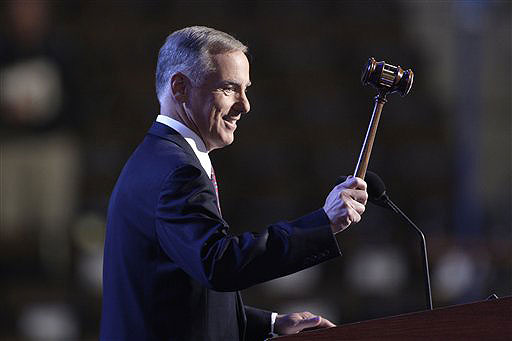
Photos - Television cameras at the DNC (www.nytimes.com), Obama and Hillary yucking it up (www.abc.net.au), Howard Dean bangs the gavel, starting the Democratic National Convention (www.cbsnews.com)