Showing posts with label taxes. Show all posts

Monday, September 24, 2012

2012 Election Primer: Obama and Romney

Obama and Romney (Politico)
So after a bunch of requests (read: 3) to write up an election primer, I decided that it is time to give the people what they want: to know what a random 20-something in New York who thinks he knows more than he does feels is the best candidate to cast your ballot for in November.

I began this election season promising myself that I would vote for neither candidate and instead write someone in. President Obama, in my opinion (and I can't explain to you the amount of flak I've received for this) has been an underwhelming president when compared to the candidate he was in 2008. And that last sentence fragment is important: when compared to the candidate he was in 2008. All in all, Obama's done some good things domestically (repealing DADT, his better-late-than-never support of marriage equality, healthcare reform).

That's only one side of the coin, however. I've chronicled my disappointment with President Obama numerous times on this blog (here, here, and here to begin with). One thing that you'll notice about those articles (and most of my gripes about Obama) is that his foreign policy is, in a word, horrible. It is unfathomable to me that those who derided Bush's war mongering will defend Obama for 2012.

Obama is leading this country in the wrong direction, but not in the way that Fox News would have you believe. Precedents are being set in the Obama White House that could have dire consequences down the road.

For one, take the drone program (a program that is technically entirely classified). We have drones flying over many countries - countries with whom we are at war and countries with whom we are not at war. This sets a serious precedent for other countries who may want to fly drones over the United States when they get the same technology we currently have.

Moving beyond the precedent it sets, however, is the diplomatic damage that drone strikes carry given their civilian casualties. We conduct drone operations in countries like Pakistan, Yemen and Somalia; countries we are not at war with. This comes back to the precedent setting: can you imagine if Islamabad began flying drones, making strikes and killing American civilians?

A drone equipped with weapons and a camera (Wired)
But it's not only about the drones. It's about extralegal killings of American citizens in non-war zones. It's about a dubiously legal "kill list," despite a longstanding executive order against such assassinations. It's about not closing what will certainly be viewed as a black-eye on this nation in the form of Guantanamo.

Going back to precedents, Obama seems to be making the same, if not similar, mistakes his predecessors made in Afghanistan. During the Libya non-war, I decried the support for the untrained rebels fighting Colonel Qaddafi. Throwing supplies and intel at a group not ready for it is not good foreign policy. In fact, when I heard that the attack on the late Ambassador Chris Stevens was coordinated I wondered if any of the attackers were former Libyan rebels who had received training or materiel from the U.S. or other NATO nations. We've seen similar problems with green on blue attacks in Afghanistan in which US-trained Afghan forces attack US soldiers.

It is for these reasons that I simply felt that I could not vote for Barack Obama come November. That view is beginning to change, however, and it has nothing to do with anything Obama is doing.

I knew I was not going to vote for the Republican candidate no matter who it was. The post-Reagan conservative is simply too beholden to the religious right (cue the famous Barry Goldwater quote). You look at candidates like Rick Santorum or Rick Perry and you shake your head wondering what has happened to the Republican Party.

Now, Mitt Romney would appear to be the most palatable of the Republican candidates. Having lived in Massachusetts while he was governor and seeing the good things he did during that time (near-universal healthcare, turning around a large deficit), I have been amazed to see Romney backtrack from his accomplishments. In 2008 I asked a good friend his opinion of Romney and he replied that he was spineless and would say anything to get elected. His prescient statement has more than proven true.

We could get into the issues with Romney, but one problem is I simply don't know where he stands on anything. It changes so frequently that it makes Obama's flip-flop on gay marriage look like, well, evolution. Romney simply cannot choose one side of a position and keep it.

One thing I like in a president is transparency (this is another arena in which I've been disappointed with the Obama administration). Needless to say, the fact that Romney refuses to release his tax returns (a tradition started by his own father, to boot) does not sit well. The fact that he and his campaign allowed it to become a months-long campaign issue indicates to me that whatever he wanted to hide in the returns was worth hiding.

I was never going to cast my vote for Romney; that was decided well before he won the Republican nomination. But what Romney has done through his ridiculous missteps - the Egypt and Libya embassy attacks statement, the utter lack of specifics in any of his policy, the 47% irrationale - has made me so angry that I might actually vote for Obama out of spite for Romney. Romney's seeming ineptitude has moved me in such a way that I might actually vote for a president who I think is setting this country up for a very difficult foreign policy environment in the near and long-term future.

So to sum it up: I do not want to vote for Obama, but if voting for neither candidate would give Romney any kind of advantage (no matter how small) it actually may be irresponsible of me, given my worldview, to not vote Obama in November. I felt that the 2008 election was the first one in a while that gave the American people a chance to actually vote for a quality candidate, as opposed to the lesser of the two evils. And I maintain that Obama was a good candidate; he just could not live up to that candidate as president. This election will definitely fall into the "lesser of two evils category." I'm just angry that Romney's horrendous campaign may actually force me to choose one.

Thursday, October 14, 2010

Democrats Blow Yet Another Political Opportunity

The Hill just released a set of polls in which voters in 10 battleground districts were asked if they support the extension of the Bush tax cuts. When asked if they favored or opposed the "extension of the Bush tax cuts," responses broke along party lines, with an overwhelming majority of Republicans in favor, a somewhat smaller majority of independents in favor, and a large majority of Democrats opposed.

However, when asked if they would favor extending tax cuts only for families earning less than $250,000 a year, the response was almost exactly the same among all three groups--two-thirds of Democrats, two-thirds of independents, and two-thirds of Republican are in favor of extending the cuts only for families earning less than $250,000 a year. What poll respondents probably don't realize is that the latter question is exactly what the President and the Democrats are proposing.

Reid, Pelosi, and the Democrats could have used this fact as an opportunity to force Republicans to vote on an extension of tax cuts for the wealthy, exposing them to the ire of the American middle class, and to the hypocrisy of calling for deficit reductions while adamantly opposing the expiration of unneeded tax breaks. But it seems the Republicans' messaging campaigns, as usual, are just better executed, regardless of the lack of actual support for their policies.

Senator McConnell has the messaging down: keep blaming the Democrats for spending, spending, spending, while completely ignoring the fact that tax cuts are contributing to the deficit. Make the middle class think that the Democrats are trying to tax them more by portraying them as avid taxers, even though that is the opposite of the truth. And even as House Minority Leader Boehner conceded that "If the only option I have is to vote for some of those tax reductions, I'll vote for it," he was immediately rebuked by Senate Republicans, who seem to know that they have the edge in the messaging campaign to keep Americans confused about how these tax cuts actually work.

Images: Senate Minority Leader Mitch McConnell (R-KY) (CBS News)

Saturday, April 17, 2010

Attending a Tea Party Rally on Tax Day

On Thursday the grand finale of the "Tea Party Express," as they've been calling it, held a demonstration in Washington, DC, ostensibly protesting taxes, big government, and excess spending, but also evoking some other, rather unrelated issues. I only had time to stay for a few minutes, but I got to talk to a few people and take some pictures. I think I was there at a bad time, because I just saw a guy doing a bizarre stand-up routine that had very little to do with the rally, and the people I was around seemed pretty bewildered by it, though they all broke into wild applause when he ended with "So are we gonna vote these guys out of office?!" and made a reference implying assassinating our incumbents that related to a joke about Lincoln he'd told a few minutes earlier. Here are some photos:

Tuesday, March 30, 2010

A Lesson in Incompetence: The Metropolitan Transportation Authority

Harking back on Nate's post from last week about transit cuts and their long-term unsustainability, I want to quickly point out the MTA here in New York and its woefully pathetic state. The drama of heightened subway fares and decreased service continues, as even more cuts are expected this year. What is frustrating is that the additional cuts are a result of state auditors miscalculating how much revenue the new payroll tax would bring in for the mismanaged agency.

To add insult to injury, Mayor Bloomberg had a message for subway riders. He said, "So save your anger for the next round [of cuts]. Just say thank you that it isn't any worse with this one." Translation: Despite your government and public agencies failing you, you should be thankful for us. Here's what Bloomberg is missing: when something costs extra, you expect to get something more from it. When you put the money up to buy a Mercedes, you expect to get certain perks that you would not find in a cheaper Honda. But what the MTA has done has taken that Honda, stripped it down (no A/C, no radio, etc.) and are making the people pay the Mercedes price. It is now more expensive to ride a service cut-laden subway system. And Bloomberg wants us to be thankful?

But it doesn't end with service cuts. A recent stabbing on the 2 train this past weekend has highlighted the gaping security holes in New York's subway system. CCTV cameras, a simple and effective safety measure employed by everyone from the highest federal offices to your local bodega, either are non-existent (as in the case of Christopher Street, where the assailants from this weekend's stabbing fled) or simply don't work (as is the case with almost half of the system's 4,313 security cameras). Why? Depends on who you ask, but there's plenty of blame being thrown around as the MTA is using its time and resources to sue Lockheed Martin, the winner of the $212 million contract to outfit the system with cameras, after the military contractor sued the authority. It's unclear if ongoing security work is continuing through the litigation (an email to the MTA has not been answered yet).

I don't expect the subway to run perfectly, nor do I expect it to be free of crime. I do expect that a raise in fares will correspond to one of two things: better service or, at the very least, the same service. To have fares raised, massive service cuts implemented, and then be told to be thankful it's not worse is insulting. Security-wise, subway systems are vulnerable in general, but to learn of New York's subway system's vulnerabilities specifically is worrisome. It just highlights the misguided priorities of the MTA, which is plagued with incompetence and mismanagement at nearly every level. They can't stand up to the unions, they can't run the system without massive problems, and they can't even get CCTV cameras installed properly. That's not a lot to be thankful for.

Photo - An overpriced piece of plastic (The Village Voice Blog)

Wednesday, March 24, 2010

Transit Cuts Are Bad Public Policy

Recently, Washington, DC increased its Metro and bus fares by 10 cents per ride, and more drastic fare hikes (or cuts in service) are expected in July. The New York MTA board just voted on a package of severe cuts, eliminating entire subway lines and substantially slashing bus service. I understand that these cities are dealing with budget shortfalls to the tune of $189 million and $400 million, respectively, but these issues should be dealt with on the city level, not on the Metropolitan Authority level, since all the authorities can do are increase fares and decrease service.

Instead, these cities, and all other cities facing similar budget woes, should look at transportation not as a luxury but as a priority. Here are the problems with attacking public transportation when fiscal times are tough:
  1. Poor people will be disproportionately affected. Public transportation is usually an inelastic good for the poor, and increasing fares will only create greater economic burdens for them. Many cities have good subsidization programs for the poorest riders, but many people who cannot easily afford increased fares will have no choice but to absorb the increased costs.
  2. Ridership will decrease. People who are on the fence between using public transport because it's cheap and good for the planet but aren't enthralled with its crowdedness, slowness, and sometimes inconvenience will likely err on the side of personal vehicles to avoid increased prices and worse service. This will only further decrease revenue for the transit authorities, exacerbating budgetary problems. Similarly, those who may have been on the fence about switching to public transportation will now have less incentive to do so.
  3. Traffic congestion will increase. As more people eschew public transportation, more cars will be used, increasing traffic problems in cities.
  4. Pollution will increase. As personal vehicle ridership increases, so will greenhouse gases, criteria pollutants, and other emissions. In an era where cities and states have begun to understand the desperate need to address environmental problems, this would be a huge setback to good environmental policy. And this is to say nothing of the increased dependence on foreign oil.
So what should cities do?

I've already made the case for a gas tax. Assuming these transit cuts in service and hikes in price are temporary, why not instead increase the gasoline tax, also ostensibly temporarily? This would put more of the burden on wealthy people who can afford to drive to work, increase public transportation usage, increase transit authority revenue, decrease congestion, and decrease pollution. This seems like a win-win-win-win to me. The only disadvantage is pissing people off who drive cars. But when they are contributing to so many social, economic, and environmental problems by doing so, isn't it a sacrifice worth making? Raise gas prices the same amount you would raise transit rides.

Alternatively, increase tolls. This will have many of the same benefits as a gas tax, though in cities other than DC it will more specifically affect those entering the cities in question, as opposed to everyone in the state (gas taxes are implemented on a state level; however, DC has the authority to instate its own gas taxes).

I realize none of these measures is politically popular, and no one wants to make anyone pay more for something so vital as transportation. But when push comes to shove, it shouldn't be public transit users who suffer increased burdens. People should be incentivized to use more public transportation so that transit systems can grow stronger, gain people's trust, and become the widespread, efficient, fast, clean, dominant means of human movement that they should be.

Images: DC Metro (American Architecture)

Wednesday, September 23, 2009

Worst-Case Scenarios: Health Care

I touched on this subject a bit last week, and I have been thinking a lot about it recently. Regarding health care reform, what is the worst-case scenario for both sides of the debate?

What is the worst-case scenario for opponents of health care reform? Assuming reform legislation is ultimately executed irresponsibly and incompetently, health care costs could actually end up staying as high as they are now, or even increasing. There may not be enough savings accrued from cracking down on waste and fraud and investing in information technology, prevention, pay-for-performance systems, and other measures that President Obama and Congressional Democrats have proposed. The alternative is new taxes.

Such taxes could take a number of forms. Income tax exclusion for employer-sponsored health insurance could be replaced with a tax deduction. The tax on cigarettes or alcohol or sugar-sweetened beverages could be increased. There could be a “play or pay” requirement on large employers, with a tax for not offering health insurance. Any way you look at it, the government would be taking more money from citizens in all of these cases. (Side note: I believe that disincentivizing unhealthy habits and behavior—possibly in the form of taxes—is a key solution to solving our nation’s high health care costs. Nutrition needs to be looked at more closely as an answer to health care problems, not just addressing the problems in an ad hoc manner.)

Now, you may be saying, “But taxes are not the worst case scenario! The government will pay people to have abortions! Illegal immigrants will get health care paid for by my tax dollars, and my grandma will be put to death by a government panel! You lie!” But don’t you have more important things to do than read my blog, Representative Wilson? Seriously though, none of those things are true.

So what’s the worst-case scenario for the other side of the debate? Well, 46 million Americans will still not have any health insurance. Health care costs will almost certainly continue to increase, which will cost Americans more money in the long run anyway. Key solutions like prevention measures will continue to go overlooked, and Americans will likely increase their susceptibility to obesity, diabetes, and heart disease.

And the bottom line in this entire debate, which no one seems to be talking about anymore: people will be left to fend for themselves when they are sick or injured, or will have to assume a financial burden with which they simply cannot cope. People will go without the treatment they need because they can’t afford it. People will remain injured or sick, and probably get worse. And people will die unnecessarily, simply because their government, whose role is supposed to be that of a guardian and helper, was not willing to protect or help them.

When worst-case scenarios are outlined honestly and juxtaposed like this, it becomes a no-brainer what the ultimate goal should be. Which is exactly why the talk of death panels, socialism, government takeovers, and Hitler have seized the public debate in our country. Because when thoughtful reason (not to mention compassion for one’s fellow citizens—isn’t that what patriotism is all about?) naturally incline voters in one direction, opponents have to combat it with sensationalism and lies.

Images: Obama and Kennedy (Change.org), Joe Wilson (Fox News), some asshole (CBS News)

Monday, August 31, 2009

Fear: 1, Facts: 0

Fear is a very powerful emotion. In fact, as a primitive biological instinct, fear trumps reasoned reflection and logic. So it’s no wonder opponents of health care reform and climate change legislation have been employing fear as a tool to sway public opinion in their favor. In fact, these very tactics have been used for decades in politics, and it seems that the majority of Americans are incapable of wising up to them, if for no other reason than the fact that fear is potent and compelling.

Scare tactics to defeat health care reform were used in the early 1920s when opponents spread the message that public health insurance was a plot by the Nazis to take over the US. They were used again to defeat Harry Truman’s attempt at health overhaul in the late 40s with the notion that nationalized medicine would lead to nation-wide Communism. And now health care reform opponents are doing exactly what they did in the Clinton years: trying to convince Americans that such reform will harm them, not help them. They are focusing especially on senior citizens, whom they allege will lose their health care in the proposed plan (suddenly conservatives are champions of medicare, apparently), or worse: face a "death panel" that will determine their continued existence.

Unfortunately, it seems to be working. Many Americans are riled up, but many of those who are most ardent about their opposition speak only in vague terms about "socialism," "Communism," and "big government," but seem not to understand any details of the proposed health care legislation. In short, instilling fear into people has not only worked for conservatives; it has created an army of largely uninformed, loud, and well-publicized opponents (thanks for giving it such excellent coverage, media).

The Glenn Becks and Rush Limbaughs of the world know exactly what they are doing. They know they are manipulating people and offering, at best, half-truths about topics on which they are thought by their listeners to be experts. They know a public option has nothing to do with Communism, and that seniors will not lose their insurance under any of the currently proposed bills. But they don't want to see health care reform, because they want to keep taxes and government spending low (regardless of potential benefits and projected savings), and want Democrats to fail. And their strategy is working all too beautifully.

Similarly, the big utilities, gas and oil companies, and manufacturers who would have to change their dirty ways (to some extent) if a climate change bill were passed are winning the messaging fight on that front. They are using all the resources at their disposal to scare Americans with talk of overwhelming hikes in gasoline and energy prices, all the while trying to play down the now well-understood science of anthropogenic climate change:

"The whole question of man-made climate change is really, really iffy," said limited-government activist Kelly Havens, speaking to a cheering, sign-waving crowd of about 200 at the recreational vehicle hall of fame. "I mean, what was man doing when Indiana's glaciers were melting? We weren't even here!"

Lawmakers know better. They know what is in the health bill, and they know the facts about climate change (well, maybe not Jim Inhofe). Those who were against reform from the start are beholden to special interests, and those who are swayed by uninformed and beguiled constituents are simply not concerned enough with the well being of Americans to want to help their constituents to resist fear and understand facts. It boggles my mind that changes that will serve to better Americans are often so hard to come by in this country.

Images: Red Army (Wikimedia), Rush Limbaugh (politicalquote.net), James Inhofe (newsok.com)

Tuesday, May 26, 2009

The Case for a Gasoline Tax

An op-ed by Eric Grunebaum in yesterday's Boston Globe eloquently outlines some of the most compelling arguments for a gasoline tax, specifically in Massachusetts. Unfortunately, such a tax has already been defeated twice this year in the Massachusetts legislature, and debate continues to roil over whether a gas tax or a hike in highway tolls would be more equitable.

Let me add one more argument to the article linked above. As urban sprawl becomes a bigger and bigger problem throughout the country (and the world), we need to be rethinking the way we develop, which is inextricably tied to the way we get around. Residents of western Massachusetts are bemoaning a gas tax, arguing that they will be unfairly impacted, as they will not be able to take advantage of the public transportation alternatives that easterners have at their disposal. However, maybe this sort of "inequity" is part of the solution to some of our biggest problems.

I would contend (with no empirical data) that a vast majority of the people who live in western Massachusetts, and other such areas relatively far from urban centers, are not farmers. While farmers need to be far away from cities to make a living and contribute to society, most who live in rural areas do not need to. Now I'm not going to be exceptionally radical here and argue that no one should live outside of a 20 mile radius of a major city, but I will argue that as long as you are living far away from an area that has access to public transportation, you should still have to pay a higher fare for gasoline, along with those who do have access to an alternative.

I don't see this as a punishment for suburban and rural dwellers, but rather as an incentive to live near trains, buses, and subways, and therefore push society to build upwards rather than outwards, and smartly rather than regressively. At a forum of urban planners that I attended last week, one of the members of the panel called for a $0.50 per gallon gas tax, a political unreality to be sure, but one that would no doubt help to decrease the insatiable sprawl that has been creeping through our untouched lands for centuries.

A Times article from a couple weeks ago discusses emerging suburbs that strive to eliminate the use of cars, a feat that seems daunting and perhaps impossible in today's fast-lane society. But towns like Vauban, Germany may just be the paradigms that we need to look to for a guide to modern planning and transportation strategies. And a gas tax, while not a singular solution, is a good place to start.

Images: Gas prices (good.is), exurban sprawl in Florida (Brittanica), Vauban, Germany (New York Times)

Friday, February 6, 2009

Democrats Use Taxpayer Money to Spur Economy, Yet Don't Pay Their Own Taxes

The ultimate irony of the entire bailout, infrastructure, stimulus plan is that those proposing it or poised to be major players in it do not even pay the entirety of the taxes they owe. Barack Obama played teacher in a lesson on the obvious when he admitted that he made a mistake and that those with power and influence are held to a different (read: nearly non-existent) standard than everyday Americans, at least when it comes to paying taxes. All of this is fallout from Tom Daschle remvoing his name from nomination for Health and Human Services (HHS) secretary when it was revealed that he was able to skirt paying his full share of taxes by improperly reporting charitable donations and not listing all of his income. This after Treasury Secretary Tim Geithner admitted his own tax mistakes during his confirmation hearings and Obama's nominee for Chief Performing Officer bowed out after her own tax problems. So there are two scenarios (which are not mutually exclusive): A, the tax codes are archaic and too complicated for anyone to figure out and we should simplify them (though this would put numerous lawyers and accountants out of business) or B, these people thought they could get away with it and it came back to bite them in the ass.

One positive that can come out of this whole thing is that Obama is admitting a mistake (something it took Bush years to do). Not only is Obama admitting mistakes, but when given the opportunity to pass the buck to Daschle, he refused and instead insisted that it was his own fault. Is this for show? I don't know, but after five years of "Mission Accomplished," I think Obama admitting a mistake is a step forward regardless.


The one thing to come out of all this can be summed up in a single word: embarrassment. It's an embarrassment for the Obama administration because it makes it look like they did a McCain campaign-like job of vetting these nominees. It's even more embarrassing for the actual nominees themselves, who made hundreds of thousands of dollars and could not either pay their taxes correctly or hire someone else to do it if they feel they were not qualified. They also lied to Obama and that lie was exposed on a national level. It also takes a qualified HHS nominee out of the running, so it not only hurts Obama and Daschle, but also Americans across the nation. To end this brief post, I'd like to point out Republican strategist Ed Rollins' assertion that Daschle did the "honorable" thing by bowing out of the nomination process. I'd have to disagree and say that Daschle saved face by bowing out; the honorable thing would have been to pay his taxes. Peace.

Photo - Tom Daschle (Wikipedia)

Thursday, December 4, 2008

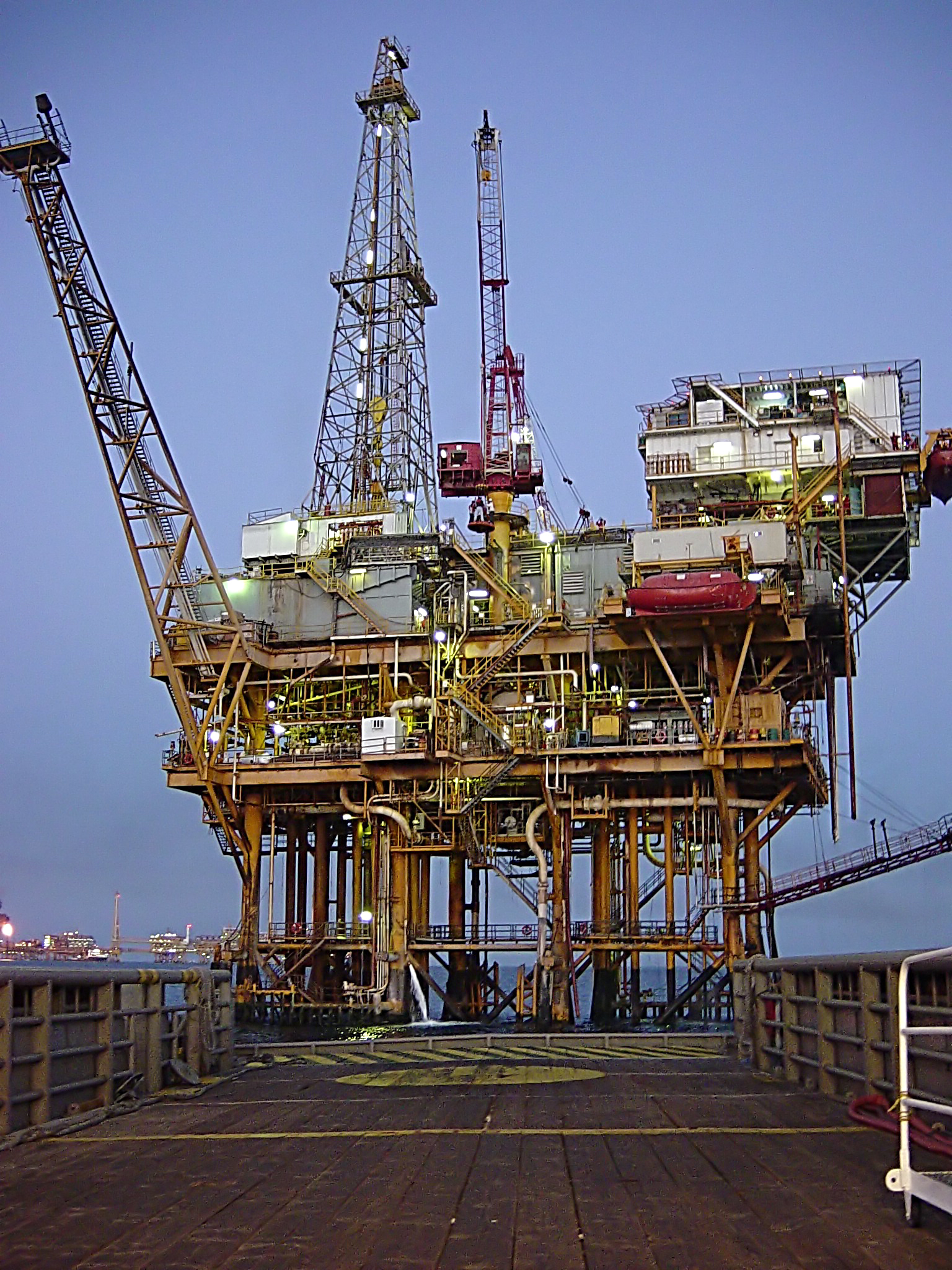
Gas is Cheap Again. Drill Baby Drill can wait.

Now is the first time since the oil crisis of the 1970s that there has been so much bipartisan support for weaning the United States off foreign fuels, and reaching ever-appealing “energy independence.” Democrats tend to want to realize this goal by focusing primarily on conservation, efficiency, and alternative fuel sources. Most Republicans talk about all of these methods as well, but don’t think it will be enough. John McCain during the campaign, for instance, spent a great deal of time talking about the widespread need for more nuclear power plants, “clean-coal” plants, and stressed the importance of drilling for more oil within and around United States territory. Sometime in August, it seemed, the “Drill Baby Drill!” chants were starting to ring across the land.

Thank goodness. There is a surefire solution to energy independence that doesn’t involve relinquishing our massive Ford Expeditions and Hummers. If we just open up new sites for oil extraction off our coasts, we will begin to offset our oil imports (which currently account for two-thirds of US consumption), while also saving money on our gas bills. …Right? Well, most “Drill Here, Drill Now” chanters during the election season seemed to be ignoring the economic analysts’ reports that asserted that we wouldn’t see gas prices drop—due to the new rigs—for several years.

Still, election seasons are election seasons. And the Democrats, delightful opportunists that they are, hopped on board the drill train, lifting an offshore drilling ban to prove to constituents that they too cared about gas prices. But wait! Now, thanks to the worst economic crisis since the Great Depression, gas prices are at their lowest points in years, and all those conservation measures that people were starting to carry out without government prodding—buying efficient cars, taking public transportation and biking, taking fewer unnecessary car rides—are gradually falling by the wayside. SUV sales are up once more. And it seems that all that talk about drilling is off the table—for now.

And then there’s the Big Three. You know, the car companies asking for $34 billion from the government (read: taxpayers). Wait, but why are Honda and Toyota not going bankrupt? Perhaps because instead of clinging exclusively to “all-American” big ol’ trucks and marketing them heavily, they invested at least a bit in more compact, efficient cars that have brought most auto business to them over the past year or so. And only now—as part of their rescue plan—do Ford and GM talk about investing seriously in plug-in hybrids, battery technology, and other efficiency measures.

What should government do? Raise gas taxes now, while they’re so low. The Federal Government should even put a floor on gas prices so that people don’t go flocking back to the Hummer too. Invest revenues from gas taxes in public transportation, research and development, and alternative energy. It’s going to take a while to make the transition to alternative fuel vehicles, so let’s start with vehicles that use much less oil than those we have now, and then once cars are running mostly on electricity, make the switch so that the backup engine is running on cellulosic ethanol or fuel cells. Going forward, we need to stop thinking about drilling and start thinking about real, long-term, innovative solutions that will keep jobs within our borders, create new jobs, cut pollution, and actually wean us off foreign oil.

Photos: Oil rig (Wikipedia), Hummer (Hummerreports.com), Plug-in Prius (Autospectator.com)