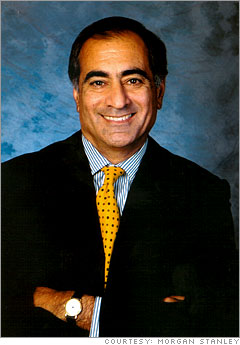
Today the government became the single largest shareholder in the epitome of failure (read: Citibank). The government used our money to go from an 8% shareholder in the company to controlling 36% of the company's stock. So one would think that the government would toss the executives who ruined the company and replace them, but instead the head of Citigroup, Vikram S. Pandit, will stay while the board of the company is "shaken up." It's sad - pathetic may be a better word - when the government might be better at running a multi-billion dollar enterprise such as this, but Citigroup may have reached that pantheonic low at this point. If $45 billion of free government money can't keep you afloat, maybe it's time to go the way of Jack Dawson because Rose, like the government, can't hold on to you forever.
But the deal with Citi is dependant on one factor: private investment. If there is no interest from the private sector, the government may not go forward with its conversion plan. However, there is a worrisome aspect of those private sector investments. Most of those pr
ivate investors are foreign governments, like the governments of Saudi Arabia and Singapore, so if Citi does indeed recover, it will be foreign governments that profit along with the other investors. This on top of the fact that Secretary of State Clinton recently let China - the biggest foreign holder of U.S. debt - know that "our economies are so intertwined...we are truly going to rise or fall together." So in a way the banks and other companies that our government is pouring money into are not nationalized; they are really multi-nationalized because we are borrowing money from foreign governments to, as the Washington Post says, "finance the spending binge the United States went on before the current economic crisis."
It's bad enough that the government is nationalizing these banks - and make no mistake, when the government becomes the largest shareholder in a company, that company has been nationalized. The government can swear up and down that it will make no policy decisions, blah blah, but the reality remains: it has provided the company with provisions it must meet (one of which is the shake up the board) and now has a serious interest in it. What's worse is that we are borrowing money from foreign governments (governments who commit serious human rights abuses, to boot) in order to do all of this. Future foreign policy negotiations with these countries should be interesting, to say the least. For America's sake (both domestically and on the international stage) let's hope Citi recovers and the government can manage it a bit better than its overpaid executives. Peace.
Photos - Citibank logo (Consumerist), Pandit (International Herald Tribune)
Friday, February 27, 2009
Government Largest Shareholder in Citi, Wants no Say in its Operations
Posted by
kane
at
7:37 PM
0
comments
Links to this post
Labels: bailout, citigroup, vikram s. pandit
Friday, February 20, 2009
Bloomie Touts Self Responsibility (Except for Bankers)
Reading about a certain MTA lawsuit recently really grinded my gears (to borrow a Peter Griffin phrase). It seems that some guy named Dustin Dibble thought that getting blitzed, falling onto the subway tracks, and getting hit by a train was not only someone else's fault, but worthy of a hefty lawsuit against the cash-strapped MTA. Now, don't get me wrong, the MTA is a highly mismanaged, dysfunctional, frustrating organization, but some things are out of their control, and drunk passengers is one of them. Dibble and his lawyer Andrew Smiley won big in court, as a jury awarded them over $2.3 million - money which will be paid ultimately by taxpayers and those who use public transportation in New York. As the MTA has all but cemented their plan to raise fares, this major setback will not help. And as our society becomes more litigous and people look to blame others for (mostly) their own shortcomings (like getting drunk and falling on the subway tracks), the MTA has paid more and more.
But this is not all. Bloomberg - looking at a chance to capitilize on some populism as anyone with a brain sees how this lawsuit is bull - came out saying that people need to be responsible for themselves. Read that sentence again, because self-responsibility is becoming a foreign concept. In any event, Bloomberg took the common-sense route in saying that Dibble's actions were stupid and the MTA (and, through the transitive property, the people of New York) should not have to pay for his mistakes. Dibble's argument in court was that the driver of the subway could have stopped in time (the driver of the car said that he thought Dibble was a large piece of trash on the tracks - take that as you wish). If the subway car had enough time to stop, wouldn't Dibble, a former college basketball player, have time to jump back up onto the platform?
So back to Bloomie: he looks like a populist, sticking up for subway riders who may have to shoulder the burden of one drunk guy's mistake (the case is on appeal now). But in reality, Bloomberg just a day before proposed something equally wasteful and stupid that cost more than 20 times Dibble's lawsuit. Bloomberg wants to use $45 million of taxpayer money to "to retrain investment bankers, traders and others who have lost jobs on Wall Stre
et, as well as provide seed capital and office space for new businesses those laid-off bankers might create." That's right, you and me are going to help pay for college-educated former bankers to be retrained to join another employer in New York somewhere. I can think of a multitude of people to help before the well-off bankers with college degrees who helped run our economy into the ground, but apparently Bloomeberg can't. I guess that 30 Rock was not too far off in their portrayal of bankers?
But seriously, how much sympathy is there out there for these folks? They decide to go into a business that is inherently risky because with great risk comes great reward. They get paid almost 6 figures straight out of college to play with other people's money. Unfortunately for those who recently got onto the banking bandwagon, the risk came back to bite the firm in the ass and they had to be let go. It's bad enough that the federal government is bailing out every company facing hard times, but now the city of New York has to use more taxpayer dollars to target these bankers because they're so "special" and "talented". If they're so talented, why do their need to be retrained to do something? These people have college degrees, some have MBAs, so what about the poor people of the city? What about those who could not afford to go to college but want training to get a better job? I could be cynical and say that Bloomberg feels a special affinity for these people because he was one of them and it's their business that his Bloomberg L.P. has relied on (and will continue to rely on) through the years, but why speculate? Maybe he really thinks that those making 6 figures with advanced degrees who go into a job knowing they could be laid off at any moment but the money's too good to care about job security are the worst off in New York.
So while Bloomberg seems to support self responsibility and facing the consequences for one's actions in the Dustin Dibble case, when it comes to bankers being laid off from an inherently risky private sector job the government will be there to make sure they don't - GASP - leave New York. Because then we might have to divsersify the way the state makes money and not rely on Wall Street for it. But seriously, if you want the government to help these people out, let them go on the welfare rolls, let them get food stamps and live in public housing, because if you're poor in New York and have trouble finding work - and happen not to be recently laid off from a troubled bank - that's what you have to do because there is no special program for you. Peace.
Photos - Bloomberg (Time Magazine), NBC interns on 30 Rock after being laid off from the financial sector (Gothamist)
Posted by
kane
at
2:52 PM
3
comments
Links to this post
Labels: banks, dustin dibble, michael bloomberg, mta, new york city, populism
Wednesday, February 11, 2009
Banks On Their Knees Asking for Money, How Could We Say No?
Today was the day many people have been waiting for: when the CEOs of the big banks who would have failed without emergency government handouts would have to answer to Congress. Now Congress has never had a fully developed vertebrae (see: Clarence Thomas), but with the popular mood seeming to be against the bankers who ruined their billion dollar companies, some in Congress asked some moderately hard questions. The banks represented included Citigroup, Bank of America, Goldman Sachs, JPMorgan Chase, Morgan Stanley, Wells Fargo, Bank of New York Mellon and State Street.
One of the main sticking points with the public is executive compensation, namely bonuses. Now a sensible person would think that a bonus would only be given out when the company has a good year and there is extra money to be spread around, but not with the banks. No; f
or even when the executives helped run these companies straight into corporate ICU and the government ventilator was barely keeping them alive, bonuses were apparently merited. There was actually a pretty classic line in today's hearings from John J. Mack of Morgan Stanley who told Congress, "We love what we do. If you gave us no bonus, we would still be here." That's easy to say when you've made $55.91 million at Morgan Stanley (while being there only three years). Mack should be getting nothing, especially given his admitted propensity for risky investment. But it turns out that when he screwed up, he was really paying with house money because we the taxpayer were there to bail him out.
Another laugh comes from the sentiment, "Oh, we're not using TARP money for bonuses, that's money we already had." So wait, if you already had money why wasn't it being used to help the company as a whole and not some high-level executive who most likely contributed to the problem? It's like Larry David's friend Simon in Curb Your Enthusiasm who gets a $10,000 loan from Larry only to throw a party that costs $10,000. Sure, the money he used for the party was not the physical money Larry gave to him, but without it he would have had to use the party money to stay afloat.
Barney Frank
asked a pointed question during his discussion of executive bonuses: "Why do you need to be bribed to have your interests aligned with the company?" Obviously it is a rhetorical question, but one worth answering. None of these CEOs have the company's best interest in mind. Why would they care how the company does if they know that they're too big to fail? They get to fly their private jets, make tens of millions of dollars, and live in ritzy suburbs. Sure, their companies are failing, but do you really think these guys are going to downsize their personal lives? The money will still come in, and they will still live in their McMansion and drive their luxury foreign cars (though to be fair, their companies might have to use NetJets instead of owning a private plane - how embarrassing!). They can afford not to care.
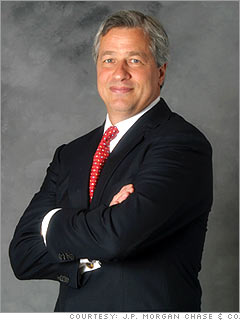
Another tactic used by the banks at the hearings: blame others. When pushed on why they were not lending a lot of money when that was what the TARP money was for, Jamie Dimon (CEO of JPMorgan Chase) said that it was from a scaling down of lenders like money market funds and hedge funds. The irony of the fact that his bank is partially responsible for the decimation of peoples' money market funds it completely lost on Mr. Dimon as he laments the fact that money market funds are not as active as they used to be.
Representative Paul E. Kanjorski said it best when he told the banks, "When you took taxpayer money, you moved into a fishbowl. Now, everyone is rightly watching your every move from every side." Obviously this is something the banks are not used to, for when they gave money out (by buying sub-prime mortgages) they did not keep tabs on who they were lending to or how they would pay them back; the money was coming from somewhere (though those who did their homework knew it would not last long). This boosted profits and lulled the shareholders and other regulators into complacency. Now when I was in school and I did not do my homework and got a bad grade on a test because of it, the teacher did not offer to give me free points to save my grade; I was responsible for myself. But these banks did not do their homework and they did not just fail the test, they failed the semester and brought everyone down with them, but it's ok because Professor Government is going to give them free points, because they're too important to fail. Peace.
Photos - The financial world brain trust (New York Times), John Mack (CNN Money), Jamie Dimon (CNN Money)
Posted by
kane
at
8:47 PM
0
comments
Links to this post
Labels: bailout, bank of america, banks, citigroup, executive compensation, jamie dimon, john mack, jpmorgan chase, morgan stanley
Sunday, February 8, 2009
What is it with Jersey City Cops and DUIs? (UPDATED)
One story that I followed on this blog in its earlier days was about a Jersey City police officer named Kevin Freibott. Freibott killed a 2 year old boy and nearly killed his mother after hitting the vehicle they were in. There is one more aspect to this story: Freibott was drunk. Freibott was scheduled to work that day, but called in sick instead and decided it would be a good idea to get his BAC to three times the 0.08 legal limit in Jersey and go out for a drive. Freibott received 11 years for killing a two year old; a light sentence for the murder of a child in my opinion. On top of all this (yes, there's more) Freibott's license had been suspended before for not attending a court-mandated program for drunk drivers. He was fired from the Middletown Township police department after that incident, but it seems that in Jersey City being a drunk driver and then
disobeying a judge's order's to go to treatment for it is not enough to keep you off of the force.
Within the same week after Freibott murdered a 2 year old and nearly killed his mother, another JCPD officer was caught drinking and driving. This time it was Toms River native Thomas Porter, who was involved in a minor car accident in a parking lot in which (thankfully) no one was injured or killed. The arrogance of the act is ridiculous. But there's more: in June of 2007 (about six months after the Freibott/Porter incidents) it was reported that the mayor of Jersey City had been involved a year earlier in a drunken "incident" down on the Jersey Shore in which he was charged with disorderly conduct, resisting arrest, and obstructing justice. I suppose that leading by example is not exactly something aspired towards in JC.
So why is all of this relevant? Because, unfortunately, another Jersey City police officer has killed an innocent person after getting behind the wheel of a car while drunk. Martin Abreu, 25, of Jersey City was the driver of the 2007 Camry that hit Marilyn Feng, 26, and Dennis Loffredo, 26. Feng was pronounced dead at the scene while Loffredo is at St. Vincent's with a broken leg. So just a little more than two years after Jersey City cop Kevin Freibott killed a 2 year old while drunk driving,
Abreu thought that we has above the law and went out and killed a 26 year old while drunk driving. On top of all this, Abreu is an officer of the law and he should know better. It seems that JCPD would benefit from some alcohol awareness classes for their officers (the mayor should show up, too).
Of course because of the odd laws involving death by vehicle in this country, Abreu will not face charges on the same level as murder (though what he did was murder this woman with his car). Remember, Freibott only got 11 years for killing a 2 year old child. A teenager in Smithtown, NY recently killed three people with his car but only got 30 days in jail. Abreu has been suspended from the force in Jersey City and will probably get a few years at least in prison, but is this enough punishment for stealing a person's life and nearly killing another because of a selfish, despicable act? A Jersey City resident named Robert Reyes told the Daily News that Abreu was a "good cop." Good cops follow the law and don't kill innocent people. Peace.
UPDATE: As if the arrogance of drinking and driving (and killing someone in the process) was not enough for Jersey City cop Martin Abreu, his mother one-upped him by talking to the Daily News and saying that the whole incident was victim Marilyn Feng's fault. Some of her statements include, "It was her fault," "So my son went out and had a couple
of drinks. He deserves to have a good time now and then," and "My son is a good kid, he doesn't deserve this." No one is saying that Abreu had no right to go out and have a few drinks and a good time, but the right to then mow someone down in your car because you're drunk and should not be driving is not recognized anywhere. I would also argue that Feng did not deserve to die after being plowed into by a drunk cop behind the wheel, but I guess that's just my opinion. I guess we can now venture a guess as to where Abreu got the narcissism and the "I can never do wrong" attitude that put him in this position. If Abreu's mom wants to help him, she should keep her mouth shut, because she is certainly doing him no favors in the realm of public opinion. I'll end this with a Jay-Z quote: "You can pay for school, but you can't buy class." Peace.
Photos - Police at the scene of the deadly drunk driving accident near Battery Park (New York Daily News), Paramedics help an unidentified victim at the scene (New York Post), Marilyn Feng (New York Daily News), Abreu's mother (New York Daily News)
Posted by
kane
at
1:00 PM
2
comments
Links to this post
Labels: drunk driving, jersey city police, kevin freibott, martin abreu, new jersey
Friday, February 6, 2009
Democrats Use Taxpayer Money to Spur Economy, Yet Don't Pay Their Own Taxes
The ultimate irony of the entire bailout, infrastructure, stimulus plan is that those proposing it or poised to be major players in it do not even pay the entirety of the taxes they owe. Barack Obama played teacher in a lesson on the obvious when he admitted that he made a mistake and that those with power and influence are held to a different (read: nearly non-existent) standard than everyday Americans, at least when it comes to paying taxes. All of this is fallout from Tom Daschle remvoing his name from nomination for Health and Human Services (HHS) secretary when it was revealed that he was able to skirt paying his full share of taxes by improperly reporting charitable donations and not listing all of his income. This after Treasury Secretary Tim Geithner admitted his own tax mistakes during his confirmation hearings and Obama's nominee for Chief Performing Officer bowed out after her own tax problems. So there are two scenarios (which are not mutually exclusive): A, the tax codes are archaic and too complicated for anyone to figure out and we should simplify them (though this would put numerous lawyers and accountants out of business) or B, these people thought they could get away with it and it came back to bite them in the ass.
One positive that can come out of this whole thing is that Obama is admitting a mistake (something it took Bush years to do). Not only is Obama admitting mistakes, but when given the opportunity to pass the buck to Daschle, he refused and instead insisted that it was his own fault. Is this for show? I don't know, but after five years of "Mission Accomplished," I think Obama admitting a mistake is a step forward regardless.
The one thing to come out of all this can be summed up in a single word: embarrassment. It's an embarrassment for the Obama administration because it makes it look like they did a McCain campaign-like job of vetting these nominees. It's even more embarrassing for the actual nominees themselves, who made hundreds of thousands of dollars and could not either pay their taxes correctly or hire someone else to do it if they feel they were not qualified. They also lied to Obama and that lie was exposed on a national level. It also takes a qualified HHS nominee out of the running, so it not only hurts Obama and Daschle, but also Americans across the nation. To end this brief post, I'd like to point out Republican strategist Ed Rollins' assertion that Daschle did the "honorable" thing by bowing out of the nomination process. I'd have to disagree and say that Daschle saved face by bowing out; the honorable thing would have been to pay his taxes. Peace.
Photo - Tom Daschle (Wikipedia)
Posted by
kane
at
4:16 PM
0
comments
Links to this post
Labels: barack obama, taxes, tim geithner, tom daschle
Tuesday, February 3, 2009
Raising Kane Op-Ed
An Op-Ed piece that I wrote for the Newton TAB was published today online and will be available in tomorrow's print version.
Click Here for the Op-Ed
Posted by
kane
at
12:29 PM
2
comments
Links to this post
Labels: op-ed